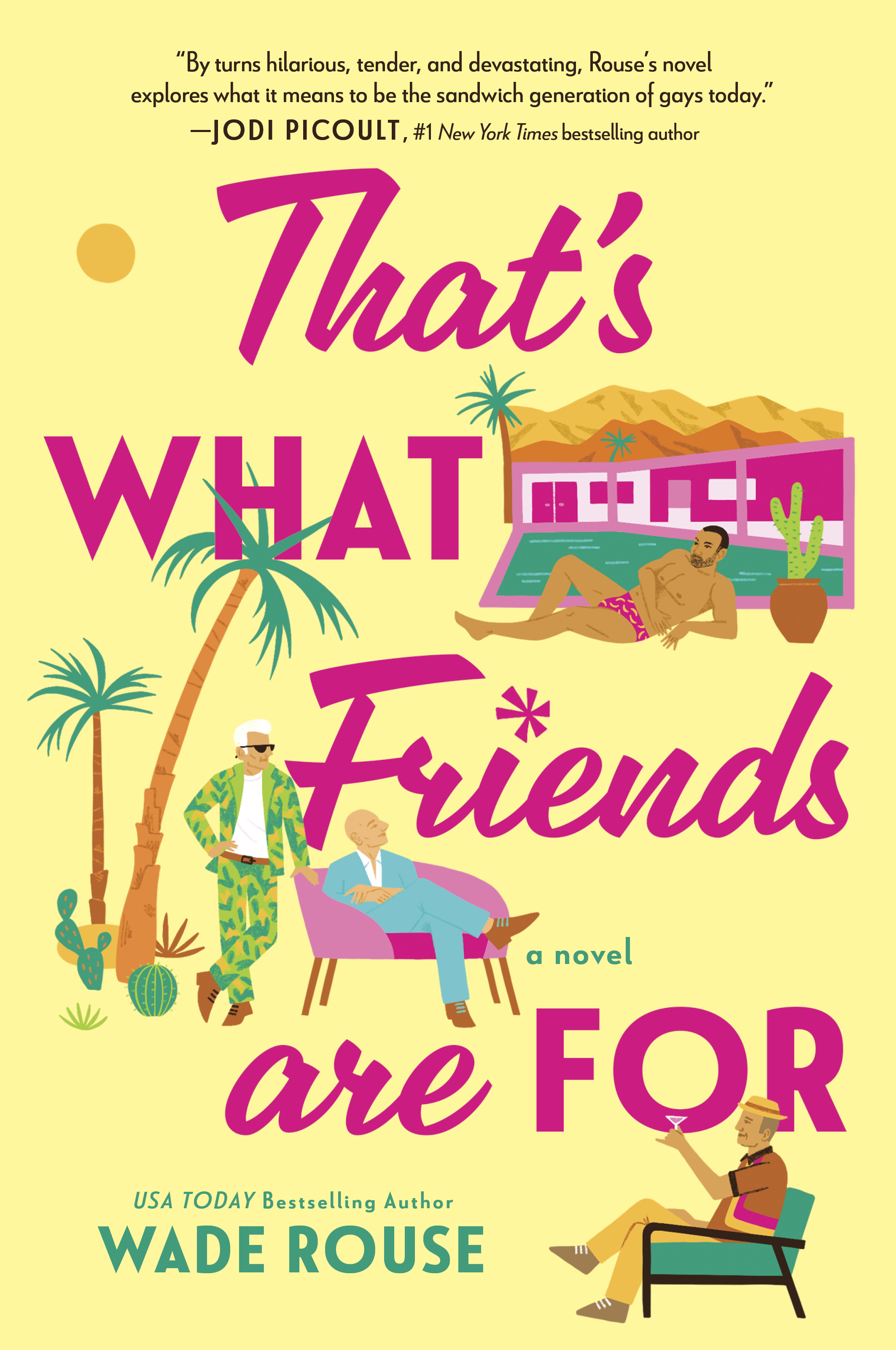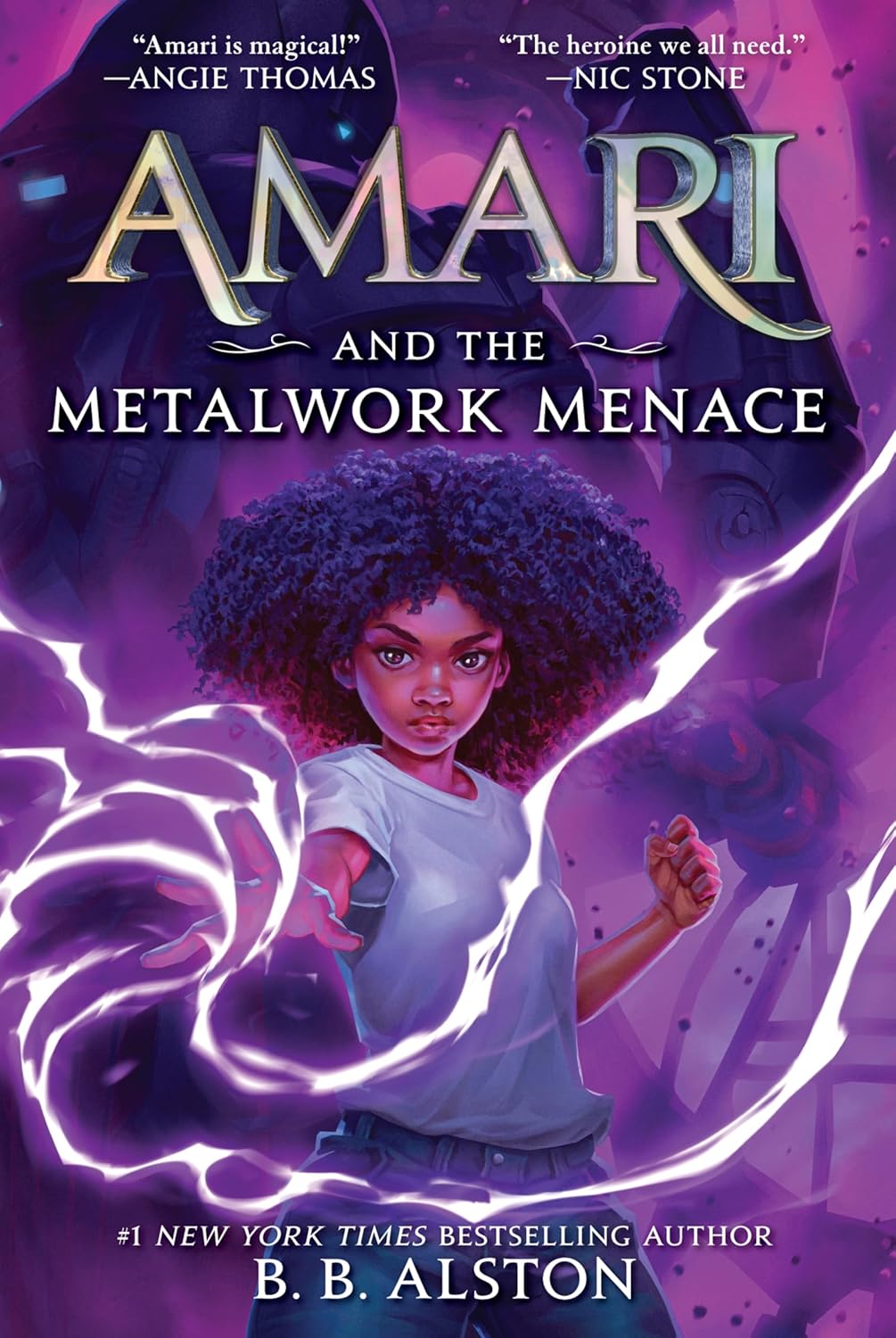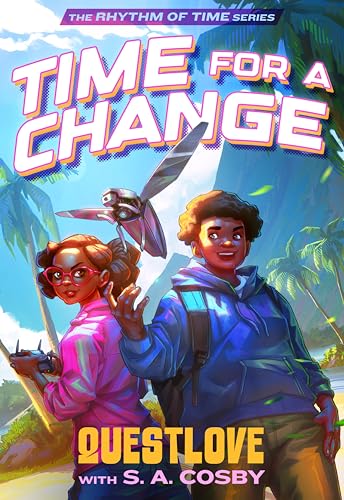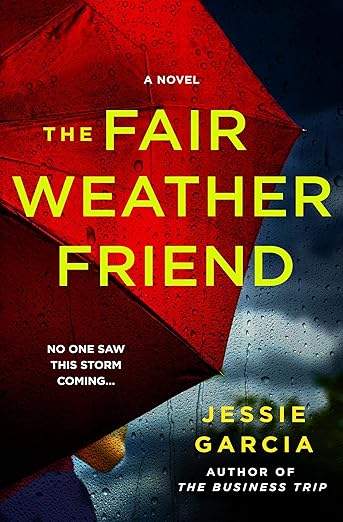
Born into a wealthy Black Indianapolis family, Earl “Trey” Singleton III leaves his overbearing parents and their expectations behind by running away to New York City with only a few dollars in his pocket. In the city, Trey meets up with a cast of characters that changes his life forever. He volunteers at a renegade home hospice for AIDS patients, and after being put to the test by gay rights activists, becomes a member of the AIDS Coalition to Unleash Power (ACT UP). Along the way Trey attempts to navigate past traumas and searches for ways to maintain familial relationships—all while seeking the meaning of life amid so much death.Vibrant, humorous, and fraught with entanglements, Rasheed Newson’s My Government Means to Kill Me is an exhilarating, fast-paced coming-of-age story that lends itself to a larger discussion about what it means for a young gay Black man in the mid-1980s to come to terms with his role in the midst of a political and social reckoning. [from the publisher]
This book serves as a perfect example of why, generally, I'm not a fan of historical fiction: neither the fiction nor the history is well-served. I read a lot of politics, social justice, history, and LGBTQ (primarily fiction, but also nonfiction). In this case, I would have been much more satisfied by reading a historical account of the AIDS crisis (along with race relations and general LGBTQ issues). Here, the significant factual narrative was completely overshadowed by the sexual exploits of the fictional characters. It's like the history was an afterthought. After reading a well-done nonfiction account of the topics, I would also, possibly, be happy to read a purely fictional story about the main character, Trey, if it weren't so sexually explicit. That is, every little detail of the many sexual encounters of several characters is not interesting to me. I don't think it advances the characters' stories. Describe to me how the characters feel and what they're thinking. Make me care. Don't just catalog their sexual positions and acts.
Contrary to the publisher's assertion that the book is “an exhilarating, fast-paced coming-of-age story,” I felt like every minute of the book was a trudge. This is an especially startling disconnect in a book that is relatively short (fewer than 300 pages).
Thank you, NetGalley and Macmillan Audio, for the audio ARC of the book in exchange for an honest review. Publication is expected August 23.
Ada, Iggy, and Rosie are ready for their sleepover, but Iggy warns them of the haunted basement. The Questioneers must investigate using science, bravery, and teamwork. [from the publisher]
Iggy thinks there's a ghost in his dad's basement. He and his friends Ada and Rosie work together, using the scientific method, to determine whether he's right.
I especially like the spirit of cooperation between the friends, the fact that the friends are diverse in gender and race, the presence of a supportive adult, and the use of science.
Thank you, NetGalley and Dreamscape Media, for the audio ARC of the book in exchange for an honest review. Publication is expected August 23.
Smarting from her recently cancelled wedding and about to turn forty, Laurie Sassalyn returns to her Maine hometown of Calcasset to handle the estate of her great-aunt Dot, a spirited adventurer who lived to be ninety. Along with boxes of Polaroids and pottery, a mysterious wooden duck shows up at the bottom of a cedar chest. Laurie's curiosity is piqued, especially after she finds a love letter to the never-married Dot that ends with the line, “And anyway, if you're ever desperate, there are always ducks, darling.”Laurie is told that the duck has no financial value. But after it disappears under suspicious circumstances, she feels compelled to figure out why anyone would steal a wooden duck—and why Dot kept it hidden away in the first place. Suddenly Laurie finds herself swept up in a righteous caper that has her negotiating with antiques dealers and con artists, going on after-hours dates at the local library, and reconnecting with her oldest friend and first love. Desperate to uncover her great-aunt's secrets, Laurie must reckon with her past, her future, and ultimately embrace her own vision of flying solo. [from the publisher]
It's refreshing—and all too rare, it seems—to read a book where several of the characters (both Laurie at almost-40 and supporting characters in the two generations before her) are mature in terms of both age and behavior, but also funny, vibrant, strong, smart, sexy, and a host of other positive characteristics.
From the time she was born, Sigrid has only ever been ordinary. Being paired at birth with a plain horse―instead of the powerful winged mare of a valkyrie―meant there would be no warrior path for her. No riding the skies, no glory among the nine worlds. Just the simple, unremarkable life of a stable hand.Everything changes when a terrible enemy ambushes Vanaheim and Sigrid sees a vision of herself atop a mythical stallion, leading the valkyries into a harrowing battle. Finally, she can grab her future with her own two hands and become the hero of her own story . . . if she dares.
But her destiny is tied up with Mariam, a fallen valkyrie who’s allied herself with the very enemy Sigrid is trying to stop.
Now Sigrid has left ordinary behind as she begins a journey with the beautiful―if treacherous―valkyrie, each step bringing her closer to answers . . . and to awakened feelings for Mariam.
Only, the life Sigrid has escaped may have been paradise compared to the one she’s racing toward. Because her destination is the realm of the dead: the gates of Hel. [from the publisher]
Jay Allan and Cindy Cooper were soap-opera stars in the late 90s, a wholesome young husband-and-wife duo who combined musical talent with humor and charisma. When the truth about their sexual orientations came to light, their marriage and TV careers ended, but decades later they have remained friends. Together, they open Palm Springs’ chicest movie memorabilia store, Hooray for Hollywood, but no customers and dwindling finances spell trouble.A Hail Mary arrives in the form of Yana Tosh, a ninety-year-old diva of the silver screen who has amassed a valuable collection of costumes and props and is looking to sell. But first, Jay and Cindy have to beat their competition, a vice president from a mega-auction house with ten times their resources. And when he winds up dead, they become prime suspects in the murder.
With their freedom and livelihoods on the line, Jay and Cindy desperately need to clear their names. There are plenty of other potential suspects, but they'll have to solve it soon before they're forced to trade in their vintage costume collection for two orange jumpsuits. [from the publisher]
Thank you, NetGalley and Dreamscape Media, for the audio ARC of the book in exchange for an honest review. Publication is expected August 9.
4-star reads
honorable mention (3.5)
Carmen Aguilar just wants to make her happily ever after come true. Except apparently “happily ever after” for Carmen involves being stuck in an unpaid summer internship! All she has to do is perform! In a ball gown! During the summer. In Miami.Fine. Except that Carmen’s company is hired for her spoiled cousin Ariana’s over the top quinceañera.
And of course, her new dance partner at work is none other than Mauro Reyes, Carmen’s most deeply regrettable ex.
If Carmen is going to move into the future she wants, she needs to leave the past behind. And if she can manage dancing in the blistering heat, fending off Mauro’s texts, and stopping Ariana from ruining her own quinceañera Carmen might just get that happily ever after after all. [from the publisher]
This is the third YA rom-com I read over the course of less than two weeks, and it's the only one in which sex is part of the equation. As the main character has reached the age of majority (in story time—not when she became sexually active), this is not really an issue. However, the sex scene didn't add anything to the story. Though that's not the only factor, this did contribute to the fact that I rated this book lowest of the three.
I didn't find most of the characters particularly appealing. If over-the-top family drama is fun for you, you might enjoy it more.
James Bascule is adrift. College beckons—but not quite strongly enough to actually get him to campus. A trip to Europe showed him a world bigger than his Northern California upbringing—and yet, one broken heart later, Northern California is where he’s returned. Back to his old bedroom, paying his bemused parents rent with his new hobby, baking bread with the sourdough starter that is his only souvenir of what was apparently just a summer fling.The future is being built an hour or two down the highway—it’s 1985; the twenty-first century is just around the corner!—but that’s not his world, either. While sitting in a Sonoma County bar, indulging in a little aimless day-drinking with a junior college acquaintance, he meets a man. A man with . . . something like a plan. Has James ever heard of a “suitcase clone”? It’s a cutting of a vine used to clone and propagate noteworthy grapes—say, from a legendary European vineyard to an upstart Napa Valley operation. This man has an operation. He has a suitcase. He just needs an enterprising young accomplice up for an adventure.
Just how deliriously fun and thrillingly mind-expanding an adventure, James can’t yet know. But we, of course, know how Robin Sloan crafts a story. Crossing the international literary-techno-conspiracy of Mr. Penumbra with the delicious experimentation of Sourdough, The Suitcase Clone is a tale that enriches and expands the Penumbraverse in ways you never saw coming, told by a mysterious narrator with an unexpected perspective on the great puzzles of life. Who could it be? [from the publisher]
Regardless, if you're a Sloan fan, you should definitely read The Suitcase Clone. Even if you aren't a generally a short story (or slightly longer short story) fan—as I generally am not—this piece is plenty entertaining and certainly a quick read. There's a surprising level of intrigue and adventure for such a short piece.
Thank you, NetGalley and Macmillan Audio (for their production from Farrar, Straus and Giroux), for the audio ARC of the book in exchange for an honest review. Publication is expected August 2.
Liv Bakersfield is used to living her life in “shoulds.” Be fit. Be financially responsible. Be your best self. An overworked graphic designer, she’s stretched so thin that she’s about to miss yet another vacation with her beloved group of college friends. But when Liv finally decides to start saying no, it feels good . . . good enough to leap straight into quitting her job and hopping on a plane to join them in South Africa.Amid the exotic landscape and unforgettable sights, Liv expects sun and safari animals and an easy time with her best friends. But such close proximity makes everything more complicated, especially with the emotionally unavailable Lucas Deiss. Their friendship is the only thing in her life that's still solid, and she vows to do anything she can to keep the group together. But once they get back to L.A., Liv discovers that her leap of faith has become a freefall, sending her crashing into Deiss's arms. With the trust of the people she loves most on the line, Liv must decide between doing what she should . . . and risking everything for what she shouldn’t want. [from the publisher]
A major disaster is discovered toward the end of Liv's impromptu South African trip (slightly shy of the halfway point) that is ridiculously implausible, but sets the stage for the rest of the story. Not to worry—I don't think I'll be spoiling anything when I tell you that everyone lives happily ever after.
Befitting a rom-com (vs. a hardcore romance), sex is minimal and not terribly graphic.
Tracy Flick is a hardworking assistant principal at a public high school in suburban New Jersey. Still ambitious but feeling a little stuck and underappreciated in midlife, Tracy gets a jolt of good news when the longtime principal, Jack Weede, abruptly announces his retirement, creating a rare opportunity for Tracy to ascend to the top job.Energized by the prospect of her long-overdue promotion, Tracy throws herself into her work with renewed zeal, determined to prove her worth to the students, faculty, and School Board, while also managing her personal life—a ten-year-old daughter, a needy doctor boyfriend, and a burgeoning meditation practice. But nothing ever comes easily to Tracy Flick, no matter how diligent or qualified she happens to be.
Among her many other responsibilities, Tracy is enlisted to serve on the Selection Committee for the brand-new Green Meadow High School Hall of Fame. Her male colleagues’ determination to honor Vito Falcone—a star quarterback of dubious character who had a brief, undistinguished career in the NFL—triggers bad memories for Tracy, and leads her to troubling reflections about the trajectory of her own life and the forces that have left her feeling thwarted and disappointed, unable to fulfill her true potential.
As she broods on the past, Tracy becomes aware of storm clouds brewing in the present. Is she really a shoo-in for the Principal job? Is the Superintendent plotting against her? Why is the School Board President’s wife trying so hard to be her friend? And why can’t she ever get what she deserves? [from the publisher]
SoCal surfer Dolphin Smoote just wanted to earn quick dough for a date with the brown-eyed beauty . . . what he got was G-men (and G-women), ghosts, and a Colt 45.John Jacobson’s California Fever is the compelling fusion of mystery, crime, and Southern California beach charm. Top surfer Dolphin Smoote gets more than he bargains for when he works up the nerve to ask out the brown-eyed beauty on a date. The search of quick coin without having to work will always lead a surfer to precarious places, and Dolphin is no exception. With the help of his lovable surfer crew who often have more to say about stylishness than anything else, Dolphin finds himself between conmen, ghosts, an impending storm from the coast of Mexico . . . and still no money for a second date. Along the ride, Dolphin finds in himself capacity for storytelling that would make P. G. Wodehouse himself chortle with laughter. [from the publisher]
Thank you, NetGalley and Blackstone Publishing, for the audio ARC of the book in exchange for an honest review. Publication is expected August 2.
They were three Black girls. Dawn, tall and studious; her sister, Kim, younger by three years and headstrong; and her best friend, Debra, already prom-queen pretty by third grade. They bonded as they roamed the concrete landscape of Bronzeville, a historic neighborhood on Chicago’s South Side, the destination of hundreds of thousands of Black folks who fled the ravages of the Jim Crow South.These third-generation daughters of the Great Migration come of age in the 1970s, in the warm glow of the recent civil rights movement. It has offered them a promise that they will have more opportunities, rights, and freedoms than any generation of Black Americans in history. But the girls have much more immediate concerns: hiding under the dining room table and eavesdropping on grown folks’ business; collecting secret treasures; and daydreaming about their futures. And then fate intervenes, sending them careening in wildly different directions. There’s heartbreak, loss, displacement, and even murder.
Three Girls from Bronzeville is a memoir that chronicles Dawn’s attempt to find answers. It’s a celebration of sisterhood, a testimony to the unique struggles of Black women, and a tour-de-force about the complex interplay of race, class, and opportunity, and how those forces shape our lives and our capacity for resilience and redemption. [from the publisher]
Dawn Turner is an award-winning journalist and novelist. A former columnist and reporter for the Chicago Tribune, Turner spent a decade and a half writing about race, politics, and people whose stories are often dismissed and ignored. Turner, who served as a 2017 and 2018 juror for the Pulitzer Prize in commentary, has written commentary for The Washington Post, PBS NewsHour, CBS Sunday Morning News show, NPR’s Morning Edition show, the Chicago Tonight show, and elsewhere. She has covered national presidential conventions, as well as Barack Obama’s 2008 presidential election and inauguration. Turner has been a regular commentator for several national and international news programs, and has reported from around the world in countries such as Australia, China, France, and Ghana. [from the author's page on publisher website]
The book absolutely makes some important sociopolitical points, but does so almost casually or in passing. I felt like the lessons got lost in Turner's exhaustively detailed retelling of her personal events. There are much more powerful books on the subject—both fiction and nonfiction.
My favorite quote of the book offers some comic relief (I think), when Dawn's sister, Kim, says to her, “Don't leave me with that woman. When she’s old and crazy, how will we know?” [Part 2 Chapter 14]
High school junior Blaine Bowers has it all—the perfect boyfriend, a pretty sweet gig as a muralist for local Windy City businesses, a loving family, and awesome, talented friends. And he is absolutely, 100% positive that aforementioned perfect boyfriend—senior student council president and Mr. Popular of Wicker West High School, Joey—is going to invite Blaine to spend spring break with his family in beautiful, sunny Cabo San Lucas.Except Joey breaks up with him instead. In public. On their one-year anniversary.
Because, according to Joey, Blaine is too goofy, too flighty, too . . . unserious. And if Joey wants to go far in life, he needs to start dating more serious guys. Guys like Zach Chesterton.
Determined to prove that Blaine can be what Joey wants, Blaine decides to enter the running to become his successor (and beat out Joey’s new boyfriend, Zach) as senior student council president.
But is he willing to sacrifice everything he loves about himself to do it? [from the publisher]
Representation includes gay, lesbian, Black, and Vietnamese American.
This quote sums up Blaine, but serves many of us well: “Where's the fun in fitting in?” [Chapter 2]
When ex-CIA agent Vera Kelly loses her job and her girlfriend in a single day, she reluctantly goes into business as a private detective. Heartbroken and cash-strapped, she takes a case that dredges up dark memories and attracts dangerous characters from across the Cold War landscape. Before it’s over, she’ll chase a lost child through foster care and follow a trail of Dominican exiles to the Caribbean. Forever looking over her shoulder, she nearly misses what’s right in front of her: her own desire for home, connection, and a new romance at the local bar. [from the publisher]
Liz Buxbaum has always known that Wes Bennett was not boyfriend material. You would think that her next-door neighbor would be a prince candidate for her romantic comedy fantasies, but Wes has only proven himself to be a pain in the butt, ever since they were little. Wes was the kid who put a frog in her Barbie Dreamhouse, the monster who hid a lawn gnome's severed head in her little homemade neighborhood book exchange.Flash forward ten years from the Great Gnome Decapitation. It's Liz's senior year, a time meant to be rife with milestones perfect for any big screen, and she needs Wes's help. See, Liz's forever crush, Michael, has just moved back to town, and—horribly, annoyingly—he's hitting it off with Wes. Meaning that if Liz wants Michael to finally notice her, and hopefully be her prom date, she needs Wes. He's her in.
But as Liz and Wes scheme to get Liz her magical prom moment, she's shocked to discover that she actually likes being around Wes. And as they continue to grow closer, she must reexamine everything she thought she knew about love—and rethink her own perception of what Happily Ever After should really look like. [from the publisher]
Con: Libby is painfully slow to come to terms with her true attraction; repetitive; *I didn't like the way Wes masqueraded his affection for Libby by antagonizing her
Middle school is always hard, but when you’re known as the Roadkill Kid, well, it’s even harder. Jack’s mom collects roadkill—it’s her job, and she’s very good at it. Ever since Jack’s mom and dad got divorced, Jack has stepped into the role of Mom’s co-scientist.One day while tending to the roadkill garden, Jack believes he spots a cougar in the wilderness beyond his backyard. A cougar in Tennessee? They’re supposed to be extinct. So, when Jack has to choose an animal to research for his Earth Science class, he picks cougar.
As pressure mounts on Jack to complete his project and to be Mom’s business partner, the mystery of the cougar feels too big to solve. Jack knows what the decomposition of an animal—and a family—looks like, so can he figure out how to bring them back to life? [from the publisher]
Thank you to NetGalley and Harper Audio for making this voicegalley (not human-narrated audiobook) ARC of the book available in exchange for an honest review. Publication is expected October 11.
Ranging from chattel slavery, through the New Deal to the Covid pandemic, a groundbreaking work that investigates how pivotal decisions have established and perpetuated discriminatory practices, even as the rise of disinformation and other modern advertising techniques have plunged democracy into an ever-deepening crisis.Throughout our nation's history, numerous racialized decisions have solidified the fates of generations of citizens of color. Some of the earliest involved race-based slavery, the removal of Indigenous peoples from their lands, and the exclusion of most Asians. More have proliferated over time. While America grew into a superpower in the twentieth century, it continued to discriminate against people of color—both soldiers who served overseas and civilians on the home front, herding Japanese Americans into internment camps during World War II and denying Black citizens their right to vote.
American Politicians have waxed eloquently and endlessly about bettering the nation. But bettering it for whom? journalist and cultural commentator Ellis Cose asks. From Reconstruction to the New Deal to the unceasing fight for civil rights, Cose reveals how the hopes of many Americans for a true multicultural democracy have been repeatedly frustrated by white nationalists skilled at weaponizing racial anxieties of other whites.
In Race and Reckoning Cose dissects chapter-by-chapter how America's overall narrative breeds racial resentment rooted in conjecture over fact. Through rigorous research and with astute detail, Cose uncovers how, at countless points in history, America's leaders have upheld a narrative of American greatness rooted in racism, as he offers a hopeful yet clear-eyed vision of American possibility.
It is a story grounded in history, and it demolishes the myths that ultimately allowed one of the most ill-prepared, unethical, vindictive, and truth-challenged politicians in history to position himself as America's savior by tapping into the nation's darkest tendencies. [from the publisher]
“You are the next step in human evolution.”At first, Logan Ramsay isn’t sure if anything’s different. He just feels a little . . . sharper. Better able to concentrate. Better at multitasking. Reading a bit faster, memorizing better, needing less sleep.
But before long, he can’t deny it: Something’s happening to his brain. To his body. He’s starting to see the world, and those around him—even those he loves most—in whole new ways.
The truth is, Logan’s genome has been hacked. And there’s a reason he’s been targeted for this upgrade. A reason that goes back decades to the darkest part of his past, and a horrific family legacy.
Worse still, what’s happening to him is just the first step in a much larger plan, one that will inflict the same changes on humanity at large—at a terrifying cost.
Because of his new abilities, Logan’s the one person in the world capable of stopping what’s been set in motion. But to have a chance at winning this war, he’ll have to become something other than himself. Maybe even something other than human.
And even as he’s fighting, he can’t help wondering: what if humanity’s only hope for a future really does lie in engineering our own evolution? [from the publisher]
After the huge disappointment of my previous read—which was billed as a science fiction mystery/thriller [though I believe it's really a sci-fi mystery (not thriller)—I've discussed the differences before]—I debated whether to read Upgrade—a science fiction thriller—immediately or to put a book or more between. I'm glad that I dove in immediately. This book is longer than Scarecrow, but has a much better pace—there's less repetition (if any) and much more depth, action, and excitement. In fact, perhaps Upgrade could have been even slightly longer without diminishing its effect. I've read and very-much-enjoyed two other books of Crouch's previously—he'll stay on my radar as a preferred author.
Never trust other people’s memories, and watch out for your own.Although we’ve all seen The Wizard of Oz, few of us recall that the Scarecrow is holding a gun in the haunted forest. Strange it may seem, but this sort of thing happens all the time. Something jarring—something right in front of our faces—escapes our memory altogether, no matter how many times we witnessed it.
This new novel is the story of a man’s ongoing struggle with tormenting lacunae in his own memory. Tortured by his inability to remember details of his wife’s murder—even though he was an eyewitness—Sean Whittlesea pins hopes on a high-tech device purportedly able to provide him with accurate access to every detail of his past.
A haunting question emerges through Sean’s quest for answers. Are we the masters of our memories, or are we their helpless pawns? [from the publisher]
The book is classified as a science fiction mystery/thriller. Given that mystery has always been my favorite genre, and that I also read heavily in science fiction, I jumped at the chance to request to read it as soon as I saw it in early April. Sadly, not only did I not love the book, I actively disliked it. Here are just a few of the reasons:
As always, I'll point out that your mileage may vary, and I welcome discussion with other readers.
Thank you, NetGalley and Imbrifex Audio, for the audio ARC of the book in exchange for an honest review. Publication is expected August 2.
When Valerie Jarrett interviewed a promising young lawyer named Michelle Robinson in July 1991 for a job in Chicago city government, neither knew that it was the first step on a path that would end in the White House. Jarrett soon became Michelle and Barack Obama's trusted personal adviser and family confidante; in the White House, she was known as the one who got him and helped him engage his public life. Jarrett joined the White House team on January 20, 2009 and departed with the First Family on January 20, 2017, and she was in the room—in the Oval Office, on Air Force One, and everywhere else—when it all happened. No one has as intimate a view of the Obama Years, nor one that reaches back as many decades, as Jarrett shares in Finding My Voice.Born in Iran (where her father, a doctor, sought a better job than he could find in segregated America), Jarrett grew up in Chicago in the 60s as racial and gender barriers were being challenged. A single mother stagnating in corporate law, she found her voice in Harold Washington's historic administration, where she began a remarkable journey, ultimately becoming one of the most visible and influential African-American women of the twenty-first century.
From her work ensuring equality for women and girls, advancing civil rights, reforming our criminal justice system, and improving the lives of working families, to the real stories behind some of the most stirring moments of the Obama presidency, Jarrett shares her forthright, optimistic perspective on the importance of leadership and the responsibilities of citizenship in the twenty-first century, inspiring readers to lift their own voices. [from the publisher]
It's no wonder that Jarrett is so determined, intelligent, and accomplished—she comes from a long line of super-high-achievers. [I would have liked to meet several of her ancestors, as well.] Jarrett and I both grew up in Hyde Park/Kenwood, but our age difference kept us from meeting then. Both her personal and professional lives are fascinating.
Incidentally, Justin and Hannah gave me The Ultimate Reading Challenge: Complete a goal, open an envelope, and reveal your bookish prize! for my birthday this year. This book opened the envelope “Read a book that's been sitting on your shelf, unread, for more than a year.” The book was published on April 2, 2019; I shelved it six days later. This was a good pick for this week—it was inspiring and fun.
She's got his back.Hannah Brooks looks more like a kindergarten teacher than somebody who could kill you with a wine bottle opener. Or a ballpoint pen. Or a dinner napkin. But the truth is, she’s an Executive Protection Agent (aka “bodyguard”), and she just got hired to protect superstar actor Jack Stapleton from his middle-aged, corgi-breeding stalker.
He’s got her heart.
Jack Stapleton’s a household name—captured by paparazzi on beaches the world over, famous for, among other things, rising out of the waves in all manner of clingy board shorts and glistening like a Roman deity. But a few years back, in the wake of a family tragedy, he dropped from the public eye and went off the grid.
They’ve got a secret.
When Jack’s mom gets sick, he comes home to the family’s Texas ranch to help out. Only one catch: He doesn’t want his family to know about his stalker. Or the bodyguard thing. And so Hannah—against her will and her better judgment—finds herself pretending to be Jack’s girlfriend as a cover. Even though her ex, like a jerk, says no one will believe it.
What could possibly go wrong???
Hannah hardly believes it, herself. But the more time she spends with Jack, the more real it all starts to seem. And there lies the heartbreak. Because it’s easy for Hannah to protect Jack. But protecting her own, long-neglected heart? That’s the hardest thing she’s ever done. [from the publisher]
Besides the absence of the above-mentioned offensive items, I enjoyed The Bodyguard because of these positive inclusions: humor; a strong, independent, skillful female protagonist (yes, Hannah has some insecurities—she's human); Jack's warm family (for the most part); and acknowledgment of the importance of event-suitable footwear.
Thank you, NetGalley and Macmillan Audio, for the audio ARC of the book in exchange for an honest review. Publication is expected July 19.
Shantanu Das is living in the shadows of his past. In his fifties, he finds himself isolated from his traditional Bengali community after a devastating divorce from his wife, Chaitali; he hasn’t spoken to his eldest daughter Mitali in months; and most painfully, he lives each day with the regret that he didn’t accept his teenaged daughter Keya after she came out as gay. As the anniversary of Keya’s death approaches, Shantanu wakes up one morning utterly alone in his suburban New Jersey home and realizes it’s finally time to move on.This is when Shantanu discovers a tucked-away box in the attic that could change everything. He calls Mitali and pleads with her to come home. She does so out of pity, not realizing that her life is about to shift.
Inside the box is an unfinished manuscript that Keya and her girlfriend were writing. It’s a surprising discovery that brings Keya to life briefly. But Neesh Desai, a new love interest for Mitali with regrets of his own, comes up with a wild idea, one that would give Keya more permanence: what if they are to stage the play? It could be an homage to Keya’s memory, and a way to make amends. But first, the Dases need to convince Pamela Moore, Keya’s girlfriend, to give her blessing. And they have to overcome ghosts from the past they haven’t met yet. [from the publisher]
Defense attorney Mickey Haller is pulled over by police, who find the body of a client in the trunk of his Lincoln. Haller is charged with murder and can't make the exorbitant $5 million bail slapped on him by a vindictive judge.Mickey elects to defend himself and must strategize and build his defense from his jail cell in the Twin Towers Correctional Center in downtown Los Angeles, all the while looking over his shoulder—as an officer of the court he is an instant target.
Mickey knows he's been framed. Now, with the help of his trusted team, he has to figure out who has plotted to destroy his life and why. Then he has to go before a judge and jury and prove his innocence. [from the publisher]
The sixth book is in keeping with its predecessors in terms of tone and formula. It's set near the beginning of the COVID-19 pandemic. There were fewer appearances by Lorna and Cisco. Mickey & Maggie's daughter is now in college (or law school, maybe?). Mickey's love interest from the previous book makes an appearance. As always, there's a little surprise toward the end.
As far as I can tell, Connelly has written 23 Hieronymus “Harry” Bosch books so far. When I start that series, I'll try to show greater restraint and not consume them all in the space of a month . . . or even six of them in a month. [I started The Lincoln Lawyer (book 1) on June 3. I finished The Law of Innocence (book 6) on July 3.] I have only watched an episode or two of the Bosch television series. Binge opportunities abound!
4-star reads
honorable mention
When Laura Costello moves to Los Angeles, trying to escape an overprotective family and the haunting memories of a terrible accident, she doesn’t expect to be homeless after a week. (She’s pretty sure she didn’t start that fire—right?) She also doesn't expect to find herself adopted by a rogue bookseller, installed in a lovely but completely illegal boardinghouse, or challenged to save a losing trivia team from ignominy . . . but that’s what happens. Add a regretful landlady, a gorgeous housemate and an ex-boyfriend determined to put himself back in the running and you’ll see why Laura isn’t really sure she’s cut out for this adulting thing. Luckily for her, her new friends Nina, Polly and Impossibly Handsome Bob aren't sure either, but maybe if they put their heads (and hearts) together they’ll be able to make it work for them. [from the publisher]
There's so much of Waxman's trademark gentle, often bookish humor that I can't possibly share all my bookmarks. Here's just a taste.
“Tell the normal people what you moved out of your schedule to make room for both me and trivia.”“Additional reading,” said Nina defiantly.
“Which was additional to. . . ?”
“Work reading,” she said in a slightly quieter voice.
“Which was on top of. . . ?”
“Regular reading,” she muttered.
Tom turned up his palms and grinned at Bob.
In addition to the humor, the many various relationships in the book are key. [Toward the end, the romantic denial between Laura and Impossibly Handsome Bob became just too much, in my opinion; but it didn't sour me on the book overall.] I typically like Waxman's books (though—shockingly—I did bail on one), and the latest is no exception. They're easy and comforting to read—my drug of choice to counter the currently atrocious happenings in real life.
When a child goes missing in Edinburgh's darkest streets, young Ropa investigates. She'll need to call on Zimbabwean magic as well as her Scottish pragmatism to hunt down clues. But as shadows lengthen, will the hunter become the hunted?When ghosts talk, she will listen. . . .
Ropa dropped out of school to become a ghostalker. Now she speaks to Edinburgh's dead, carrying messages to the living. A girl's gotta earn a living, and it seems harmless enough. Until, that is, the dead whisper that someone's bewitching children—leaving them husks, empty of joy and life. It's on Ropa's patch, so she feels honor-bound to investigate. But what she learns will change her world.
She'll dice with death (not part of her life plan . . .), discovering an occult library and a taste for hidden magic. She'll also experience dark times. For Edinburgh hides a wealth of secrets, and Ropa's gonna hunt them all down. [from the publisher]
MC Ropa is a reader after my own heart, though—she is an audiobook devotee. “I walk around all day, and the way I see it, if I'm walking and learning, then I'm doubling time.” [Chapter 2]
Allison Brody is thirty-two and newly arrived on the East Coast after just managing to flee her movie producer boyfriend. She has some money, saved up from years of writing and waitressing, and so she spends it, buying a small house on the beach. But then a Category 3 hurricane makes landfall and scatters her home up and down the shore, leaving Allison adrift.Should she go home from the bar with the strange cameraman and stay in his guest room? Is that a glass vase he smashed on her skull? Can she wipe the blood from her eyes, get in her car, and drive to her mother's? Does she really love the brain surgeon who saved her, or is she just using him for his swimming pool? And is it possible to ever truly heal without seeking some measure of revenge?
A gripping, provocative novel that walks a knife's edge between comedy and horror, Hurricane Girl is the work of a singular talent, a novelist unafraid to explore the intersection of love, sex, violence, and freedom—while celebrating the true joy that can be found in a great swim and a good turkey sandwich. [from the publisher]
The writing is choppy and basic. My overwhelming feeling during the entire book was boredom. [I was going to say “ennui”, but it doesn't merit the more interesting word.] I often omit the final paragraph in the publisher's description—you know, the money shot—but I had to include this one because the book falls so very short on both the promised comedy and horror sides of the knife's edge. Allison is uninspired and immature. The (non-)surprise ending didn't elicit even the tiniest gasp from this horror lightweight.
As is not infrequently the case, my opinion is in the minority for this recent release. If you read it, let me know how it worked for you. I hope the answer is “better!”
Mickey Haller gets the text, "Call me ASAP—187," and the California penal code for murder immediately gets his attention. Murder cases have the highest stakes and the biggest paydays, and they always mean Haller has to be at the top of his game.When Mickey learns that the victim was his own former client, a prostitute he thought he had rescued and put on the straight and narrow path, he knows he is on the hook for this one. He soon finds out that she was back in LA and back in the life. Far from saving her, Mickey may have been the one who put her in danger.
Haunted by the ghosts of his past, Mickey must work tirelessly and bring all his skill to bear on a case that could mean his ultimate redemption or proof of his ultimate guilt. [from the publisher]
Felicia “Fe Fe” Stevens is living with her vigilantly loving mother and older teenaged brother, whom she adores, in building 4950 of Chicago's Robert Taylor Homes. It's the summer of 1999, and her high-rise is next in line to be torn down by the Chicago Housing Authority. She, with the devout Precious Brown and Stacia Buchanan, daughter of a Gangster Disciple Queen-Pin, form a tentative trio and, for a brief moment, carve out for themselves a simple life of Double Dutch and innocence. But when Fe Fe welcomes a mysterious new friend, Tonya, into their fold, the dynamics shift, upending the lives of all four girls.As their beloved neighborhood falls down around them, so too do their friendships and the structures of the four girls' families. Fe Fe must make the painful decision of whom she can trust and whom she must let go. Decades later, as she remembers that fateful summer—just before her home was demolished, her life uprooted, and community forever changed—Fe Fe tries to make sense of the grief and fraught bonds that still haunt her and attempts to reclaim the love that never left. [from the publisher]
There wasn’t enough caution tape in the world for our neighborhood. [Chapter 18: Salvation]
My favorite passage (probably) comes just a hair before the very end, so I won't share it with you—I'll leave it for you to discover and sit with when you get there. The ending was just right.
Nearly a decade ago, iconic magician Violet Volk performed her greatest trick yet: vanishing mid-act. Though she hasn’t been seen since, her hold on the public hasn’t wavered. While Violet sought out the spotlight, her sister Sasha, ever the responsible one, took over their mother’s salon and built a quiet life for her daughter, Quinn. But Sasha can never seem to escape her sister’s orbit or her memories of their unresolved, tumultuous relationship. Then there’s Cameron Frank, determined to finally get his big break hosting a podcast devoted to all things Violet—though keeping his job hinges on an exclusive interview with Sasha, the last person who wants to talk to him.As the ten-year anniversary approaches, the podcast picks up steam, and Cameron’s pursuit of Sasha becomes increasingly intrusive. He isn’t the only one wondering what secrets she might be keeping: Quinn, loyal to the aunt she always idolized, is doing her own investigating. Meanwhile, Sasha begins to experience an unsettling series of sleepwalking episodes and coincidences, which all lead back to Violet. Pushed to her emotional limits, Sasha must finally confront the most painful truths about her sister, and herself, even at the risk of losing everything.
Alternating between Sasha’s narration and Cameron’s podcast transcripts, interspersed with documents that offer a tantalizing peek at Violet herself, Acts of Violet is an utterly original, propulsive story of fame, deception, and forgiveness that will make you believe in magic. [from the publisher]
This work is especially well-served by reading with one's ears because it varies in style from chapter to chapter, told as regular narrative, podcasts, interviews, and letters. The audio edition boasts 10 narrators, which also enhances the variety of chapter formats. I'm not a podcast follower or true-crime fan—if you are either/both, the audio edition of this book may be especially fun for you. Mystery is the predominant genre.
In addition to Violet, Sasha, Quinn, and Cameron, as mentioned in the publisher's summary, Sasha's husband/Quinn's dad is a key character, and there are several segments featuring an older magician who perhaps served as a mentor to Violet. Overall, my favorite chapters were those in the present day, primarily starring Sasha and her family.
Thank you, NetGalley and Macmillan Audio, for the audio ARC of the book in exchange for an honest review. Publication is expected July 5.

Chemist Elizabeth Zott is not your average woman. In fact, Elizabeth Zott would be the first to point out that there is no such thing as an average woman. But it's the early 1960s and her all-male team at Hastings Research Institute takes a very unscientific view of equality. Except for one: Calvin Evans; the lonely, brilliant, Nobel-prize nominated grudge-holder who falls in love with—of all things—her mind. True chemistry results.But like science, life is unpredictable. Which is why a few years later Elizabeth Zott finds herself not only a single mother, but the reluctant star of America's most beloved cooking show Supper at Six. Elizabeth's unusual approach to cooking (“combine one tablespoon acetic acid with a pinch of sodium chloride”) proves revolutionary. But as her following grows, not everyone is happy. Because as it turns out, Elizabeth Zott isn't just teaching women to cook. She's daring them to change the status quo. [from the publisher]
As long as I've started out with the bad . . . content warnings include beating, rape, domestic abuse, child neglect and abuse, death, and death threats.
Less bad than misleading: the book cover pictured above on the top is the American edition, which makes the book look like fluffy “chick lit” (a term for which I don't care, as you know). It's not that. The cover pictured on the bottom is the British edition. An exclusive Waterstones edition (with the British cover) also has the paper edges stamped with elements, periodic table–style. Like most of my bookish friends who have read the book, I find the American marketing choices curious at best.
Now that we've got the negatives out of the way, let's get down to the good stuff! Lessons In Chemistry very much appealed to and resonated with me. I saw myself, friends, and family in multiple parts of the story—good and bad.
In addition to Elizabeth and Mad Zott, several characters are prominent in and especially important to the story, including Elizabeth's neighbor, Harriet Sloane; Walter Pine, Elizabeth's TV boss and the father of one of Mad's classmates; and Elizabeth's rescue dog, Six-Thirty, who understands a phenomenal number of English words and uses his knowledge to great end. There's also a priest (whose name escapes me at the moment) who is helpful to Mad when she is searching for information about her late father, Calvin. The relationships between these characters are developed beautifully. I cared about them and their stories.
There were so many weighty and infuriating topics in the book, which made it a heavy read overall (again, not a book that deserves the cover pictured above top). There's also humor, vulnerability, hope, and love, rounding out the experience. It's rare that I enjoy a work of fiction quite this much—let alone one that includes so much injustice and violence.
I bookmarked 16 passages to revisit later (again, good and bad), including the following response from the author about the importance of rowing to the story—and life—in the bonus interview at the end of the audiobook.
In terms of rowing, I wanted it in there because . . . rowing is a metaphor for balance. It's a metaphor for collaboration and cooperation. It's the art of working together, of recognizing our commonalities. And, while those are strengths—for everyone they're strengths—but, in a boat, how well you cooperate with each other is the difference between winning and losing. It's not who's the biggest; it's who cooperates best with their teammates. Everyone rows as one, and that is hard. The author-cited statistic by Elizabeth that we're 99% the same happens to be true, and it's also part of rowing. Things like systemic racism and misogyny and religious zealotry are divisive elements, and they're not based in science. They're cultural constructs, and they're usually used to control people—to keep some in charge and others under their thumbs. Imbalance in a boat spells failure, and the same is true in everyday life. So, when we choose to create situations dominated by one race, one gender, one religion, one outlook, we create imbalance, and the result is havoc. —Interview with Bonnie Garmus, conducted by British journalist and speaker Pandora Sykes
It's the summer of 2015, and Alice Quick needs to get to work. She's twenty-eight years old, grieving her mother, barely scraping by as a nanny, and freshly kicked out of her apartment. If she can just get her act together and sign up for the MCAT, she can start chasing her dream of becoming a doctor . . . but in the Age of Distraction, the distractions are so distracting. There's her tech millionaire brother's religious awakening. His picture-perfect wife's emotional breakdown. Her chaotic new roommate's thirst for adventure. And, of course, there's the biggest distraction of all: Love. [from the publisher]
I had high expectations because of the overwhelmingly glowing reviews (granted, there aren't that many yet) and because the author is a co-creator of the TV series How I Met Your Mother. Several reviewers promised that it would all come together in a spectacular end. I'll grant that the ending is somewhat successful in terms of connecting the dots and bringing things to a satisfying close. However, it doesn't make up for the fact that it's too fluffin' long! If the story were a lot more engaging and the characters were significantly more appealing, the length might be warranted. But the vast majority of the characters are over-the-top: too superficial, self-absorbed, petty, and jealous. The story finally started getting mildly interesting at the 90% mark—roughly page 432 is a little long to wait for a reward, isn't it? [One of the worst characters performs an act of kindness only slightly before this point—again, it's too little too late in my book.] In the entire almost 500 pages, I only marked three passages for additional reflection. There are much shorter works in which I have wanted to remember much more.
If you use my less-stellar reviews as your marker for a promising book, you like taking the scenic route, or you have nothing but time to read, this one could be for you.
The mythical Greek king, Oedipus, is no stranger to tragedy. As a baby, he is left to die on the mountainside of Thebes by his royal parents after the Oracle of Delphi prophesies that he will kill his father and marry his mother. Pitied by the shepherd tasked with leaving him, Oedipus is given to another royal family and grows up ignorant of his past as a foreign prince.Returning to Thebes by chance many years later, he defeats the Sphinx terrorising the city by answering her riddle and becomes king. From here on a series of tragic events begin to unfurl. . . .
Many years later, his daughter Antigone takes on the role of biographer and is determined to set the record straight about her father's life and death.
In a beautiful retelling of the popular myth, Antigone meditates on the illusion of free will, the power of fate, and her powerful family's demise. An astonishing contribution to the reclaimed classics, "I, Antigone" is perfect for fans of Madeleine Miller, Jennifer Saint and Elodie Harper. [from the publisher]
Antigone is barely more than the narrator. There is next-to-nothing relating to her personal actions or feelings. [Contrast this to Miller's Circe, the retelling of which I enjoyed and rated highly.]
Rape and murder abound. This shouldn't be a surprise to anyone who has read Greek mythology. Zeus abducts and rapes Europa, and Laius (Oedipus' father/Antigone's grandfather) rapes a young servant boy. Both are described graphically to no real “benefit” to this story, in my opinion. In the murder department: Laius orders that his infant son (later named Oedipus by his adoptive parents) be murdered (obviously, that doesn't happen); years later, Oedipus murders Laius (whom he doesn't know is his birth father), as prophesied; and there are other “less important” murders as well. Multiple suicides and maims are also described.
The most interesting and only possibly decent characters end up being the servants who care for Queen Jocasta (Oedipus' mother/later wife; Antigone's grandmother and mother) during her pregnancy and beyond, and who facilitate the rescue of the infant Oedipus. These servants are present throughout the story—they appear toward the end as Oedipus' true identity is discovered/revealed, bringing the story full-circle.
Thank you, NetGalley and Saga Egmont Audio, for the audio ARC of the book in exchange for an honest review. Publication is expected July 1.
Mickey Haller has fallen on tough times. He expands his business into foreclosure defense, only to see one of his clients accused of killing the banker she blames for trying to take away her home.Mickey puts his team into high gear to exonerate Lisa Trammel, even though the evidence and his own suspicions tell him his client is guilty. Soon after he learns that the victim had black market dealings of his own, Haller is assaulted, too—and he's certain he's on the right trail.
Despite the danger and uncertainty, Haller mounts the best defense of his career in a trial where the last surprise comes after the verdict is in. [from the publisher]
Everyone needs things to look forward to: big things and small things, on good days and on bad days, whether we actively create delight for ourselves or simply allow it to enter our lives.In these pages, beloved author and illustrator Sophie Blackall has gathered a collection of joys for all of us—reminders that every day the sun comes up and new babies are born. She includes suggestions that you bake muffins for a friend, or draw a face on an egg and put it in the fridge where it will smile at you each time you open the door. With wisdom, whimsy, and compassion, the 52 illustrated ideas in this book offer moments of uplift and serendipity for yourself and your loved ones.
A message of hope and solace in hard times and of joyful anticipation at times of new beginnings—whether you're grieving a loss or starting a new chapter—and for all the days in between—Things to Look Forward To is full of gentle reminders of the objects, occasions, gestures, and ideas that warm our hearts. There is always something bright on the horizon, and sometimes that horizon can be a lot closer than we think. [from the publisher]
Here are a couple of my favorites:
No. 27: Collecting Pebbles: But I live with someone who, much as he appreciates pebbles, believes that there is a limit to the number of pebbles you can keep in a home. That number is 288, apparently. So, if you have more than 288 pebbles, you can give them away. But first you can paint whales and comets and rabbits and moons on them. [62]
No. 31: Moving the Furniture Around: My grandmother, who never went on vacation, used to say, “A change is as good as a holiday.” [72]
The Sisters Sputnik are a time-traveling trio of storytellers-for-hire who are much in demand throughout the multiverse of 2,052 alternate worlds. Each world was created by the detonation of a nuclear bomb in Earth Standard Time, home of the Sisters’ leader, aging comic book creator Debbie Reynolds Biondi, her 20-something apprentice Unicorn Girl, and their pop culture–loving AI, Cassandra. Tales of Earth Standard Time-That-Was, from World Wars to the space race to Hollywood celebrities, have turned the Sisters into storytelling rock stars.In a distant reality where books and music have disappeared, Debbie finds herself in bed with an old Earth Standard Time lover who begs her to tell him a story. Over one long, eventful night, she spins the epic of the Sisters’ adventures in alternate realities, starting with the theft of a book of evil comic strips in a post-pandemic Toronto full of ghost kitchens and robot-worshipping lost children known as junksters, to a disco-era purgatory where synthetic people are sending humans into the past through a reverse-engineered Statue of Liberty, to a version of the 1950s where the Sisters meet a rising star named Frank Sinatra and his girlfriend, the once-and-future Queen of England. [from the publisher]
At the start, I thought it was going to be great fun—perhaps in a similar vein to John Scalzi, Douglas Adams, or Dennis E. Taylor's Bobiverse series—science fiction with a little social commentary and a lot of humor. Well before the end, I felt like it was too heavy on the social commentary and trauma (however accurate and well-deserved) and far lighter on the humor. Most likely, it's just not the book for me at this time—though it is a fine book for this time. The acknowledgments indicate that the author started building one of the dystopian storylines before it became a reality in which we are currently living. While I have read heavily in the areas of politics and social and racial justice, I find myself currently needing more entertainment for entertainment's sake. That is, while I'm not ignoring that we are living in a tenuous time socially, politically, and historically (I read news every day), I need to have a break from that each day, too. Recreational reading needs to be my break time for now.
Cons: drags on; doesn't seem to trust that we'll get references unless we're hit over the head with them
Pros: many strong, clever, creative, daring, loyal, task- and team-oriented female characters; diversity in humans and other species (imagined or real—who am I to say?); quest to save life in multiple universes and times; interesting connections made between the times/universes
Thank you, NetGalley and ECW Press Audio, for the audio ARC of the book in exchange for an honest review. Publication is expected June 30.
Longtime defense attorney Mickey Haller finds himself recruited to change stripes and prosecute the high-profile retrial of a brutal child murder.After 24 years in prison, new DNA evidence means convicted killer Jason Jessup has been granted another trial. Haller takes the case on the condition that he gets to choose his investigator, LAPD Detective Harry Bosch.
Haller becomes convinced Jessup is guilty. Together, Bosch and Haller set off on a case fraught with political and personal danger. Opposing them is Jessup, now out on bail, his defense attorney who excels at manipulating the media, and a runaway eyewitness reluctant to testify after so many years.
With the odds and the evidence against them, Bosch and Haller must nail a sadistic killer once and for all. What does Bosch think? If he's sure of anything, it's that Jason Jessup plans to kill again. [from the publisher]
As in all the series installments so far, this one exposes some of the challenges of the criminal justice system. Everyone is entitled to a defense, and the defense attorney must defend their client even if they know the client is guilty. In the series so far, we've met clients who were found guilty but were actually innocent and clients who were found innocent but were actually guilty. In each book, we read about the investigators' searches, Mickey's thought process and courtroom performance, and the goings-on inside the courtroom and in the community. [Fun fact: As a tween, I thought I wanted to be a lawyer, and I thought quite a bit, with ambivalence, about these very things. Sadly, I didn't have particularly good advisors/guidance on the vocations to which I might have been best-suited.]
I'm rating this installment ever-so-slightly lower. It was more gruesome and threatening overall. Content warnings include child abduction, murder of a child, sexual assault of children, drug abuse and addiction, and mass murder.
One summer. Two rivals. A plot twist they didn't see coming. . . .Nora Stephens’ life is books—she’s read them all—and she is not that type of heroine. Not the plucky one, not the laidback dream girl, and especially not the sweetheart. In fact, the only people Nora is a heroine for are her clients, for whom she lands enormous deals as a cutthroat literary agent, and her beloved little sister Libby.
Which is why she agrees to go to Sunshine Falls, North Carolina for the month of August when Libby begs her for a sisters’ trip away—with visions of a small-town transformation for Nora, who she’s convinced needs to become the heroine in her own story. But instead of picnics in meadows, or run-ins with a handsome country doctor or bulging-forearmed bartender, Nora keeps bumping into Charlie Lastra, a bookish brooding editor from back in the city. It would be a meet-cute if not for the fact that they’ve met many times and it’s never been cute.
If Nora knows she’s not an ideal heroine, Charlie knows he’s nobody’s hero, but as they are thrown together again and again—in a series of coincidences no editor worth their salt would allow—what they discover might just unravel the carefully crafted stories they’ve written about themselves. [from the publisher]
At the risk of beating a dead horse, I want to talk about the romance genre and books about books/libraries/bookshops. Both of these tend to disappoint me, but I keep on reading them because I'm determined in my belief that some author is capable of doing them right (for me).
First, let's talk about romance as a genre. I am of an age that thinks of the romance genre in terms of Harlequin romances and the like—the paperbacks with racy pictures on the cover, churned out to titillate bored housewives. The whole point of those is the sex. There's not a lot of plot required, and I imagine that they're quite formulaic (which isn't always a bad thing, of course—when one finds what they like, why not have more?). If that's your bag, cool—enjoy! Fast forward some decades, and now it seems that anything that includes a romantic relationship is considered part of the romance genre. Really?! That's so disappointing to me. I hope that romantic relationships are part of all adults' lives, if they so desire. I like to read about romantic relationships . . . as part of an interesting, well-rounded work of fiction. That is, I need more than the sex—I want to know about the whole lives. Incidentally, I looked up some much older works of fiction that include romantic relationships (e.g. Wuthering Heights, Jane Eyre, and Pride and Prejudice), and while there are a shocking number of readers who classify those as romance, there are significantly more who classify them both as classics and fiction. That's what I'm talking about! From now on, I'm not going to classify what I read as belonging to the romance genre unless it's just about sex. Instead, I will classify more fully-plotted books as fiction . . . and occasionally, if the shoe fits, also as a rom-com.
Now, on to books about books/libraries/bookshops. Don't tease a bookdragon with a bookish title or location if it's not pertinent to the plot. That is all.
Back to Book Lovers, there was a slightly irritating and angsty section of the book that dragged for me. Luckily, it's not the greatest portion of the book. I'm not a huge fan of the “we just can't make this relationship work for ridiculous and superficial reasons, so we mustn't ever see each other again” trope. Then again, if the characters were completely mature and secure, I guess it would be too easy? I don't know.
On a brighter and stronger note, here are some of the things that satisfied me in terms of “fiction that doesn't belong in the romance genre, but includes romantic relationship(s) as an element of the story” as well as book-themed books:
The bottom line is that Book Lovers was a winner for me. It was definitely worth the hold spot it hogged.
Things are finally looking up for defense attorney Mickey Haller. After two years of wrong turns, Haller is back in the courtroom. When Hollywood lawyer Jerry Vincent is murdered, Haller inherits his biggest case yet: the defense of Walter Elliott, a prominent studio executive accused of murdering his wife and her lover. But as Haller prepares for the case that could launch him into the big time, he learns that Vincent's killer may be coming for him next.Enter Harry Bosch. Determined to find Vincent's killer, he is not opposed to using Haller as bait. But as danger mounts and the stakes rise, these two loners realize their only choice is to work together. [from the publisher]
For those who are living vicariously through my dive into all things Lincoln Lawyer, here are the updates since my review of book one:
I'll see you again in a couple/few days to talk about book three!
Money can't buy happiness... but it can buy a decent fake.Ava Wong has always played it safe. As a strait-laced, rule-abiding Chinese American lawyer with a successful surgeon as a husband, a young son, and a beautiful home—she's built the perfect life. But beneath this façade, Ava's world is crumbling: her marriage is falling apart, her expensive law degree hasn't been used in years, and her toddler's tantrums are pushing her to the breaking point.
Enter Winnie Fang, Ava's enigmatic college roommate from Mainland China, who abruptly dropped out under mysterious circumstances. Now, twenty years later, Winnie is looking to reconnect with her old friend. But the shy, awkward girl Ava once knew has been replaced with a confident woman of the world, dripping in luxury goods, including a coveted Birkin in classic orange. The secret to her success? Winnie has developed an ingenious counterfeit scheme that involves importing near-exact replicas of luxury handbags and now she needs someone with a U.S. passport to help manage her business—someone who'd never be suspected of wrongdoing, someone like Ava. But when their spectacular success is threatened and Winnie vanishes once again, Ava is left to face the consequences. [from the publisher]
Zinnia Gray, professional fairy-tale fixer and lapsed Sleeping Beauty is over rescuing snoring princesses. Once you’ve rescued a dozen damsels and burned fifty spindles, once you’ve gotten drunk with twenty good fairies and made out with one too many members of the royal family, you start to wish some of these girls would just get a grip and try solving their own narrative issues.Just when Zinnia’s beginning to think she can't handle one more princess, she glances into a mirror and sees another face looking back at her: the shockingly gorgeous face of evil, asking for her help. Because there’s more than one person trapped in a story they didn’t choose. Snow White's Evil Queen has found out how her story ends and she's desperate for a better ending. She wants Zinnia to help her before it’s too late for everyone. Will Zinnia accept the Queen's poisonous request, and save them both from the hot iron shoes that wait for them, or will she try another path? [from the publisher]
Thank you, NetGalley and Macmillan Audio, for the audio ARC of the book in exchange for an honest review. Publication is expected June 14.
Mickey Haller has spent all his professional life afraid that he wouldn’t recognize innocence if it stood right in front of him. But what he should have been on the watch for was evil.Haller is a Lincoln Lawyer, a criminal defense attorney who operates out of the back seat of his Lincoln Town Car, traveling between the far-flung courthouses of Los Angeles to defend clients of every kind. Bikers, con artists, drunk drivers, drug dealers—they’re all on Mickey Haller’s client list. For him, the law is rarely about guilt or innocence—it’s about negotiation and manipulation. Sometimes it’s even about justice.
A Beverly Hills playboy arrested for attacking a woman he picked up in a bar chooses Haller to defend him, and Mickey has his first high-paying client in years. It is a defense attorney’s dream, what they call a franchise case. And as the evidence stacks up, Haller comes to believe this may be the easiest case of his career.
Then someone close to him is murdered and Haller discovers that his search for innocence has brought him face-to-face with evil as pure as a flame. To escape without being burned, he must deploy every tactic, feint, and instinct in his arsenal—this time to save his own life. [from the publisher]
On to the book. . . . Despite my understanding that the Netflix series is based on the second book, there was a storyline that was drawn from the first book. The details are not identical, but they're fairly close. I enjoyed meeting the characters in Mickey's inner circle. I was on the edge of my seat several times during the story, as exciting, tense, sad, or scary events played out. I enjoyed watching Mickey (and select other characters) put the puzzle pieces together. I'm a fan, so far. Bring on book two!
Seventeen-year-old Eleanor is the least likely person in Salem to believe in witchcraft—or think that her life could be transformed by mysterious forces. Ostracized by her classmates after losing her best friend and first love, Chloe, Eleanor has spent the past year in a haze, vowing to stay away from anything resembling romance.But when a handwritten guide to tarot arrives in the mail at the witchy souvenir store where Eleanor works, it seems to bring with it the message that magic is about to enter her life. Cynical Eleanor is quick to dismiss this promise, until real-life witch Pix shows up with an unusual invitation. Inspired by the magic and mystery of the tarot, Eleanor decides to open herself up to making friends with Pix and her coven of witches, and even to the possibility of a new romance.
But Eleanor’s complicated history in Salem continues to haunt her, and she is desperate to keep Pix from finding out the truth. Eleanor will have to reckon with the old ghosts that threaten to destroy everything, even her chance at new love. [from the publisher]
The Favorite Funny Quote of the Book Award goes to: “She must spend half her day rolling her eyes at him.” [refers to minor characters Jillian and Simon (a couple) in Chapter Nineteen]
Pros: Eleanor's mom and boss (mom's friend) are supportive of Eleanor; other supportive adults include chef and artist parents of a minor character; Pix is (mostly) appealing—sweet, tender, and sincere; a little bit of history; a smidge of social justice
Cons: Eleanor is whiny and self-pitying throughout; too many slow and repetitive flashback scenes
Content warnings include bullying; teenage alcohol and marijuana abuse; violence (mild to moderate); homophobia; stalking
In Charlie Hall’s world, shadows can be altered, for entertainment and cosmetic preferences—but also to increase power and influence. You can alter someone’s feelings—and memories—but manipulating shadows has a cost, with the potential to take hours or days from your life. Your shadow holds all the parts of you that you want to keep hidden—a second self, standing just to your left, walking behind you into lit rooms. And sometimes, it has a life of its own.Charlie is a low-level con artist, working as a bartender while trying to distance herself from the powerful and dangerous underground world of shadow trading. She gets by doing odd jobs for her patrons and the naive new money in her town at the edge of the Berkshires. But when a terrible figure from her past returns, Charlie’s present life is thrown into chaos, and her future seems at best, unclear—and at worst, non-existent. Determined to survive, Charlie throws herself into a maelstrom of secrets and murder, setting her against a cast of doppelgängers, mercurial billionaires, shadow thieves, and her own sister—all desperate to control the magic of the shadows. [from the publisher]
4-star reads
honorable mention
Savannah Cade is a low-level editor at Pennington Publishing, a prestigious publisher producing only the highest of highbrow titles. And while editing the latest edition of The Anthology of Medieval Didactic Poetry may be her day job, she has two secrets she’s hiding.One: She’s writing a romance novel.
Two: She’s discovered the Book Nook—a secret room in the publishing house where she finds inspiration for her “lowbrow” hobby.
After leaving her manuscript behind one afternoon, she returns to the nook only to discover someone has written notes in the margins. Savannah’s first response to the criticism is defensive, but events transpire that force her to admit that she needs the help of this shadowy editor after all. As the notes take a turn for the romantic, and as Savannah’s madcap life gets more complicated than ever, she uses the process of elimination to identify her mysterious editor—only to discover that what she truly wants and what she should want just might not be the same. [from the publisher]
Pro: the tiniest smattering of humor; a secret room; a loyal friend; a bar called Oxford Commas
Con: Savannah's supposedly loyal family that is actually totally toxic, including her nasty, selfish, narcissistic sister/roommate who is engaged to Savannah's ex of eight years, and their completely insensitive parents; Savannah's incredible and irritating lack of self-esteem and maturity; general tediousness
A highly trained team of mercenaries launches a well-planned, coordinated attack on a well-guarded military contractor—but they didn't count on one thing, the right man being in the wrong place at the right time.Desmond Aloysius Limerick (“Dez” to all) is a retired mercenary, and enthusiastic amateur musician, currently in Southern California, enjoying the sun and sitting in on the occasional gig, when the hotel he's at falls under attack. A skilled team attempts to kidnap the Chief legal counsel of Triton Expeditors, a major military contractor—in fact, Petra Alexandris is the daughter of the CEO—but their meticulously-planned, seamlessly executed scheme runs into the figurative 'spanner-in-the-works,' Dez himself.
After foiling the attack, and with nothing better to do, Dez agrees to help Alexandris with another problem she’s having—someone has embezzled more than a billion dollars from her company and left very few tracks behind. But Dez is a gatekeeper—one who opens doors and keeps them open—and this is just a door of another kind. And the door he opens leads to a dangerous conspiracy involving media manipulation, militias, an armed coup, and an attempt to fracture the United States themselves. There’s only one obstacle between the conspirators and success—and that is Dez, The Gatekeeper. [from the publisher]
The book is action-packed and fast-paced. There are new and old relationships that come into play for Dez and other characters, which makes things more interesting. There are numerous characters representing women and people of color in powerful positions, which is more refreshing than it should be. There's a fair amount of teamwork involved, even though Dez is star of the show.
There is explicit and graphic violence, blood, and gore at a level common to contemporary thrillers. It's gross while it's happening, but it doesn't comprise the bulk of the book.
I hope that Byrne continues writing. I would read another novel from him.
Thank you, NetGalley and Macmillan Audio, for the audio ARC of the book in exchange for an honest review. Publication is expected June 7.
Fifteen years ago, a murder-suicide in room 712 rocked the grand old Bellweather Hotel and the young bridesmaid who witnessed it, Minnie Graves. Now hundreds of high school musicians have gathered at the Bellweather for the annual Statewide festival; Minnie has returned to face her demons; and a blizzard is threatening to trap them all inside. When a young prodigy disappears from infamous room 712, the search for her entwines an eccentric cast of conductors and caretakers, teenagers on the verge and adults haunted by memories. This is a genre-bending page-turner, full of playful nods to pop-culture classics from The Shining to Agatha Christie to Glee. [from the publisher]
I don't remember how long the book was on my TBR list, nor who recommended it to me. I found it so much more enjoyable than Racculia's Tuesday Mooney Talks to Ghosts, which I read immediately after its publication (as opposed to eight years after publication as is the case here).
I marked five passages, but won't share them for fear of ruining your fun. If you read it, let's chat!
Jason Goodyear is the star outfielder for the Los Angeles Lions, stationed with the rest of his team in the punishingly hot Arizona desert for their annual spring training. Handsome, famous, and talented, Goodyear is nonetheless coming apart at the seams. And the coaches, writers, wives, girlfriends, petty criminals, and diehard fans following his every move are eager to find out why—as they hide secrets of their own.Humming with the energy of a ballpark before the first pitch, Emily Nemens' The Cactus League unravels the tightly connected web of people behind a seemingly linear game. Narrated by a sportscaster, Goodyear's story is interspersed with tales of Michael Taylor, a batting coach trying to stay relevant; Tamara Rowland, a resourceful spring-training paramour, looking for one last catch; Herb Allison, a legendary sports agent grappling with his decline; and a plethora of other richly drawn characters, all striving to be seen as the season approaches. It's a journey that, like the Arizona desert, brims with both possibility and destruction. [from the publisher]
Liking baseball (as I do) is not a prerequisite for reading this book. There are so many different characters beyond the team members. Does one have to be interested in Texas oil to enjoy the TV series Dallas, or in forensic anthropology to enjoy Kathy Reichs' Temperance Brennan book series (or the resultant TV series)? The baseball team just provides a framework.
Overall, the feel is vaguely soap opera–ish. Every character or situation is extreme or overly dramatic. Few, if any, of the characters are especially appealing or sympathy-inducing. There was one character of whom I might have liked to have seen more, though there is a related storyline with different characters.
I was adequately entertained. But this is definitely an audiobook I wish I could have borrowed.
Samuel has lived alone on a small island off the coast of an unnamed African country for more than two decades. He tends to his garden, his lighthouse, and his chickens, content with a solitary life. Routinely, the nameless bodies of refugees wash ashore, but Samuel—who understands that the government only values certain lives, certain deaths—always buries them himself.One day, though, he finds that one of these bodies is still breathing. As he nurses the stranger back to life, Samuel—feeling strangely threatened—is soon swept up in memories of his former life as a political prisoner on the mainland. This was a life that saw his country exploited under colonial rule, followed by a period of revolution and a brief, hard-won independence—only for the cycle of suffering to continue under a cruel dictator. And he can't help but recall his own shameful role in that history. In this stranger's presence, he begins to consider, as he did in his youth: What does it mean to own land, or to belong to it? And what does it cost to have, and lose, a home? [from the publisher]
Did they not care about those who had put them in power with blood and sweat? Did they care nothing for their people? Power made men hateful. Power made men forget everyone but themselves. [The Third Day]
Every day, Albert Entwistle makes his way through the streets of his small English town, delivering letters and parcels and returning greetings with a quick wave and a “how do?” Everyone on his route knows Albert, or thinks they do—a man of quiet routines, content to live alone with his cat, Gracie.Three months before his sixty-fifth birthday, Albert receives a letter from the Royal Mail thanking him for decades of service and stating that he is being forced into retirement. At once, Albert’s simple life unravels. Without the work that fills his days, what will he do? He has no friends, family, or hobbies—just a past he never speaks of, and a lost love that fills him with regret. And so, rather than continue his lonely existence, Albert forms a brave plan to start truly living, to be honest about who he is . . . and to find George, the man with whom he spent one perfect spring and summer long ago.
One painful yet exhilarating step at a time, Albert begins searching for George and revealing his story to those around him. As he does, something extraordinary happens. Albert finds unlikely allies, new friends, and the courage to help others—even as he seeks the happiness he’s always denied himself. [from the publisher]
The story is quite predictable and somewhat formulaic, but the journey is pleasant. When Albert shows the least bit of attention to others—asking after their loved ones, sometimes sharing advice, and delivering treats—they feel good, he feels good, and relationships blossom. Especially notable supporting characters include Nicole—a black, teenage, single mom to toddler daughter Rini; and neighbor Edith—in her 80s—who used to design costumes for the local theatre. Also appearing are Nicole's boyfriend and his parents, various of Albert's coworkers, a new (and gay) couple in the neighborhood, someone from Edith's past, and a motley crew of people who aid in Albert's quest to find George.
There is an excessive amount of internal dialogue on the part of several characters, which is somewhat awkward and disconcerting. The book is occasionally repetitive, giving an almost-verbatim description of certain characters or situations several times. Simon Vance—who has narrated an incredible number and variety of books—does a fine job on this work (better with male voices than female, but not horrid even with the latter).
Content warnings include homophobia, violence, racism, isolation, emotional abuse from a parent, and death of a beloved pet.
Thank you, NetGalley and RB Media, for the audio ARC of the book in exchange for an honest review. Publication is expected May 31.
Come of age in the credit crunch. Be civil in a hostile environment. Go to college, get an education, start a career. Do all the right things. Buy an apartment. Buy art. Buy a sort of happiness. But above all, keep your head down. Keep quiet. And keep going.The narrator of Assembly is a black British woman. She is preparing to attend a lavish garden party at her boyfriend’s family estate, set deep in the English countryside. At the same time, she is considering the carefully assembled pieces of herself. As the minutes tick down and the future beckons, she can’t escape the question: is it time to take it all apart?
Assembly is a story about the stories we live within—those of race and class, safety and freedom, winners and losers. And it is about one woman daring to take control of her own story, even at the cost of her life. [from the publisher]
Last summer, Alice Ogilve’s basketball-star boyfriend Steve dumped her. Then she disappeared for five days. Where she went and what happened to her is the biggest mystery in Castle Cove, because she’s not talking. Or it was, at least. But now, another one of Steve’s girlfriends has vanished: Brooke Donovan, Alice’s ex–best friend. And it doesn’t look like Brooke will be coming back. . . .Enter Iris Adams, Alice’s tutor. Iris has her own reasons for wanting to disappear, though unlike Alice, she doesn’t have the money or the means. That could be changed by the hefty reward Brooke’s grandmother is offering to anyone who can share information about her granddaughter’s whereabouts. The police are convinced Steve is the culprit, but Alice isn’t so sure, and with Iris on her side, she just might be able to prove her theory.
In order to get the reward and prove Steve’s innocence, they need to figure out who killed Brooke Donovan. And luckily Alice has exactly what they need—the complete works of Agatha Christie. If there’s anyone that can teach the girls how to solve a mystery it’s the master herself. But the town of Castle Cove holds many secrets, and Alice and Iris have no idea how much danger they're about to walk into. [from the publisher]
Alice and Iris are from wildly different backgrounds and social groups. While neither is thrilled with their forced tutoring arrangement, they find their way to working well together and, eventually, caring for each other. The broad collection of characters all contribute something. Nothing/no one is presented without cause. It makes for a more interesting search for clues in the case.
While the book is targeted at teens, and the tone of the book isn't particularly intense as murder mysteries go, the subject matter (main and subplots) is quite serious, including underage drinking, drug use, and sex; murder; domestic abuse; neglect; poverty; gambling addiction; and corruption. This is noted at the end of the book, and resources for handling some of these issues is provided.
When Sara Foster runs away from home at sixteen, she leaves behind not only the losses that have shattered her world but the girl she once was, capable of trust and intimacy. Years later, in Los Angeles, she is a sought-after bartender, renowned as much for her brilliant cocktails as for the mystery that clings to her. Across the city, Emilie Dubois is in a holding pattern. In her sixth year and fifth major as an undergraduate, she yearns for the beauty and community her Creole grandparents cultivated but is unable to commit. On a whim, she takes a job arranging flowers at the glamorous restaurant Yerba Buena and embarks on an affair with the married owner.When Sara catches sight of Emilie one morning at Yerba Buena, their connection is immediate. But the damage both women carry, and the choices they have made, pulls them apart again and again. When Sara's old life catches up to her, upending everything she thought she wanted just as Emilie has finally gained her own sense of purpose, they must decide if their love is more powerful than their pasts. [from the publisher]
Upon completion, I unexpectedly went breathless and sobbed. I'm not quite sure how much of that strong reaction can be assigned to the book and how much credit is due to the current state of our world on top of a week of woefully insufficient sleep. Either way, I was deeply moved by the story, and tentatively awarded it an even higher rating than the one on which I have settled after some days removed from the experience. The bottom line is that if you are interested and emotionally resilient enough to be immersed in a deeply emotional and powerful story, I would recommend this one. If you aren't up to it (or just plain aren't interested in the plot description), you won't get any shade from me.
Pro: I was cheering for Emilie and Sara throughout the story, hopeful that they would find their way to happiness and fulfillment, individually and together. Rich language, intricate backstories, and adequate character development are present. I was interested in various characters' creativity and skills. Representation includes biracial, lesbian, and bisexual main characters, as well as LGBTQ and multicultural supporting characters. The audio edition is narrated by Julia Whelan.
Con: Content warnings include (but are not necessarily limited to) drug abuse and addiction, including overdose; prostitution, including minors; child neglect (at least); and infidelity.
Thank you, NetGalley and Macmillan Audio, for the audio ARC of the book in exchange for an honest review. Publication is expected May 31.
First Rule: Make them like you.Second Rule: Make them need you.
Third Rule: Make them pay.
They think I’m a young, idealistic law student, that I’m passionate about reforming a corrupt and brutal system.
They think I’m working hard to impress them.
They think I’m here to save an innocent man on death row.
They're wrong. I’m going to bury him.
[from the publisher]
Law student Hannah joins the Innocence Project at the University of Virginia in order to sabotage the case of a client with whom her alcoholic mother has a bad past—a fact that Hannah learns by reading her mom's secret diary. There is plenty of action propelling the story.
I'm having a hard time deciding how to rate this, as I'm torn between appreciating how well the story kept my attention and being irritated at some of the writing tactics leading to the reveal.
Content warnings include brutal beatings and multiple sexual assaults.
Jameela Green only has one wish.To see her memoir on the New York Times bestseller list. When her dream doesn’t come true, she seeks spiritual guidance at her local mosque. New imam and recent immigrant Ibrahim Sultan is appalled by Jameela’s shallowness, but agrees to assist her on one condition: that she perform a good deed.
Jameela reluctantly accepts his terms, kicking off a chain of absurd and unfortunate events. When the person the two do-gooders try to help is recruited by a terrorist group called D.I.C.K.—Dominion of the Islamic Caliphate and Kingdoms—the federal authorities become suspicious of Ibrahim, and soon after, the imam mysteriously disappears.
Certain that the CIA have captured Ibrahim for interrogation via torture, Jameela decides to set off on a one-woman operation to rescue him. Her quixotic quest soon finds her entangled in an international plan targeting the egomaniacal leader of the terrorist organization—a scheme that puts Jameela, and countless others, including her hapless husband and clever but disapproving daughter, at risk. [from the publisher]
I probably should have bailed fairly early on. When I got to about the 70% mark [Chapter 32, in which Jameela is talking to a leader in the terrorist organization she has tried to infiltrate/been captured by about the (unarguable) harms caused by the American government], I figured I might as well finish it and see if it redeemed itself. It didn't. In Chapter 47 (93%), Jameela meets a social media influencer who tells her “You don't have to be rich or powerful or white to mobilize people and create massive global awareness.” These two examples are about as deep as the narrative gets.
The characters are, generally, horribly unappealing. Jameela is immature and narcissistic (as is a former classmate/rival of Jameela's who is brought into the story multiple times at no benefit to the story or reader). Her husband is portrayed as completely ineffectual. There are a bunch of government agency–types and terrorists who, of course, aren't meant to be positive characters. The closest we get to someone for whom a reader could root are Ibrahim (though he comes off as so very naive that I question his position as a religious leader—where are the wisdom and experience needed to counsel his congregants?) and Jameela's teenage daughter, who is a talented food preparer and caretaker of others (especially those who should be caring for her). Even these two get caught up in/tainted by the ridiculous plot.
For others who like to read with their ears: The narrator has possibly the worst-ever British accent. In terms of how the narrator used her voice to differentiate characters, it was sometimes difficult to understand which character was speaking.
Judith Potts is seventy-seven years old and blissfully happy. She lives on her own in a faded mansion just outside Marlow, there’s no man in her life to tell her what to do or how much whisky to drink, and to keep herself busy she sets crosswords for The Times newspaper.One evening, while out swimming in the Thames, Judith witnesses a brutal murder. The local police don’t believe her story, so she decides to investigate for herself, and is soon joined in her quest by Suzie, a salt-of-the-earth dog-walker, and Becks, the prim and proper wife of the local Vicar.
Together, they are the Marlow Murder Club.
When another body turns up, they realise they have a real-life serial killer on their hands. And the puzzle they set out to solve has become a trap from which they might never escape. . . . [from the publisher]
All the heroes of the book are female. The friendships formed between the three members of the Marlow Murder Club—all from different backgrounds—are the main attraction. Tanika, the police detective (I can't remember her exact title) in charge of the case has her work cut out for her—not only leading the investigation and being away from her family extra hours, but also trying to manage the civilians who keep trying to insert themselves. Emma the dog becomes a character of some import.
During the course of the story, among the amateur sleuthing trio, there are secrets revealed, untapped or unrecognized talents emerging, and a fair amount of whiskey drinking.
My favorite quote of the book is in Chapter 8: “If we only did what was wise, nothing would ever get done, would it?”
Chloe Green is so close to winning. After her moms moved her from SoCal to Alabama for high school, she’s spent the past four years dodging gossipy classmates and a puritanical administration at Willowgrove Christian Academy. The thing that’s kept her going: winning valedictorian. Her only rival: prom queen Shara Wheeler, the principal’s perfect progeny.But a month before graduation, Shara kisses Chloe and vanishes.
On a furious hunt for answers, Chloe discovers she’s not the only one Shara kissed. There’s also Smith, Shara’s longtime quarterback sweetheart, and Rory, Shara’s bad boy neighbor with a crush. The three have nothing in common except Shara and the annoyingly cryptic notes she left behind, but together they must untangle Shara’s trail of clues and find her. It’ll be worth it, if Chloe can drag Shara back before graduation to beat her fair-and-square.
Thrown into an unlikely alliance, chasing a ghost through parties, break-ins, puzzles, and secrets revealed on monogrammed stationery, Chloe starts to suspect there might be more to this small town than she thought. And maybe—probably not, but maybe—more to Shara, too. [from the publisher]
I liked the mystery of Shara's clues left behind for Chloe, Smith, and Rory, but didn't find Chloe's obsession to the point of risking her academic record plausible. Smith was probably my favorite character in the book, but he could have been developed more. Chloe's best friend, Georgia, could have been better developed, as well.
There is some humor, which helps. In Chapter 10, when Rory and Chloe are on the hunt for clues, Chloe says about Principal Wheeler (Shara's dad), “There’s no way his job is that hard. All he does is cut the arts budget and misinterpret the Bible. How many hours can that possibly take?” The most feel-good part of the book comes at the end in the forms of a reveal about/potential comeuppance for one character and a group grand event.
True biz (adj/exclamation; American Sign Language): really, seriously, definitely, real-talkTrue biz? The students at the River Valley School for the Deaf just want to hook up, pass their history final, and have doctors, politicians, and their parents stop telling them what to do with their bodies. This revelatory novel plunges readers into the halls of a residential school for the deaf, where they'll meet Charlie, a rebellious transfer student who's never met another deaf person before; Austin, the school's golden boy, whose world is rocked when his baby sister is born hearing; and February, the headmistress, who is fighting to keep her school open and her marriage intact, but might not be able to do both. As a series of crises both personal and political threaten to unravel each of them, Charlie, Austin, and February find their lives inextricable from one another—and changed forever.
This is a story of sign language and lip-reading, cochlear implants and civil rights, isolation and injustice, first love and loss, and, above all, great persistence, daring, and joy. [from the publisher]
The fictional story was less compelling. There is little progress made throughout the book, and there's a fair amount of repetition. Some of the side storylines were distracting at worst and unnecessary at best.
Still, I'm glad I read True Biz. I appreciate being given the opportunity to learn about this history and present.
After Tova Sullivan's husband died, she began working the night shift at the Sowell Bay Aquarium, mopping floors and tidying up. Keeping busy has always helped her cope, which she's been doing since her eighteen-year-old son, Erik, mysteriously vanished on a boat in Puget Sound over thirty years ago.Tova becomes acquainted with curmudgeonly Marcellus, a giant Pacific octopus living at the aquarium. Marcellus knows more than anyone can imagine but wouldn't dream of lifting one of his eight arms for his human captors—until he forms a remarkable friendship with Tova.
Ever the detective, Marcellus deduces what happened the night Tova's son disappeared. And now Marcellus must use every trick his old invertebrate body can muster to unearth the truth for her before it's too late. [from the publisher]
I would have liked more Marcellus. I was slightly frustrated a couple of times when Tova did something counter to achieving the appropriate ending, or Cameron was especially petulant (not attractive on a 30-something). Occasionally I wanted to urge a character to “Get there faster!” Overall, though, it was a charming, warm story.
The audiobook is skillfully narrated by actors Marin Ireland (Sissy in 10 episodes of The Umbrella Academy, among other credits; also a prolific narrator of such books as Hoffman's The Rules of Magic, Wilson's Nothing to See Here, and Backman's Anxious People) and the adorable and fantastic Michael Urie (Marc St. James in 85 episodes of Ugly Betty, among other credits; also narrator of such books as Rowley's Lily and the Octopus and The Editor).
I can see what non-Bowie-fan reviewers are saying about not understanding the appeal of the book. I couldn't read the book without singing the text in my head. Sadly, I can also relate to what Bowie-fan reviewers are saying about the lyrics not translating well to this platform.
So, let's focus on the absolutely delightful and joyous illustrations. People (and quite a few animals) of different ages, skin tones, religions, and cultures move their bodies in a variety of environments. The drawings are so colorful and vivid that one can see and feel the energy and emotion.
Former child actor Fiona St. James dropped out of the spotlight after a spectacularly public crash and burn. The tabloids called her crazy and self-destructive and said she'd lost her mind. Now in her late twenties, Fiona believes her humiliating past is firmly behind her. She's finally regained a modicum of privacy, and she won't let anything—or anyone—mess it up.Unlike Fiona, Sam Fox, who played her older brother on the popular television show Birds of California, loves the perks that come with being a successful Hollywood actor: fame, women, parties, money. When his current show gets cancelled and his agent starts to avoid his calls, the desperate actor enthusiastically signs on for a Birds of California revival. But to make it happen, he needs Fiona St. James.
Against her better judgment, Fiona agrees to have lunch with Sam. What happens next takes them both by surprise. Sam is enthralled by Fiona's take-no-prisoners attitude, and Fiona discovers a lovable goofball behind Sam's close-up-ready face. Long drives to the beach, late nights at dive bars . . . theirs is the kind of kitschy romance Hollywood sells. But just like in the rom-coms Fiona despises, there's a twist that threatens her new love. Sam doesn't know the full story behind her breakdown. What happens when she reveals the truth? [from the publisher]
There are several reasons Birds of California makes it into the former category.
As for Fiona's trauma, there is more than one source that could have led to her public meltdowns. One is obvious from the beginning. The other—the one that's most to blame for getting in the way of her developing relationship with Sam—is drawn out until the very last few pages of the book. On the one hand, after a while, this made the story drag something fierce. On the other hand, in real life, it legitimately takes a long time to process and deal with trauma. I'm glad I stuck with the story when I started getting impatient with the pace. For some reviewers, that was a deal-breaker.
5-star read
4-star reads
honorable mention (3.5)
Opulence. Sex. Betrayal. Sometimes friendship can be deadly.Meet the women of Buckhead—a place of expensive cars, huge houses, and competitive friendships.
Shannon was once the queen bee of Buckhead. But she’s been unceremoniously dumped by Bryce, her politician husband. When Bryce replaces her with a much younger woman, Shannon sets out to take revenge. . . .
Crystal has stepped into Shannon’s old shoes. A young, innocent Texan girl, she simply has no idea what she’s up against. . . .
Olivia has waited years to take Shannon’s crown as the unofficial queen of Buckhead. Finally, her moment has come. But to take her rightful place, she will need to use every backstabbing, manipulative, underhand trick in the book. . . .
Jenny owns Glow, the most exclusive salon in town. Jenny knows all her clients’ secrets and darkest desires. But will she ever tell?
Who amongst these women will be clever enough to survive Buckhead—and who will wind up dead? They say that friendships can be complex, but no one said it could ever be this deadly. [from the publisher]
It's true that the characters are almost all completely despicable. Yet, I was glued to the story. I got to the end and said “Wow!” out loud. I really can't share anything about the plot without spoiling it. So, if you are game for a quick, nasty, trashy drama with a bit of mystery, give this a try.
Content warning: Beyond the expected murder found in most mysteries, there are other acts of violence—including human trafficking—briefly depicted.
Sometimes middle school can make you feel like you're totally alone in the universe . . . but what if we aren't alone at all?Thanks to her best friend, Reagan, Mallory Moss knows the rules of middle school. The most important one? You have to fit in to survive. But then Jennifer Chan moves in across the street, and that rule doesn't seem to apply. Jennifer doesn't care about the laws of middle school, or the laws of the universe. She believes in aliens—and she thinks she can find them.
Then Jennifer goes missing. Using clues from Jennifer's journals, Mallory goes searching. But the closer she gets, the more Mallory has to confront why Jennifer might have run . . . and face the truth within herself. [from the publisher]
The long author's note at the end reveals her personal experience of being bullied when she was 12 years old. Her experience sounds extremely frightening—so violent that she couldn't share all of her experience in this book targeted at middle-schoolers.
Obviously, I am not in the target audience. As always, I'm interested in hearing what you thought of the book, whether or not you're in the target audience, though I'm especially interested in hearing from some tweens about their reading experiences.
You think you know a person. . . .Ariel Price wakes up in Lisbon, alone. Her husband is gone—no warning, no note, not answering his phone. Something is wrong.
She starts with hotel security, then the police, then the American embassy, at each confronting questions she can’t fully answer: What exactly is John doing in Lisbon? Why would he drag her along on his business trip? Who would want to harm him? And why does Ariel know so little about her new—much younger—husband?
The clock is ticking. Ariel is increasingly frustrated and desperate, running out of time, and the one person in the world who can help is the one person she least wants to ask. [from the publisher]
The good:
There are moments of comic relief.
There's some timely political and social commentary.
The plot kept me engaged and uncertain for much of the book (though the ending was not a complete surprise to me).
The in-between:
Characters, location, and timeline change frequently. This may be intended to portray things happening simultaneously or in real-time. It was sometimes confusing.
There are several unreliable narrators.
I am left questioning the author's motives on several plot points. He'll make a bold comment on the status quo, and then write a character or situation that seems to invalidate that point.
The bad:
Sexual assault is alluded to many times from early on in the book. Ariel thwarts an attempted attack fairly early on (not the first attack on her), but the violence against women is so pervasive in the book that it's hardly a victory. There is one rape that is so brutally and graphically depicted that it truly gave me pause. What is the value of presenting this extreme violence in such detail? Are readers going to change their viewpoint or understanding of rape because of this description? If so, will they change their behaviors or act in some way to change our culture and legislation? Is this entertainment? Does this add to or distract from the main plotline of John's kidnapping and Ariel's quest to gain his release?
So, I am faced with a rating conundrum. . . . Much of the story would put my rating at at least 4 stars, but the gratuitously graphic rape scenes and the excessive length (leading to some repetition or unnecessary filler material—somewhat surprising in light of one character's well-deserved dig at Charles Dickens early in the book) significantly diminished my overall enjoyment.
Thank you, NetGalley and Macmillan Audio, for the audio ARC of the book in exchange for an honest review. Publication is expected May 24.
Gary Janetti is bothered. By a lot of things. And thank God he's here to tell us.In Start Without Me, Gary returns with his acid tongue firmly in cheek to the moments and times that defined him. He takes us by the hand as we follow him through the summers he spends in his twenties, pursuing both the perfect tan and the perfect man to no avail and much regret. At his Catholic high school, he strikes up an unlikely friendship with a nun who shares Gary's love of soap operas, which becomes a salvation to them both. And don't get him started on how a bad hotel room can ruin even the best vacation. This laugh-out-loud collection of true-life stories from the man “behind his generation's greatest comedy” (The New York Times) is for anyone who has felt the joy in holding a decade-long grudge. [from the publisher]
Early in this volume, Janetti talks about the importance of The Carol Burnett Show to his childhood (as did Randy Rainbow in his memoir released this week; I loved it as a child, too—I often watched with Granny). Other topics include piano lessons, his sneaky method of getting out of gym class during the football unit, how we contacted friends before texting was a thing, and differences in childrearing between the 1970s and now. A few times, I laughed out loud . . . loud enough for my partner to hear from another room and check on me.
Janetti's narration was inconsistent—sometimes spirited and conversational; often dull, almost robotic. Regardless, the memoir is a quick, fun read.
Thank you, NetGalley and Macmillan Audio, for the audio ARC of the book in exchange for an honest review. Publication is expected April 26.
Glory Akindele returns to London from her seemingly glamorous life in LA to mourn the sudden death of her father, only to find her previously close family has fallen apart in her absence. Her brother, Victor, is in jail and won't speak to her because she didn't come home for his trial. Her older sister, Faith, once a busy career woman, appears to have lost her independence and ambition, and is instead channeling her energies into holding together a perfect suburban family. Worst of all, their mother, Celeste, is headed toward a breakdown after the death of her husband and the shame of her son's incarceration.Rather than returning to America, Glory decides to stay and try to bring them all together again. It's a tall order given that Glory's life isn't exactly working out according to plan either, and she's acutely aware that she's not so sure who she is and what she wants.
A chance reunion with a man she'd known in her teens—the perceptive but elusive Julian—gives her the courage to start questioning why her respectable but obsessively private Nigerian immigrant family is the way it is. But then Glory's questioning unearths a massive secret that shatters the family's fragile peace—and she risks losing everyone she deeply cares about in her pursuit of the truth and a reunited family. [from the publisher]
For what it's worth, I very much liked the narrator. The debut was engaging enough that I expect to read Benson's future work.
On World Book and Copyright Day, especially in uncertain times, we must cherish and defend books as symbols of hope and dialogue.Books have long embodied the human capacity to conjure up worlds, both real and imagined, giving voice to the diversity of human experience. They help us share ideas, obtain information, and inspire admiration for different cultures, enabling far-reaching forms of dialogue between people across space and time.
In 2022, the Mexican city of Guadalajara is taking up the mantle of World Book Capital, with a year-long programme that focuses on the role of books and reading in triggering social change, combating violence, and building a culture of peace.
On World Book and Copyright Day, UNESCO calls on its partners to share the message that books are a force to address contemporary challenges, to understand political and economic realities, and to combat inequalities and misinformation.
Storytelling is an incredibly effective tool when it comes to educating younger generations. Indeed, books are vital vehicles to access, transmit and promote education, science, culture, and information worldwide. For this reason, every year, on 23 April—a date that marks the departure of three great authors of universal literature, Miguel de Cervantes, William Shakespeare, and Inca Garcilaso de la Vega—we celebrate their captivating power to spark innovation, generate knowledge and change minds.
—https://en.unesco.org/commemorations/worldbookday
Happy World Book Day, my friends! I started my celebration off strong, reading in bed before facing a day of household projects. I'm currently reading Hope and Glory, a debut by British-Nigerian author Jendella Benson. What are you reading and how are you celebrating?
#WorldBookDay #23April #EveryDayIsDebbyBookDay
Every day, everywhere, babies are born. They're kissed and dressed and rocked and fed—and completely adored by the families who love them. With an irresistible rhyming text and delightfully endearing illustrations, here is an exuberant celebration of playing, sleeping, crawling, and of course, very noisy babies doing all the wonderful things babies do best. [from the publisher]
Why did I read this book today? Because Florida's Walton County School Superintendent Russell Hughesit banned it recently, saying it was “necessary in this moment for me to make that decision and I did it for just a welfare of all involved, including our constituents, our teachers, and our students.”
So, what's the fuss about? You should read it—or have it read to you online—and decide for yourself. To those who ban this (and other) book(s): your ignorance and intolerance are showing—shame on you!
Randy Rainbow, the man who conquered the Internet with a stylish pair of pink glasses, an inexhaustible knowledge of Broadway musicals, and the most gimlet-eyed view of American politics this side of Mark Twain finally tells all in Playing with Myself, a memoir sure to cause more than a few readers to begin singing one of his greatest hits like “A Spoonful of Clorox” or “Cover Your Freakin' Face.”As Randy has said, “There's so much fake news out there about me. I can't wait to set the record straight and finally give people a peek behind the green screen.” And set the record straight he does. Playing with Myself is a first-hand account of the journey that led Randy Rainbow from his childhood as the over-imaginative, often misunderstood little boy who carried a purse in the second grade to his first job on Broadway as the host at Hooters and on to the creation of his trademark comedy character. In chapters titled “Pajama Bottoms” (a look back at the days when he wore pajama bottoms on his head to pretend he was Dorothy in The Wizard of Oz), “Yes, It's My Real Name, Shut Up!” (no explanation necessary . . . ) and “Pink Glasses” (a rose-colored homage to his favorite accessory), Playing with Myself is a memoir that answers the question “Can an introverted musical theatre nerd with a MacBook and a dream save the world, one show tune at a time?” [from the publisher]
Wednesday 3/9: I recommended the audiobook to my library's Overdrive, subsequently becoming the first one on the hold list. Sweet!
Monday 4/11: I preordered the signed hardcover. [I'm anxiously awaiting its arrival. I can hardly wait to tag (nondestructively, natch!) my audio bookmarks in the hardcover and enjoy them again.]
Monday 4/18: I attended the live virtual book signing that was a benefit of preordering—approximately 45 minutes of RR goodness.
Tuesday 4/19—publication day: My audiobook hold was fulfilled and I started reading.
Wednesday 4/20: I continued to revel in all things RR. The party was over all-too-soon.
Randy Rainbow and I are kindred spirits. Just a few of our similarities include being super-introverted only children of Jewish mothers; our especially close relationships with our maternal grandmothers; and our love of musical theatre, Carol Burnett, color-coded index cards, cats, coffee ice cream, and certain swear words (not necessarily in that order).
Rainbow's memoir is everything this fan expected—funny, warm, self-deprecating, and sincere. His chapter about losing his cat, Mushi, was delivered with emotion. I cried along with him. He does a lot of name-dropping, but one can hardly fault him, considering his meteoric rise to fame. Too, in each case, Rainbow is sharing his delight in meeting and developing relationships with so many people he has admired.
Reading this memoir felt much like hanging out together over coffee, mango margaritas, or martinis. It was comfortable and fun.
In a slightly alternate London in 1983, Susan Arkshaw is looking for her father, a man she has never met. Crime boss Frank Thringley might be able to help her, but Susan doesn’t get time to ask Frank any questions before he is turned to dust by the prick of a silver hatpin in the hands of the outrageously attractive Merlin.Merlin is a young left-handed bookseller (one of the fighting ones), who with the right-handed booksellers (the intellectual ones), are an extended family of magical beings who police the mythic and legendary Old World when it intrudes on the modern world, in addition to running several bookshops.
Susan’s search for her father begins with her mother’s possibly misremembered or misspelt surnames, a reading room ticket, and a silver cigarette case engraved with something that might be a coat of arms.
Merlin has a quest of his own, to find the Old World entity who used ordinary criminals to kill his mother. As he and his sister, the right-handed bookseller Vivien, tread in the path of a botched or covered-up police investigation from years past, they find this quest strangely overlaps with Susan’s. Who or what was her father? Susan, Merlin, and Vivien must find out, as the Old World erupts dangerously into the New. [from the publisher]
When we work together, we humans can do incredible things.We share the responsibility to address climate change and our changing planet. It is critical that we act collectively to protect our beautiful, fragile world. [from the publisher]
I've placed a hold on the print edition from my library so I'll be able to enjoy the illustrations accompanying the text.
Thank you, NetGalley and Macmillan Audio (from Henry Holt and Company), for the audio ARC of the book in exchange for an honest review. Publication is expected April 19.
Natural-born healer Emma Starling once had big plans for her life, but she's lost her way. A med school dropout, she's come back to small-town Everton, New Hampshire to care for her father, dying from a mysterious brain disease. Clive Starling has been hallucinating small animals, as well as visions of the ghost of a long-dead naturalist, Ernest Harold Baynes, once known for letting wild animals live in his house. This ghost has been giving Clive some ideas on how to spend his final days.Emma arrives home knowing she must face her dad's illness, her mom's judgement, and her younger brother's recent stint in rehab, but she's unprepared to find that her former best friend from high school is missing, with no one bothering to look for her. The police say they don't spend much time looking for drug addicts. Emma's dad is the only one convinced the young woman might still be alive, and Emma is hopeful he could be right. Someone should look for her, at least. Emma isn't really trying to be a hero—but somehow she and her father set in motion just the kind of miracle the town needs.
Set against the backdrop of a small town in the throes of a very real opioid crisis, Unlikely Animals is a tragicomic novel about familial expectations, imperfect friendships, and the possibility of resurrecting that which had been thought irrevocably lost. [from the publisher]
Eddie Morales finds his lowly R&D life completely upended when his Boise-based biotech firm dispatches him to Puerto Malogrado, a tiny but tumultuous country in South America where the international media is accusing their experimental potatoes of causing a bizarre medical crisis. Eddie unwillingly arrives in South America only to find his plans for a quick resolution thwarted when he gets caught between the two sides of an impending revolution, each hoping to capitalize on the potato scandal in order to seize power.Eddie stumbles into a conspiracy that reveals just how far his company will go to advance its potato empire. He is forced to make a choice. What―and who―will he sacrifice to preserve his own future in this brave new world of biotechnology? [from the publisher]
What I got was a little bit of a lot of things: political and social commentary, GMO debate from both sides, relationships galore (family, friends, enemies, colleagues, romantic, community), tenderness, lots of humor, a little mystery, intrigue, action, war, and suspense.
When the story opens, Eddie is working in his corporate lab on a French fry vending machine. The president of the company demands that he go manage the company's crisis in South America purportedly because he speaks Spanish. Eddie doesn't realize until departure that a journalist/blogger, Raven, is accompanying him. Through the course of the story, we meet a big cast of characters, each contributing something to the adventure.
The book was a nonstop comedy of errors—never dull. I greatly enjoyed the ride.
Thank you, NetGalley and Dreamscape Media, for the audio ARC of the book—even after publication day of April 12—in exchange for an honest review.
A swine barn explodes near a lakeside Manitoba town, putting veterinarian Dr. Peter Bannerman on a collision course with murder and a startling conspiracy. Peter is an odd duck, obsessed with logic and measurable facts, an obsession he puts to good use in his veterinary practice. When a murder is connected to the swine barn explosion and his friend Tom becomes the prime suspect, Peter feels compelled to put his reasoning skills, and his dog Pippin's remarkable nose, to use to help clear him. The situation darkens with a second murder and a series of break-ins, including at Peter's house and clinic, but Peter has a hard time knowing when he is out of his depth, despite warnings from his brother-in-law Kevin, an RCMP officer. It becomes increasingly clear that something extraordinary is behind all this, possibly international in scope. Ultimately Peter finds himself out in the middle of frozen Lake Winnipeg during a blizzard, fighting for his life and confronting a horrifying realization he had been blind to all along. [from the publisher]
The set-up progressed slowly. Much of the book was low-key. The action and excitement are limited to quite a short time near the story's conclusion. When the pace finally picks up, it's a big escalation.
I especially liked Peter's relationship with his dog, Pippin; the fact that Peter and his wife, Laura, are introverts (noting that she is a more social introvert than he); that Laura is a professional knitter; and that there are LGBTQ representation, discussion of nonbinary pronouns, and characters from multiple countries/cultures. It's not important to the story, but the fact that Peter and Laura play the cooperative board game Pandemic tickled me. We were introduced to it by Number One Son and Darling-In-Law, who received it from dear friends as a creative wedding gift.
Thank you, NetGalley and ECW Press Audio, for the audio ARC of the book in exchange for an honest review. Publication is expected April 19.
Annie McIntyre has a love/hate relationship with Garnett, Texas.Recently graduated from college and home waitressing, lacking not in ambition but certainly in direction, Annie is lured into the family business—a private investigation firm—by her supposed-to-be-retired grandfather, Leroy, despite the rest of the clan’s misgivings.
When a waitress at the café goes missing, Annie and Leroy begin an investigation that leads them down rural routes and haunted byways, to noxious-smelling oil fields and to the glowing neon of local honky-tonks. As Annie works to uncover the truth she finds herself identifying with the victim in increasing, unsettling ways, and realizes she must confront her own past—failed romances, a disturbing experience she’d rather forget, and the trick mirror of nostalgia itself—if she wants to survive this homecoming. [from the publisher]
Right out of the gate, the story is told with rich, descriptive language. The author didn't waste a minute starting to develop the characters and their relationships, without being longwinded, boring, or tedious. Family (close and extended), friends, coworkers, and townsfolk are all fully created and interconnected in both expected and surprising ways. Story elements were well-conceived as well, leading to a satisfying and comprehensive ending.
The violence level wasn't exceedingly graphic or unrelenting for the genre. However, content warnings include murder; alcohol abuse, including by minors; use of date-rape drugs; sexual assault, including involving minors.
Thank you, NetGalley and RB Media, for the audio ARC of the book in exchange for an honest review. Publication is expected April 19.
Life is hard enough for a teenage girl in 1950s suburbia without having a mother who may—or may not—be a witch. A single mother at that. Sure, she fits in with her starched dresses, string of pearls, and floral aprons. Then there are the hushed and mystical consultations with neighborhood women in distress. The unsavory, mysterious plants in the flower beds. The divined warning to steer clear of a boyfriend whose fate is certainly doomed. But as the daughter of this bewitching homemaker comes of age and her mother’s claims become more and more outlandish, she begins to question everything she once took for granted. [from the publisher]
When the body of disgraced reality TV star Desiree Pierce is found on a playground in the Bronx the morning after her 25th birthday party, the police and the media are quick to declare her death an overdose. It’s a tragedy, certainly, but not a crime.But Desiree’s half-sister Lena Scott knows that can’t be the case. A graduate student at Columbia, Lena has spent the past decade forging her own path far from the spotlight, but some facts about Desiree just couldn’t have changed since their childhood. And Desiree would never travel above 125th Street. So why is no one listening to her?
Despite the bitter truth that the two haven’t spoken in two years, torn apart by Desiree’s partying and by their father, Mel, a wealthy and influential hip-hop mogul, Lena becomes determined to find justice for her sister, even if it means untangling her family’s darkest secrets—or ending up dead herself. [from the publisher]
There are many secondary and lower level characters, including Lena's elderly aunt with whom she lives, Desiree's best friend/social media influencer buddy, a reporter, a former partner/current rival of Lena's dad's, a classmate of Lena's, hotel staff, and so many more. Similarly, there are also quite a few candidates for Desiree's murderer. It was interesting to follow Lena's thought-process during her investigation.
Josey Cirrini is sure of three things: winter is her favorite season, she’s a sorry excuse for a Southern belle, and sweets are best eaten in the privacy of her closet. For while Josey has settled into an uneventful life in her mother’s house, her one consolation is the stockpile of sugary treats and paperback romances she escapes to each night. . . . Until she finds her closet harboring Della Lee Baker, a local waitress who is one part nemesis—and two parts fairy godmother. With Della Lee’s tough love, Josey’s narrow existence quickly expands. She even bonds with Chloe Finley, a young woman who is hounded by books that inexplicably appear when she needs them—and who has a close connection to Josey’s longtime crush. Soon Josey is living in a world where the color red has startling powers, and passion can make eggs fry in their cartons. And that’s just for starters.Brimming with warmth, wit, and a sprinkling of magic, here is a spellbinding tale of friendship, love—and the enchanting possibilities of every new day. [from the publisher]
Popular advice columnist Wendy Wise has been skillfully advising the women who write to her seeking help for four decades, so why are her own daughters’ lives such a mess? Clementine, the working mother of a six-year-old boy, has just discovered that she is actually renting the Queens home that she thought she owned, because her husband Steve secretly funneled their money into his flailing start-up. Meanwhile, her sister Barb has overextended herself at her architecture firm and reunited semi-unhappily with her cheating girlfriend.When Steve goes MIA and Clementine receives an eviction notice, Wendy swoops in to save the day, even though her daughters, who are holding onto some resentments from childhood, haven’t asked for her help. But as soon as Wendy sets her sights on hunting down her rogue son-in-law, Barb and Clementine quickly discover that their mother has been hiding more than a few problems of her own.
As the three women confront the disappointments and heartaches that have accumulated between them over the years, they discover that while the future may look entirely different from the one that they’ve expected, it may be even brighter than they’d hoped. [from the publisher]
In her first book of essays, I Don’t Know What You Know Me From, Greer writes about everything you would hope to hear from your best friend: how a midnight shopping trip to Walgreens can cure all; what it’s like to wake up one day with stepchildren; and how she really feels about fans telling her that she’s prettier in person. Yes, it’s all here—from the hilarious moments to the intimate confessions.But Judy Greer isn’t just a regular friend—she’s a celebrity friend. Want to know which celebs she’s peed next to? Or what the Academy Awards are actually like? Or which hot actor gave her father a Harley-Davidson? Don’t worry; Greer reveals all of that, too. You’ll love her because, besides being laugh-out-loud funny, she makes us genuinely feel like she’s one of us. Because even though she sometimes has a stylist and a makeup artist, she still wears (and hates!) Spanx. Because even after almost twenty years in Hollywood, she still hasn’t figured everything out—except that you should always wash your face before bed. Always. [from the publisher]
I picked up this book because Greer comes up in From Hollywood with Love.
Andie Stern thought she’d solved her final homicide. Once a budding FBI profiler, she gave up her career to raise her four (soon to be five) children in West Windsor, New Jersey. But one day, between soccer games and trips to the local pool, Andie pulls into a gas station—and stumbles across a murder scene. An attendant has been killed, and the bumbling local cops are in way over their heads. Suddenly, Andie is obsessed with the case, and back on the trail of a killer, this time with kids in tow.She soon crosses paths with disgraced local journalist Kenny Lee, who also has everything to prove in solving the case. A string of unusual occurrences—and, eventually, body parts—surfaces around town, and Andie and Kenny uncover simmering racial tensions and a decades-old conspiracy. [from the publisher]
No Hollywood genre has been more misunderstood—or more unfairly under-appreciated—than the romantic comedy. Funny, charming, and reliably crowd-pleasing, rom-coms were the essential backbone of the Hollywood landscape, launching the careers of many of Hollywood's most talented actors and filmmakers, such as Julia Roberts and Matthew McConaughey, and providing many of the yet limited creative opportunities women had in Hollywood. But despite—or perhaps because of—all that, the rom-com has routinely been overlooked by the Academy Awards or snobbishly dismissed by critics. In From Hollywood with Love, culture writer and GQ contributor Scott Meslow seeks to right this wrong, celebrating and analyzing rom-coms with the appreciative, insightful critical lens they've always deserved.Beginning with the golden era of the romantic comedy—spanning from the late '80s to the mid-'00s with the breakthrough of films such as When Harry Met Sally—to the rise of streaming and the long-overdue push for diversity setting the course for films such as the groundbreaking, franchise-spawning Crazy Rich Asians, Meslow examines the evolution of the genre through its many iterations, from its establishment of new tropes, the Austen and Shakespeare rewrites, the many love triangles, and even the occasional brave decision to do away with the happily ever after. [from the publisher]
In addition to so many romantic comedies that readily come to mind, Meslow brings up a few that I wouldn't have placed in the genre. Even better—and more importantly—there are several essays that discuss institutional racism in Hollywood and the unequal treatment of women actors.
4 (or more)-star reads
honorable mention
Will Matthews came to Wall Street with hopes and dreams of hitting it big. But things have not been going as expected. He’s on the verge of being fired when he meets the devilishly mysterious and fabulously wealthy Sam Abaddon.Winning Sam’s business answers Will’s prayers, catapulting the young stockbroker into the privileged world of money and luxury. Not only that, but Will also has met his dream girl, ambitious attorney Gwen Lipton.
All at once, it seems as if Will’s life couldn’t get any better.
And it doesn’t.
When Will witnesses a shocking act of violence, his charmed new existence is revealed to be a waking nightmare as the truth about his benefactor—and his own complicity in criminal conduct—becomes devastatingly clear. As the noose draws tighter, Will faces an impossible choice: feast upon the poisonous fruit of his bloody business or defy his patron and face dire consequences.
Then again, maybe there’s a third option. . . . [from the publisher]
Nothing good ever comes from drinking a box of wine alone. So when I decided to entertain my drunken self by setting up some hand-me-down podcasting equipment and reading the steamy parts from romance novels, I never thought anyone would actually listen. The fact that I admitted my huge crush on my sexy next door neighbor made the whole thing even more mortifying. But sometimes life surprises you, and that’s how my podcast, Heidi’s Discount Erotica, was born.Now I, Heidi Larsen, a sweet former kindergarten teacher in Waconia, Minnesota, lead a scandalous double life reading erotic novels to the listening world. And with each episode, I find myself embracing my new alter ego more and more. Now I’m starting to feel more comfortable in my own skin and do things I never would have dreamed of—like kissing my neighbor. [from the publisher]
Where’s the dinner? Where’s the dancing? Where’s the freaking romance? They’re just going to get right down to it in chapter one?Heidi's mom gives every little detail on the way to her point in conversation—which is a little tedious. On the plus side, I enjoyed the Minnesota accent and expressions.
I'm giving Heidi a slight rating boost because of the abundance of humor, including reference to the four seasons in Minnesota: winter, more winter, still more winter, and that one day of summer. That sounds a lot like the Chicago area, doesn't it?
As expected, content warnings include explicit sex and mature language.
In 1959 Florence Green, a kindhearted widow with a small inheritance, risks everything to open a bookshop - the only bookshop - in the seaside town of Hardborough. By making a success of a business so impractical, she invites the hostility of the town's less prosperous shopkeepers. By daring to enlarge her neighbors' lives, she crosses Mrs. Gamart, the local arts doyenne. Florence's warehouse leaks, her cellar seeps, and the shop is apparently haunted. Only too late does she begin to suspect the truth: a town that lacks a bookshop isn't always a town that wants one. [from the publisher]
Poor Princess Anya. Forced to live with her evil stepmother’s new husband, her evil stepstepfather. Plagued with an unfortunate ability to break curses with a magic-assisted kiss. And forced to go on the run when her stepstepfather decides to make the kingdom entirely his own.Aided by a loyal talking dog, a boy thief trapped in the body of a newt, and some extraordinarily mischievous wizards, Anya sets off on a Quest that, if she plays it right, will ultimately free her land—and teach her a thing or two about the use of power, the effectiveness of a well-placed pucker, and the finding of friends in places both high and low. [from the publisher]
Nine years ago, Vivienne Jones nursed her broken heart like any young witch would: vodka, weepy music, bubble baths . . . and a curse on the horrible boyfriend. Sure, Vivi knows she shouldn’t use her magic this way, but with only an “orchard hayride” scented candle on hand, she isn’t worried it will cause him anything more than a bad hair day or two.That is until Rhys Penhallow, descendent of the town’s ancestors, breaker of hearts, and annoyingly just as gorgeous as he always was, returns to Graves Glen, Georgia. What should be a quick trip to recharge the town’s ley lines and make an appearance at the annual fall festival turns disastrously wrong. With one calamity after another striking Rhys, Vivi realizes her silly little Ex Hex may not have been so harmless after all.
Suddenly, Graves Glen is under attack from murderous wind-up toys, a pissed off ghost, and a talking cat with some interesting things to say. Vivi and Rhys have to ignore their off the charts chemistry to work together to save the town and find a way to break the break-up curse before it’s too late. [from the publisher]
Content warnings: explicit sex; swearing
Lost something? Gabriela Rose knows how to get it back. As a recovery agent, she’s hired by individuals and companies seeking lost treasures, stolen heirlooms, or missing assets of any kind. She’s reliable, cool under pressure, and well trained in weapons of all types. But Gabriela’s latest job isn’t for some bamboozled billionaire, it’s for her own family, whose home is going to be wiped off the map if they can’t come up with a lot of money fast.Inspired by an old family legend, Gabriela sets off for the jungles of Peru in pursuit of the Ring of Solomon and the lost treasure of Cortez. But this particular job comes with a huge problem attached to it—Gabriela’s ex-husband, Rafer. It’s Rafer who has the map that possibly points the way to the treasure, and he’s not about to let Gabriela find it without him.
Rafer is as relaxed as Gabriela is driven, and he has a lifetime’s experience getting under his ex-wife’s skin. But when they aren’t bickering about old times the two make a formidable team, and it’s going to take a team to defeat the vicious drug lord who has also been searching for the fabled ring. A drug lord who doesn’t mind leaving a large body count behind him to get it. [from the publisher]
Enter Evanovich's new series, with protagonist Gabriela Rose. There are some similarities and parallels to the Plum series: Gabriela's mom and grandmother are characters; Gabriela has an assistant in place of Stephanie's sidekick, Lula; Gabriela's sizzle is with ex-husband, Rafer, with whom she grew up (and has a long history, like Stephanie has with boyfriend, Morelli); both Gabriela and Stephanie come from working-class families.
I enjoyed the gear—it's not James Bond–level (which she mentions), but it's still cool and useful—and the travel aspect of the story.
I will gladly read the next installment.
In a peaceful retirement village, four unlikely friends meet weekly in the Jigsaw Room to discuss unsolved crimes; together they call themselves The Thursday Murder Club. Elizabeth, Joyce, Ibrahim and Ron might be pushing eighty but they still have a few tricks up their sleeves.When a local developer is found dead with a mysterious photograph left next to the body, the Thursday Murder Club suddenly find themselves in the middle of their first live case. As the bodies begin to pile up, can our unorthodox but brilliant gang catch the killer, before it’s too late? [from the publisher]
This book puts me in the mood to rewatch The Best Exotic Marigold Hotel, which isn't a mystery, but features a cast of retirees.
The audio edition I read included author Marian Keyes interviewing author Richard Osman. Keyes notes that while there are the four main characters, she counted 20 meaningful characters in the book. Later in the interview Osman commented that he wants the world to be a better place. He also mentioned his writing philosophy of “Show, don't tell.”
Two years after being released from Camp Green Lake, Armpit is home in Austin, Texas, trying to turn his life around. But it’s hard when you have a record, and everyone expects the worst from you. The only person who believes in him is Ginny, his 10-year old disabled neighbor. Together, they are learning to take small steps. And he seems to be on the right path, until X-Ray, a buddy from Camp Green Lake, comes up with a get-rich-quick scheme. This leads to a chance encounter with teen pop sensation, Kaira DeLeon, and suddenly his life spins out of control, with only one thing for certain. He’ll never be the same again. [from the publisher]
The Going to Bed Book was first published in 1982 and has been a cherished part of many millions of bedtimes ever since.Good Night, Good Night is the larger and longer version, now redrawn by the author for a fabulous new generation. Every copy comes with a free pair of imaginary singing rabbits. [from the publisher]
Despite the weirdness of post-bath and clean pajamas exercising, this expanded story is still a delightful bedtime story. From memory (that is, it's been at least a couple decades since I read the board book regularly), additions include a spread in which the animals all pile into their gigantic bed and a spread in which a lullaby is sung by the rabbits.
It’s 1975 and the comic book industry is struggling, but Carmen Valdez doesn’t care. She’s an assistant at Triumph Comics, which doesn’t have the creative zeal of Marvel nor the buttoned-up efficiency of DC, but it doesn’t matter. Carmen is tantalizingly close to fulfilling her dream of writing a superhero book.That dream is nearly a reality when one of the Triumph writers enlists her help to create a new character, which they call “The Lethal Lynx,” Triumph's first female hero. But her colleague is acting strangely and asking to keep her involvement a secret. And then he’s found dead, with all of their scripts turned into the publisher without her name. Carmen is desperate to piece together what happened to him, to hang on to her piece of the Lynx, which turns out to be a runaway hit. But that’s complicated by a surprise visitor from her home in Miami, a tenacious cop who is piecing everything together too quickly for Carmen, and the tangled web of secrets and resentments among the passionate eccentrics who write comics for a living. [from the publisher]
I was disappointed at Carmen's reluctance to stand up for herself and her justification of certain men's actions.
On the whole, the book is somewhat drawn-out, slow, and tedious. The writing was occasionally awkward. Still, I'm not sorry that I read it—it was a nice taste of something a little bit different.
In 1977, Claire Lake, Oregon, was shaken by the Lady Killer Murders: Two men, seemingly randomly, were murdered with the same gun, with strange notes left behind. Beth Greer was the perfect suspect—a rich, eccentric twenty-three-year-old woman, seen fleeing one of the crimes. But she was acquitted, and she retreated to the isolation of her mansion.Oregon, 2017. Shea Collins is a receptionist, but by night, she runs a true crime website, the Book of Cold Cases—a passion fueled by the attempted abduction she escaped as a child. When she meets Beth by chance, Shea asks her for an interview. To Shea's surprise, Beth says yes.
They meet regularly at Beth's mansion, though Shea is never comfortable there. Items move when she's not looking, and she could swear she's seen a girl outside the window. The allure of learning the truth about the case from the smart, charming Beth is too much to resist, but even as they grow closer, Shea senses something isn't right. Is she making friends with a manipulative murderer, or are there other dangers lurking in the darkness of the Greer house? [from the publisher]
I like that so many of the characters from the 1970s played a part in the present. That may have been the case in the other two books, as well; but, I perceive that there was more cross-timeline participation in this book.
As in the other books, St. James didn't surprise me with the major twists. Again, the storytelling was engaging enough that I didn't mind terribly. Also like the others, relationship-building is strong in this book.
If you like a mystery that spans generations—and are willing to tolerate a limited amount of ghost story, even if you're not a big fan—give this one a try. I'll keep reading this author, including going into the backlist.
The K Team’s latest case—a recent unsolved murder—gives Corey a chance to solve “the one that got away.” Corey knew the murder victim from his time on the force, when he was unable to protect her in a domestic dispute. Now, he is convinced the same abusive boyfriend is responsible for her murder. With some help from Laurie’s lawyer husband, Andy Carpenter, the K Team is determined to prove what the police could not, no matter the cost. What they uncover is much more sinister than they could have imagined. [from the publisher]
A governmental think-tank, whose remit is to curb the independence of the intelligence service, has lost one of its key members, and Claude Whelan—one-time head of MI5's Regent’s Park—is tasked with tracking her down. But the trail leads straight back to the Park itself, with Diana Taverner as chief suspect. Has Diana overplayed her hand at last? What’s her counterpart, Moscow’s First Desk, doing in London? And does Jackson Lamb know more than he’s telling?Over at Slough House, with Shirley Dander in rehab, Roddy Ho in dress rehearsal, and new recruit Ashley Khan turning up the heat, the slow horses are doing what they do best, and adding a little bit of chaos to an already unstable situation. . . .
There are bad actors everywhere, and they usually get their comeuppance before the credits roll. But politics is a dirty business, and in a world where lying, cheating and backstabbing are the norm, sometimes the good guys can find themselves outgunned. [from the publisher]
Bad Actors is occasionally funny (I didn't find it as all-out hilarious as did the series' true fans). It takes place post-Brexit and post–COVID-19. The level of description was tedious to read—the book was really a trudge until the short, exciting scene at the end. It might translate well to a TV serial, so I plan to watch the Apple TV+ series Slow Horses starring Gary Oldman as Jackson Lamb (streaming starting this coming Friday!). The preview made me laugh out loud and looks potentially exciting.
Thank you, NetGalley and RB Media, for the audio ARC of the book in exchange for an honest review. Publication is expected May 10.
Greta James's meteoric rise to indie stardom was hard-won. Before she graced magazine covers and sold out venues, she spent her girlhood strumming her guitar in the family garage. Her first fan was her mother, Helen, whose face shone bright in the dusty downtown bars where she got her start—but not everyone encouraged Greta to follow her dreams. While many daydream about a crowd chanting their name, her father, Conrad, saw only a precarious life ahead for his daughter.Greta has spent her life trying to prove him wrong, but three months after Helen's sudden death, and weeks before the launch of her high-stakes sophomore album, Greta has an onstage meltdown that goes viral. Attempting to outrun the humiliation and heartbreak, she reluctantly agrees to accompany her father on a week-long Alaskan cruise, the very one that her parents had booked to celebrate their fortieth anniversary.
This could be the James family's last chance to heal old wounds and will prove to be a voyage of discovery for them, as well as for Ben Wilder, a historian also struggling with a major upheaval in his life. Ben is on board to lecture about Jack London's The Call of the Wild, the adventure story Greta's mother adored, and he captures Greta's attention after her streak of dating hanger-ons. As Greta works to build up her confidence and heal, and Ben confronts his uncertain future, they must rely on one another to make sense of life’s difficult choices. In the end, Greta must make the most challenging decision of all: to listen to the song within her or make peace with those who love her. [from the publisher]
I didn’t love any of the major characters. The story felt slow and tedious. Both Greta and her dad are resistant to healing individually or collectively.
My favorite part of the story, by far, was Prithi, whose name means “love” or “satisfaction”—a tween girl who captures Greta's attention on the cruise. If only she had been a greater part of the story. . . .
It’s New Year’s Eve 1999. Y2K is expected to end in chaos: planes falling from the sky, elevators plunging to earth, world markets collapsing. A digital apocalypse. None of that happens. But at a Blockbuster Video in Linden, New Jersey, four teenage girls working the night shift are attacked. Only one survives. Police quickly identify a suspect who flees and is never seen again.Fifteen years later, in the same town, four teenage employees working late at an ice cream store are attacked, and again only one makes it out alive.
Both surviving victims recall the killer speaking only a few final words . . . “Goodnight, pretty girl.”
In the aftermath, three lives intersect: the survivor of the Blockbuster massacre who’s forced to relive her tragedy; the brother of the original suspect, who’s convinced the police have it wrong; and the FBI agent, who’s determined to solve both cases. On a collision course toward the truth, all three lives will forever be changed, and not everyone will make it out alive. [from the publisher]
Danica Waterhouse is a fully modern witch—daughter, granddaughter, cousin, and co-owner of the Fix-It Witches, a magical tech repair shop. After a messy breakup that included way too much family “feedback,” Danica made a pact with her cousin: they’ll keep their hearts protected and have fun, without involving any of the overly opinionated Waterhouse matriarchs. Danica is more than a little exhausted navigating a long-standing family feud where Gram thinks the only good mundane is a dead one and Danica’s mother weaves floral crowns for anyone who crosses her path.Three blocks down from the Fix-It Witches, Titus Winnaker, owner of Sugar Daddy’s bakery, has family trouble of his own. After a tragic loss, all he’s got left is his sister, the bakery, and a lifetime of terrible luck in love. Sure, business is sweet, but he can’t seem to shake the romantic curse that’s left him past thirty and still a virgin. He’s decided he’s doomed to be forever alone.
Until he meets Danica Waterhouse. The sparks are instant, their attraction irresistible. For him, she’s the one. To her, he’s a firebomb thrown in the middle of a family war. Can a modern witch find love with an old-fashioned mundane who refuses to settle for anything less than forever? [from the publisher]
Content warnings: multiple explicit sex scenes; drug use
When Dan suddenly goes missing, his disappearance evokes dark memories that take Lucy back more than thirty years—to the day her brother vanished without a trace. That’s when Lucy began conjuring stories. The police investigation revealed few confirmed details, so she created tales to fill in the gaps, to explain what happened that day her brother disappeared—and young Lucy was the only witness.Now decades later, with the whole world watching, Lucy’s past and present are colliding, and this bestselling author skilled in telling stories is losing control of her own narrative.
Where is Dan? What happened to Lucy's brother? And is the brilliant mystery writer—an expert in devising red herrings and hidden clues—revealing all she knows about both disappearances? [from the publisher]
While Dan's gaslighting of his wife is clear from the outset, it takes a while for Lucy to recognize it (after which she brings it up at every narrative opportunity). With Lucy being the breadwinner of the relationship, some of the plot points were completely implausible. As Lucy is purportedly a bestselling mystery writer, I didn't buy most of her behaviors and reactions, either. I suppose the reader is expected to chalk up the unexpected behaviors to Lucy's childhood trauma being summoned by Dan's gaslighting.
There isn't a single likeable character. Everybody gets to be a suspect. The conclusion was mildly interesting, but seemed like a cheap surprise tactic, as opposed to a well-developed plot point that the reader could have intuited by the clues revealed throughout the story.
So, my bookish friends, if you just can't resist a gaslighting romantic partner, give this book a try. To most mystery lovers, I'd say you could skip this one.
Medicine has triumphed in modern times, transforming birth, injury, and infectious disease from harrowing to manageable. But in the inevitable condition of aging and death, the goals of medicine seem too frequently to run counter to the interest of the human spirit. Nursing homes, preoccupied with safety, pin patients into railed beds and wheelchairs. Hospitals isolate the dying, checking for vital signs long after the goals of cure have become moot. Doctors, committed to extending life, continue to carry out devastating procedures that in the end extend suffering.Gawande, a practicing surgeon, addresses his profession's ultimate limitation, arguing that quality of life is the desired goal for patients and families. Gawande offers examples of freer, more socially fulfilling models for assisting the infirm and dependent elderly, and he explores the varieties of hospice care to demonstrate that a person's last weeks or months may be rich and dignified. [from the publisher]
My review then was as follows:
Sometimes difficult, fascinating, thoughtful discussion about facing our mortality and making each day of life its best (whatever that means). I think this is a must-read. Tom and I have been discussing it as I've read. We have lots to think about (individually and collectively).
I chose to reread the book in order to serve as moderator of two discussion groups for my League of Women Voters chapter. Other members seemed appreciative of the book choice. Most were reading for the first time.
Rereading the book nearly seven years later (having added life experiences), and discussing it with others, brought serious concerns and questions to my mind. I've worked on and thought about this review multiple times over several days, laboring over how to express these concerns. Maybe I'll boil it down to this for now: In the USA, being able to take advantage of many (maybe even most) of the end-of-life care choices in this book is reserved for a privileged few. Skilled nursing and assisted living facilities are extremely expensive, across the quality spectrum. The same goes for being hospitalized, needing prescription medicines, and needing outpatient procedures, of course. Despite these extreme costs to the consumer (all of us), many healthcare workers are paid woefully little. Until health and welfare outcomes are more important to our society than corporate profit, the tremendous disparities in our systems will never be repaired. [The same goes for all of our social issues: housing, education, etc.]
My rating of the book remains unchanged.
The Paterson Police Department has created a cold case division, and they want to hire the private investigators known as the K Team to look into the crimes. After all, Corey Douglas and his K-9 partner, German shepherd Simon Garfunkel, recently retired from the force. Plus, another K Team member, Laurie Collins, used to be a cop as well.Their first cold case hits home for the K Team. A decade ago, at Laurie's tenth high school reunion, two of their friends simply . . . vanished. At the time Laurie had just left the force, and Corey was in a different department, so they had no choice but to watch from the sidelines. With no leads, the case went cold.
As the team starts to delve deeper into the events leading up to that night—reopening old wounds along the way—the pieces start to come together. But someone wants to stop them from uncovering the truth behind the disappearance, by any means necessary. [from the publisher]
I liked this installment more than the first. It's funnier, more sarcastic (if memory serves), has a more interesting mystery, and includes more appearances by Simon. There are quite a few characters, making it fun to guess who is really involved and who is a red herring. I like the relationships among the team members (Corey, Laurie, and Marcus), and with their extended colleagues and their respective romantic partners.
Based on this book, I am considering not only reading the second installment in this series, but also reading more of Rosenfelt's work (including a series in which Laurie's husband—a lawyer—is the main character).
Thank you, NetGalley, Macmillan Audio, and Minotaur Books, for the audio ARC of the book in exchange for an honest review. Publication is expected March 15.
Jess needs a fresh start. She’s broke and alone, and she’s just left her job under less than ideal circumstances. Her half-brother Ben didn’t sound thrilled when she asked if she could crash with him for a bit, but he didn’t say no, and surely everything will look better from Paris. Only when she shows up—to find a very nice apartment, could Ben really have afforded this?—he’s not there.The longer Ben stays missing, the more Jess starts to dig into her brother’s situation, and the more questions she has. Ben’s neighbors are an eclectic bunch, and not particularly friendly. Jess may have come to Paris to escape her past, but it’s starting to look like it’s Ben’s future that’s in question.
The socialite—The nice guy—The alcoholic—The girl on the verge—The concierge
Everyone’s a neighbor. Everyone’s a suspect. And everyone knows something they’re not telling. [from the publisher]
As I did for Foley's The Guest List, I'm giving The Paris Apartment a tiny rating bump for being somewhat twisty. However, I thought these twists were easier to anticipate. I may continue to read Foley's mysteries if they come to my attention, but not to be in a mad rush to get my hands on them, especially if it means hogging a precious spot on my severely limited digital audio hold list.
4 (or more)-star reads
honorable mention
The Gemini Thief could be anyone. Your father, your mother, your best friend’s crazy uncle. Some country music star’s deranged sister. Anyone.The Gemini Thief is a serial kidnapper, who takes three boys and holds them captive from June 1st to June 30th of the following year. The June Boys endure thirteen months of being stolen, hidden, observed, and fed before they are released, unharmed, by their masked captor. The Thief is a pro, having eluded authorities for nearly a decade and taken at least twelve boys.
Now Thea Delacroix has reason to believe the Gemini Thief took a thirteenth victim: her cousin, Aulus McClaghen.
But the game changes when one of the kidnapped boys turns up dead. Together with her boyfriend Nick and her best friends, Thea is determined to find the Gemini Thief and the remaining boys before it’s too late. Only she’s beginning to wonder something sinister, something repulsive, something unbelievable, and yet, not impossible:
What if her father is the Gemini Thief? [from the publisher]
This story is also quite twisty, which I enjoy. Thea has a lot of emotional and physical support from friends and family members. While they offer a window to his state of mind during captivity, I haven't decided how I feel about the Elizabeth Letters written by Aulus and interspersed in the storytelling.
If my glowing review of We Were Kings didn't result in you dropping everything to read it immediately, I'd recommend reading The June Boys first and enjoying it on its own merits.
Robinson's [second] essay collection is a call to arms. She tackles a wide range of topics, such as giving feminism a tough-love talk in hopes it can become more intersectional; telling society's beauty standards to kick rocks; and demanding that toxic masculinity close its mouth and legs (enough with the manspreading already!), and get out of the way so true progress can happen. [from the publisher]
Still, Robinson has a lot to say, much of which I appreciate or admire. Here are a couple sections that were particularly impactful or interesting to me:
Show us it bothers you by behaving differently. Act as if you understand that inclusiveness is what feminism should have been about since day one, and not because you're hoping you're going to get a pat on the back for doing what you should have done in the first place. OK? [31%]
130 million girls are not in school, and it has been proven that a lack of education is directly linked to the worldwide extreme poverty crisis. So, Poverty Is Sexist was created to not only raise awareness, but to encourage people to be active in eradicating gender inequality and put pressure on world leaders to fully invest in women and girls. [59%]
Some things don't stay buried.It starts with a body—a young woman found dead in an Iowa cornfield, on one of the few family farms still managing to compete with the giants of Big Agriculture.
When Sergeant Riley Fisher, newly promoted to head of investigations for the Black Hawk County Sheriff’s Office, arrives on the scene, an already horrific crime becomes personal when she discovers the victim was a childhood friend, connected to a dark past she thought she’d left behind.
The investigation grows complicated as more victims are found. Drawn deeper in, Riley soon discovers implications far beyond her Midwest town. [from the publisher]
Pro: woman in position of power in male-dominated field; varied family and friend relationships however challenging; interesting tidbits and discussion about farming and GMO; lots of storyline connections
Con: above-noted powerful woman not being treated with respect; brutally graphic descriptions of corpses and cannibalism; rape in present and in flashback
The unrelenting over-concentration on rape and murder detracted from the main plot severely. It would have been a much more interesting and manageable book without the extreme level of brutality.
The dog wasn’t really a prominent character in this book, which seems odd given the book and series titles and covers. Nothing stuck with me about the story, even just a few days later. The general feel is of an old-time gumshoe mystery. The narrator of the audio edition gives Corey an appropriately hard-boiled/tough voice. There is some friction—or at least ribbing—among the characters who contribute to the team's work, but they still band together to get the job done.
I read this knowing that I had a NetGalley advance reader copy of the third series installment upcoming. See that review on 5 March 2022.
You Can’t Be Serious is a series of funny, consequential, awkward, and ridiculous stories from Kal’s idiosyncratic life. It’s about being the grandson of Gandhian freedom fighters, and the son of immigrant parents: people who came to this country with very little and went very far—and whose vision of the American dream probably never included their son sliding off an oiled-up naked woman in a raunchy Ryan Reynolds movie . . . or getting a phone call from Air Force One as Kal flew with the country’s first Black president.With intelligence, humor, and charm on every page, Kal reflects on the most exasperating and rewarding moments from his journey so far. He pulls back the curtain on the nuances of opportunity and racism in the entertainment industry and recounts how he built allies, found encouragement, and dealt with early reminders that he might never fit in. And of course, he reveals how, after a decade and a half of fighting for and enjoying successes in Hollywood, he made the terrifying but rewarding decision to take a sabbatical from a fulfilling acting career for an opportunity to serve his country as a White House aide.
Above all, You Can’t Be Serious shows that everyone can have more than one life story. Kal demonstrates by example that no matter who you are and where you come from, you have many more choices than those presented to you. It’s a story about struggle, triumph, and learning how to keep your head up. And okay, yes, it’s also about how he accidentally (and very stupidly) accepted an invitation to take the entire White House Office of Public Engagement to a strip club—because, let’s be honest, that’s the kind of stuff you really want to hear about. [from the publisher]
What begins as a typical day for Officer Bernadette Manuelito—serving a bench warrant, dealing with a herd of cattle obstructing traffic, and stumbling across a crime scene—takes an unexpected twist when she’s called to help find an old friend. Years ago, Bernie and Maya were roommates, but time and Maya’s struggles with addiction drove them apart. Now Maya’s brother asks Bernie to find out what happened to his sister.Tracing Maya’s whereabouts, Bernie learns that her old friend had confessed to the murder of her estranged husband, a prominent astronomer. But the details don’t align. Suspicious, Bernie takes a closer look at the case only to find that nothing is as it seems. Uncovering new information about the astronomer’s work leads Bernie to a remote spot on the Navajo Nation and a calculating killer.
The investigation causes an unexpected rift with her husband and new acting boss, Jim Chee, who’s sure Bernie’s headed for trouble. While she’s caught between present and past, Chee is at a crossroads of his own. Burdened with new responsibilities he didn’t ask for and doesn’t want, he must decide what the future holds for him and act accordingly.
Can their mentor Joe Leaphorn—a man also looking at the past for answers to the future—provide the guidance both Bernie and Chee need? And will the Navajo heroes that stud the starry sky help them find justice—and the truth they seek? [from the publisher]
When Lydia was five years old, she and her family had to leave their home. They hopped from Grandma's house to Aunt Linda's house to Cousin Alice's house, but no place was permanent. Then one day, everything changed. Lydia's mom took her to a new place—not a house, but a big building with stone columns, and tall, tall steps. The library.In the library, Lydia found her special spot across from the sunny window, at a round desk. For behind that desk was her new friend, the librarian. Together, Lydia and the librarian discovered a world beyond their walls, one that sparkled with spectacular joy.
Dear Librarian is a thank you to anyone who has offered a child love and support during a difficult time. [from the publisher]
I especially loved the illustrations on the spread about the librarian reading a book about princesses to the author. In it, Lydia, wearing a princess cap, is protecting a dragon from Debra's sword.
The author's letter at the end talks about homelessness affecting around 2.5 million children every year. The care given by the librarian to the author when she was experiencing homelessness as a child is just one example of the many ways that librarians and libraries materially support their communities.
Twenty years ago, eighteen-year-old Francis Quick was convicted of murdering her best friend Cora King and sentenced to death. Now the highly debated Accelerated Death Penalty Act passes and gives Frankie thirty final days to live. From the Kings’ own family rises up the one who will challenge the woefully inadequate evidence and potential innocence of Francis Quick.The at-first reluctant and soon-fiery Nyla and her sidekick (and handsome country island boy), Sam Stack, bring Frankie’s case to the international stage through her YouTube channel Death Daze. They step into fame and a hometown battle that someone’s still willing to kill over. The senator? The philanthropist? The pawn shop owner? Nyla’s own mother?
Best advice: Don’t go to family dinner with the Kings. More people will leave the dining room in body bags than on their own two feet. And as for Francis Quick, she’s a gem . . . even if she’s guilty. [from the publisher]
As soon as I finished reading, I ordered a signed hardcover from Parnassus (one of my favorite sources of signed books). I will definitely look for more by this author.
The audiobook wasn't in Billy's delightful Scottish voice, but was delivered in the delightful Scottish voice of Gordon Gilbert Kennedy, a Scottish actor, presenter, and narrator.
Mr. Watson has 456 chickens in the sink, on the bed, in the bread box. When his partner, Mr. Nelson, threatens to leave, Mr. Watson takes his chickens to town to sell only for them to escape! Young readers will follow Mr. Watson all around town as he gathers up his chickens. But, when they're all rounded up, does he have the heart to sell them? Does a different fate await these chickens? [from the publisher]
Maud is an irascible 88-year-old Swedish woman with no family, no friends, and . . . no qualms about a little murder. This funny, irreverent story collection by Helene Tursten, author of the Irene Huss investigations, features two-never-before translated stories that will keep you laughing all the way to the retirement home.Ever since her darling father’s untimely death when she was only eighteen, Maud has lived in the family’s spacious apartment in downtown Gothenburg rent-free, thanks to a minor clause in a hastily negotiated contract. That was how Maud learned that good things can come from tragedy. Now in her late eighties, Maud contents herself with traveling the world and surfing the net from the comfort of her father’s ancient armchair. It’s a solitary existence, but she likes it that way.
Over the course of her adventures—or misadventures—this little bold lady will handle a crisis with a local celebrity who has her eyes on Maud’s apartment, foil the engagement of her long-ago lover, and dispose of some pesky neighbors. But when the local authorities are called to investigate a murder in her apartment complex, will Maud be able to avoid suspicion, or will Detective Inspector Irene Huss see through her charade? [from the publisher]
Molly Gray is not like everyone else. She struggles with social skills and misreads the intentions of others. Her gran used to interpret the world for her, codifying it into simple rules that Molly could live by.Since Gran died a few months ago, twenty-five-year-old Molly has been navigating life’s complexities all by herself. No matter—she throws herself with gusto into her work as a hotel maid. Her unique character, along with her obsessive love of cleaning and proper etiquette, make her an ideal fit for the job. She delights in donning her crisp uniform each morning, stocking her cart with miniature soaps and bottles, and returning guest rooms at the Regency Grand Hotel to a state of perfection.
But Molly’s orderly life is upended the day she enters the suite of the infamous and wealthy Charles Black, only to find it in a state of disarray and Mr. Black himself dead in his bed. Before she knows what’s happening, Molly’s unusual demeanor has the police targeting her as their lead suspect. She quickly finds herself caught in a web of deception, one she has no idea how to untangle. Fortunately for Molly, friends she never knew she had unite with her in a search for clues to what really happened to Mr. Black—but will they be able to find the real killer before it’s too late? [from the publisher]
Pro: Molly's true friends, the conclusion
Con: Molly's complete inability to read social cues and her constant Gran-isms

The recipes are meant to be so easy to make that you can have cake every day, using ingredients you probably already have in your kitchen, a single bowl (no mixer required), and a square pan (though options are given for some cakes).
My first (and only thus far) attempt was the Chocolate-Almond Olive Oil Cake with Raspberries. We didn't have almond flour in the house (we do now; we could have substituted additional all-purpose flour) and we bought fresh raspberries, as they don't last long. The cake was much less sweet than what we're accustomed to, but that's not a bad thing. It's the first cake I've made with olive oil—at first it tasted a little bit strange/different, but it wasn't unpleasant and we adjusted to it quickly. It's also my first time baking with a bit of almond flour.
I baked on Tuesday, February 8. We taste-tested that night before bed, froze a couple of pieces for Valentine's Day (we ended up not pulling them out because we baked a giant carrot layer cake days later for my birthday), and stuck the rest in the fridge to pick at during the week. The cake tasted good cold from the fridge. We'll have to see how the frozen pieces turn out. Hopefully we won't forget about them.
I absolutely love that measurements are listed both in cups (volume) and grams (weight). For everything except tiny measurements (spoons), I prefer measuring by weight.
Don't believe the author's assertion that you'll have the batter mixed before the oven preheats—she must either have an assistant or gather and measure all the ingredients before starting. Still, it was easy to make and quite tasty. I'm looking forward to trying more of the recipes. To that end, I ended up buying the e-book for myself. The notes I had made in my borrowed book transferred to my purchased book automatically.
Nothing will get in the way of Millie Price’s dream to become a Broadway star. Not her lovable but super-introverted dad, who after raising Millie alone, doesn’t want to watch her leave home to pursue her dream. Not her pesky and ongoing drama club rival, Oliver, who is the very definition of Simmering Romantic Tension. And not the “Millie Moods,” the feelings of intense emotion that threaten to overwhelm, always at maddeningly inconvenient times. Millie needs an ally. And when a left-open browser brings Millie to her dad’s embarrassingly moody LiveJournal from 2003, Millie knows just what to do. She’s going to find her mom.There’s Steph, a still-aspiring stage actress and receptionist at a talent agency. There’s Farrah, ethereal dance teacher who clearly doesn’t have the two left feet Millie has. And Beth, the chipper and sweet stage enthusiast with an equally exuberant fifteen-year-old daughter (A possible sister?! This is getting out of hand). But how can you find a new part of your life and expect it to fit into your old one, without leaving any marks? And why is it that when you go looking for the past, it somehow keeps bringing you back to what you’ve had all along? [from the publisher]
The battle-of-the-summer-interns and rival-turned-romantic-partner aspects were predictable, of course. Millie was too much for some reviewers: she's a bit loud, dramatic, and immature. I thought it fitting for her character type and age. The end was a little too “happily ever after,” but who doesn't need that occasionally?
Content warnings include child abandonment; little, if any, bad language; nothing steamier than kissing.
Representation includes an Asian family and LGBTQ family members and friends.
It is the early spring of 2016 and Queen Elizabeth is at Windsor Castle in advance of her 90th birthday celebrations. But the preparations are interrupted when a guest is found dead in one of the Castle bedrooms. The scene suggests the young Russian pianist strangled himself, but a badly tied knot leads MI5 to suspect foul play was involved. The Queen leaves the investigation to the professionals—until their suspicions point them in the wrong direction.Unhappy at the mishandling of the case and concerned for her staff’s morale, the monarch decides to discreetly take matters into her own hands. With help from her Assistant Private Secretary, Rozie Oshodi, a British Nigerian and recent officer in the Royal Horse Artillery, the Queen secretly begins making inquiries. As she carries out her royal duties with her usual aplomb, no one in the Royal Household, the government, or the public knows that the resolute Elizabeth will use her keen eye, quick mind, and steady nerve to bring a murderer to justice. [from the publisher]
Michael Phillips would never become anything. At least, that's what he was told. It seemed like everyone was waiting for him to just fall through the cracks. After losing his father, suffering a life-altering car accident, and losing his college scholarship, Michael turned to selling drugs to make ends meet. But when his house was raided, he was arrested and thrown into a living nightmare.When it looked like he would be sentenced to spend years behind bars, the judge gave him a choice—go to a special college program for adjudicated youth or face the possibility of a thirty-year prison sentence. It wasn't hard to pick. From that choice, a mission was born—to help change the system that shuffles so many young Black men like Michael straight from school to prison. Today, Michael is the pastor of a thriving church, a local leader in Baltimore, and a member of the Maryland State Board of Education. He discovered that education was the path to becoming who he was created to be.
Armed with research, statistics, and his powerful story, Michael tackles the embedded privilege of the education system and introduces ideas for change that could level the playing field and reduce negative impacts on vulnerable youth. He explores ways in which the readers can help advocate and provide resources for students, and points us to the one thing anyone can start doing, no matter who we are or what our role is: speak into young kids' lives. Tell them of their inherent worth and purpose. [from the publisher]
In the vein of Jesmyn Ward's Salvage the Bones and Sue Monk Kidd's The Secret Life of Bees, a coming-of-age novel told from the perspective of eleven-year-old KB, as she and her sister try, over the course of a summer, to make sense of their new life with their estranged grandfather after the death of their father and disappearance of their mother.After her father dies of an overdose and the debts incurred from his addiction cause the loss of the family home in Detroit, almost-eleven-year-old Kenyatta Bernice (KB) and her teenage sister, Nia, are sent by their overwhelmed mother to live with their estranged grandfather in Lansing.
Over the course of a single, sweltering summer, KB attempts to get her bearings in a world that has turned upside down—a father who is labeled a fiend; a mother whose smile no longer reaches her eyes; a sister, once her best friend, who has crossed the threshold of adolescence and suddenly wants nothing to do with her; a grandfather who is grumpy and silent; the white kids across the street who are friendly, but only sometimes. And all of them are keeping secrets.
Pinballing between resentment, abandonment, and loneliness, KB is forced to carve out a different identity for herself and find her own voice. As she examines the jagged pieces of her recently shattered world, she learns that while some truths cut deep, a new life—and a new KB—can be built from the shards. [from the publisher]
Content warnings include sexual assault of minors; drug abuse, including suicide by overdose; and child abandonment.
This is an example of how dangerous it is for publishers and others to constantly compare new books to other books (in this case, The Secret Life of Bees). I so often find that when such comparisons are made—especially to a really popular and well-received book—I am disappointed.
Finlay Donovan is―once again―struggling to finish her next novel and keep her head above water as a single mother of two. On the bright side, she has her live-in nanny and confidant Vero to rely on, and the only dead body she's dealt with lately is that of her daughter's pet goldfish.On the not-so-bright side, someone out there wants her ex-husband, Steven, out of the picture. Permanently. Whatever else Steven may be, he's a good father, but saving him will send her down a rabbit hole of hit-women disguised as soccer moms, and a little bit more involvement with the Russian mob than she'd like.
Meanwhile, Vero's keeping secrets, and Detective Nick Anthony seems determined to get back into her life. He may be a hot cop, but Finlay's first priority is preventing her family from sleeping with the fishes . . . and if that means bending a few laws then so be it.
With her next book's deadline looming and an ex-husband to keep alive, Finlay is quickly coming to the end of her rope. She can only hope there isn't a noose at the end of it. . . . [from the publisher]
I wish there were more installments ready to read.
I purchased the Kindle version of the book and borrowed the audio edition from the library—this is definitely a type of book that I like to read with my ears and eyes concurrently. I highlighted 34 bookmarks from the audio into my e-book.
In typical Pink fashion, the different types of regret are described [“Nearly all regrets fall into four core categories—foundation regrets, boldness regrets, moral regrets, and connections regrets.” (14)], and he discusses whether/how regrets can be fixed (or if they can serve, at least, to improve future decision-making).
To me, the most interesting part was a discussion of what can be gleaned from the results of the American Regret Project survey based on age, gender, race, or education level of the respondents.
The Owens family has been cursed in matters of love for over three-hundred years but all of that is about to change. The novel begins in a library, the best place for a story to be conjured, when beloved aunt Jet Owens hears the deathwatch beetle and knows she has only seven days to live. Jet is not the only one in danger—the curse is already at work.A frantic attempt to save a young man’s life spurs three generations of the Owens women, and one long-lost brother, to use their unusual gifts to break the curse as they travel from Paris to London to the English countryside where their ancestor Maria Owens first practiced the Unnamed Art. The younger generation discovers secrets that have been hidden from them in matters of both magic and love by Sally, their fiercely protective mother. As Kylie Owens uncovers the truth about who she is and what her own dark powers are, her aunt Franny comes to understand that she is ready to sacrifice everything for her family, and Sally Owens realizes that she is willing to give up everything for love. [from the publisher]
So, I read the series, with the exception of one installment, in publication order.
In this (apparently final) installment, I was frustrated trying to keep up with the family connections—there are too many generations and/or it's been too long since the last chronological installment to keep everyone straight. By the end of the book, I had either caught up or didn't care that much.
The importance of reading and libraries is a running theme throughout the book.
I liked that the family came together to save one member. Too, the various relationships—within and outside of the family—were well-developed.
Obviously, I enjoyed the book quite a bit. Still, I don't perceive that I liked it as much as the two other installments I've read. However, that could just be a gut feeling. Sometime that I have a chunk time to devote and I'm in the mood, I hope to (re)read the entire series in chronological order. I'll be interested to see what my feelings are after that experience.
If you like fantasy, magical realism, magic, witches and/or love stories, you might enjoy this series, including this finale.
4-star reads
honorable mention
For a quarter century, more than a million readers—scribes and scribblers of all ages and abilities—have been inspired by Anne Lamott’s hilarious, big-hearted, homespun advice. Advice that begins with the simple words of wisdom passed down from Anne’s father—also a writer—in the iconic passage that gives the book its title:“Thirty years ago my older brother, who was ten years old at the time, was trying to get a report on birds written that he’d had three months to write. It was due the next day. We were out at our family cabin in Bolinas, and he was at the kitchen table close to tears, surrounded by binder paper and pencils and unopened books on birds, immobilized by the hugeness of the task ahead. Then my father sat down beside him, put his arm around my brother’s shoulder, and said, ‘Bird by bird, buddy. Just take it bird by bird.’” [from the publisher]
If one is not an aspiring writer (I, most often, am not), one might wonder if there is benefit to reading Bird by Bird. I'd say, “Maybe.” That's where the subtitle and memoir portions come in—some instructions on life. Lamott has some ideas and preferences that will be off-putting to some. I will remind you and myself that we can take what works for us and leave the rest.
The book (nearly) ends on this note:
Writing and reading decrease our sense of isolation. They deepen and widen and expand our sense of life: they feed the soul. [237]
The audio edition is superbly narrated by Susan C. Bennett, the original voice of SIRI.
This is just one of the many warm, lovely, and helpful tips that Wajahat Ali and other children of immigrants receive on a daily basis. Go back where, exactly? Fremont, California, where he grew up, but is now an unaffordable place to live? Or Pakistan, the country his parents left behind a half-century ago?Growing up living the suburban American dream, young Wajahat devoured comic books (devoid of brown superheroes) and fielded well-intentioned advice from uncles and aunties. (“Become a doctor!”) He had turmeric stains under his fingernails, was accident-prone, suffered from OCD, and wore Husky pants, but he was as American as his neighbors, with roots all over the world. Then, while Ali was studying at University of California, Berkeley, 9/11 happened. Muslims replaced communists as America’s enemy #1, and he became an accidental spokesman and ambassador of all ordinary, unthreatening things Muslim-y.
Now a middle-aged dad, Ali has become one of the foremost and funniest public intellectuals in America. In Go Back to Where You Came From, he tackles the dangers of Islamophobia, white supremacy, and chocolate hummus, peppering personal stories with astute insights into national security, immigration, and pop culture. In this refreshingly bold, hopeful, and uproarious memoir, Ali offers indispensable lessons for cultivating a more compassionate, inclusive, and delicious America. [from the publisher]
The book opens with several examples of racist comments strangers have hurled at the author, along with his responses (often attempting to diffuse the situation with humor). Here's an example:
“You are just a parasite!”“Thank you! Parasites get a bad rep. But, did you know that some of us actually help protect the host from infection, diseases, and ailments? In the case of America, we protect this country from eating bland food, doing manual labor, competing in spelling competitions, driving around New York City, engineering, performing their own surgeries, economic collapse, and making fools out of themselves when they attempt to wear a sari without guidance.” [Introduction]
I flagged quite a few sections for later review and reflection, right through the Acknowledgments at the end. I don't want to share additional quotes here, though—I want you to discover them on your own.
The book is a funny, warm, savvy, sad, smart combination of memoir and social/political commentary. I hope and trust that this won't be my last exposure to Mr. Ali.
Claude just wants a place where he can fit. As a young black man born on the South Side of Chicago, he is raised by his civil rights–era grandmother, who tries to shape him into a principled actor for change; yet when riots consume his neighborhood, he hesitates to take sides, unwilling to let race define his life. He decides to escape Chicago for another place, to go to college, to find a new identity, to leave the pressure cooker of his hometown behind. But as he discovers, he cannot; there is no safe haven for a young black man in this time and place called America. [from the publisher]
Claude is an appealing character. He has strong relationships with his guardians—his grandmother and her longtime live-in friend Paul (who is gay)—and his friends. Very early in the story, Paul's romantic partner has the following touching interchange with Claude.
“What are you going to do when you're married?” Teeth asked me.“Go on adventures,” I said.
The bulk of the book is, unsurprisingly, less sweet and more heartbreaking: systemic racism, violence, and the continuing battle for civil rights. Even after Claude leaves the South Side for university, he can't escape. The conclusion feels somewhat sudden, but is moving.
“Are you listening, Warden?”“What do you want?”
“I want you to let them out.”
“Which inmates are we talking about?”
“All of them.”
When 650 of the world’s most violent human beings pour out of the Pronghorn Correctional Facility into the Nevada Desert, the biggest manhunt in US history begins.
For John Kradle, this is his chance to prove his innocence, twenty-six years after the murder of his wife and child. He just needs to stay one step ahead of the law enforcement officers he knows will be chasing down the escapees.
Death Row Supervisor turned fugitive-hunter Celine Osbourne is single-minded in her mission to catch Kradle. She has very personal reasons for hating him—and she knows exactly where he’s heading. . . . [from the publisher]
The audio edition has two narrators: Lisa Negron and David de Vries. Negron's reading was almost entirely monotonous, which made it harder to enjoy and follow the story. I don't tend to look for particular narrators' work—that is, my reading choices are based on topic and author, generally. An excellent or poor narrator will sometimes color my purchase choices or even my borrowing choices, if my choices are plentiful. David de Vries' narration was quite good, for both male and female voices.
This is my first experience with this author. I will gladly read her work again. The story was engaging. Once I was involved, I didn't want to stop reading.
Content warnings include violence, racism, homophobia, and misogyny. The book didn't strike me as gratuitously violent—it's probably in line with what most mystery and thriller readers encounter regularly.
Thank you, NetGalley, Macmillan Audio, and Forge Books, for the audio ARC of the book in exchange for an honest review. Publication is expected March 8.
It's been several months since the 2016 presidential election, and “Uncle Joe” Biden is puttering around his house, grouting the tile in his master bathroom, feeling lost and adrift in an America that doesn't make sense anymore.But when his favorite Amtrak conductor dies in a suspicious accident, Joe feels a familiar desire to serve - and he leap into the role of amateur sleuth, with a little help from his old friend President Barack Obama (code name: Renegade). Together they'll plumb the darkest depths of Delaware, traveling from cheap motels to biker bars and beyond, as they uncover the sinister forces advancing America's opioid epidemic. [from the publisher]
Seattle teacher and part-time blogger Hayden McCall wakes up sporting one hell of a shiner, with the police knocking at his door. It seems that his new crush, dancer Camilo Rodriguez, has gone missing, and they suspect foul play. What happened the night before? And where is Camilo?Determined to find answers, pint-sized, good-hearted Hayden seeks out two of Camilo’s friends—Hollister and Burley—both lesbians and both fiercely devoted to their friend. From them, Hayden learns that Camilo is a “Dreamer” whose parents had been deported years earlier and whose sister is presumed to have returned to Venezuela with them. Convinced that the cops won’t take a brown boy’s disappearance seriously, the girls join Hayden’s hunt for Camilo.
The first clues turn up at Barkingham Palace, a pet store where Camilo had taken a part-time job. The store’s owner, Della Rupert, claims ignorance, but Hayden knows something is up. And then there’s Camilo’s ex-boyfriend, Ryan, who’s suddenly grown inexplicably wealthy. When Hayden and Hollister follow Ryan to a secure airport warehouse, they make a shocking connection between him and Della—and uncover the twisted scheme that’s made both of them rich.
The trail of clues leads them to the grounds of a magnificent estate on an island in Puget Sound, where they’ll finally learn the truth about Camilo’s disappearance—and the fate of his family. [from the publisher]
There is excellent diversity in the cast, including characters who are LGBTQ, of color, and of varying generations and walks of life. In addition to the characters mentioned in the publisher blurb, Hayden's neighbor, Sarah Lee; Hayden's Aunt Sally; Sally's elderly neighbor, Jerry; and Camilo's bull terrier, Commando; make notable appearances.
There's considerable character development, without getting tedious, and significant relationships are formed. Several social and racial justice issues are also important to the story. There's a lot of humor. There's a terrific twist at the end.
My reading experience was so thoroughly enjoyable that I hope this will be the first of a long series!
Thank you, NetGalley and Dreamscape Media, for the audio ARC of the book in exchange for an honest review. Publication is expected February 8.
Evan Smoak is a man with many identities and a challenging past. As Orphan X, he was a government assassin for the off-the-books Orphan Program. After he broke with the Program, he adopted a new name and a new mission—The Nowhere Man, helping the most desperate in their times of trouble. Having just survived an attack on his life, and the complete devastation of his base of operations, as well as his complicated (and deepening) relationship with his neighbor Mia Hall, Evan isn't interested in taking on a new mission. But one finds him anyway.I read Orphan X—the first book in this series—just shy of a year ago. At the time, my only comment was “Yes, sort of Jack Reacher-ish.” I rated it 3 stars. I rate some installments of the Jack Reacher series (by Lee Child) 3 stars as well; but I just as (if not more) often rate them 4 stars. Why? I'll get to that in a moment.Aragon Urrea is a kingpin of a major drug-dealing operation in South Texas. He's also the patron of the local area—supplying employment in legitimate operations, providing help to the helpless, a rough justice to the downtrodden, and a future to a people normally with little hope. He's complicated—a not completely good man, who does bad things for often good reasons. However, for all his money and power, he is helpless when one of the most vicious cartels kidnaps his innocent eighteen year old daughter, spiriting her away into the armored complex that is their headquarters in Mexico. With no other way to rescue his daughter, he turns to The Nowhere Man.
Now not only must Evan figure out how to get into the impregnable fortress of a heavily armed, deeply paranoid cartel leader, but he must decide if he should help a very bad man—no matter how just the cause. [from the publisher]
This is the seventh installment of the Orphan X series. It looks like Hurwitz is cranking out roughly one per year. I haven't read the second through sixth books yet in no small part because my library only has book six in audio format (I purchased the audio edition of book one, and didn't like it enough to purchase subsequent installments). When the opportunity to read Dark Horse—book seven—came up on NetGalley, I jumped on it. I think there's enough background given in this installment that one won't be confused if they haven't read the series in order.
Barely into the story (in the first 10–20 pages), we're already dealing with the rape of one teenage girl and the kidnapping of another. Ugh! I almost reconsidered reading the book; but I haven't bailed on a NetGalley book yet and I really don't want to break my streak if I can help it. So, I kept reading. After a bit, there are scenes with an appealing character—16-year-old computer whiz, Joey (and her dog, Dog), whom I don't remember from the first book. Maybe she first appears in one of the installments I didn't read—it didn't seem like this was her debut. More Joey, please! Also, we learn that main character Evan Smoak made an exciting personal discovery in book six. At this point, I thought I might want to go back and read at least the previous book. That feeling didn't last long. Most of this 432-page book is brutally and gratuitously violent. [Not too far in, there are also appearances by Smoak's love interest, Mia, and her kid—both of whom I met in the first book. All three of these characters from Evan's personal life pop up again at the end of this book, but it's not enough to salvage it.]
So, I did a little thinking today about why I don't hesitate to keep reading the Jack Reacher series—which also includes some extreme violence—while I am so much less interested in reading more of the Orphan X series. The obvious difference is the level and use of violence. In the Reacher series, violence may happen along the way as part of advancing the plot, but it's not the main event. In contrast, Dark Horse was unrelentingly violent. The violence is so prevalent that it completely drowns the plot. [There was also extreme violence in the first installment—including sexual violence. The first book has some cool parts involving Smoak's home/headquarters. Again, that doesn't sufficiently offset the extreme violence.] Part of the difference in my perceptions of the two series may also be that the Reacher series leans toward mystery and the Orphan X series seems to lean toward thriller. Reacher has to figure out who is behind The Bad Thing; Smoak knows who it is (if not immediately, quite soon) and just goes off to “handle it.”
Thank you, NetGalley, Macmillan Audio, and Minotaur Books, for the audio ARC of the book in exchange for an honest review. Publication is expected February 8.
A young congressman discovers a mysterious stuffed aardvark on his doorstep and sets out on a rip-roaring journey to find out what it means.It's early one morning on a hot day in August, and millennial congressman Alexander Paine Wilson (R), planning his first reelection campaign and in deep denial about his sexuality, receives a mysterious, over-sized FedEx delivery on his front stoop. Inside is a gigantic taxidermied aardvark.
This outrageous, edge-of-your-seat novel hurtles between contemporary Washington, DC, where Wilson tries to get rid of the unsightly beast before it destroys his career, and Victorian England—where we meet Titus Downing, the taxidermist who stuffed the aardvark, and Richard Ostlet, the naturalist who hunted her. Our present world, we begin to see, has been shaped in profound and disturbing ways by the secret that binds these men. [from the publisher]
The publisher's blurb tells all you need to know before starting this novella. I first started reading this in an airport, but quickly found I couldn't focus on it. The story is chaotic enough on its own—it's probably best not to add personal chaos to your reading. I'm glad I gave it another shot—sometimes a short farce is needed.
I've read and enjoyed books written by Angie Thomas and Nic Stone in the past. This collection exposed me to other authors I may want to read in the future.
Before I go on, I have to share that one of my Goodreads friends labeled this a self care book. I like it! It gives me the sense that it's a more continuous process instead of a “one and done.”
Right out of the gate, the authors note that “Dealing with your stress is a separate process from dealing with the things that cause your stress. To deal with your stress, you have to complete the cycle.” [4] While physical activity is the most effective way to complete the stress response cycle, the authors offer several other viable options for those who won't or can't engage in strenuous physical activity. The content of the book goes well beyond this list—I pretty heavily tagged up the print edition. A section that particularly stood out to me was the importance of rest and sleep (Chapter 7: What Makes You Stronger). First, according to this book, science says that 42 percent of our time is what is required to achieve “adequate” rest (including but not limited to sleep, which requires eight hours, give or take an hour)—that's roughly 10 hours a day. Further, toward the end of the chapter, they state,
Sleep is a racial justice issue as well as a gender issue, a class issue, and a basic public health issue. [184]
Detractors of the book (like the Old Me may have been) complain that men also experience toxic stress and that the book bashes The Patriarchy excessively. The authors acknowledge that men experience some of the things addressed in the book, but the book is clearly targeted at/marketed to women. When The Patriarchy is mentioned in the book, it is followed by “Ugh.” This was amusing in the audio edition. I didn't read the entire print edition with my eyes (just the sections I needed to tag to correspond to my audio bookmarks), so I can't say how often it appeared or how others would react to it in print (obviously). The book is written conversationally, which clearly irritated some readers. I, for one, can say that because I'm burned-out, I appreciated a bit of levity and straight talk. Take what works for you; leave the rest.
Margaret Atwood meets Buffy in these funny, warm, and furious stories of women at their breaking points, from Hellenic times to today. [from the publisher]
After inheriting her mother’s fortune-telling business as a young woman, Imelda Burova has spent her life on the Brighton pier practicing her trade. She and her trusty pack of Tarot cards have seen the lovers and the liars, the angels and the devils, the dreamers and the fools. Now, after a lifetime of keeping other people’s secrets, Madam Burova is ready to have a little piece of life for herself. But she still has one last thing to do—to fulfill a promise made in the 1970s, when she and her girlfriends were carefree, with their whole lives still before them.In London, it is time for another woman to make a fresh start. Billie has lost her university job, her marriage, and her place in the world when a sudden and unlikely discovery leaves her very identity in question. Determined to find answers, she must follow a trail . . . which leads to Brighton, the pier, and directly to Madame Burova’s door.
In a story spanning over fifty years, Ruth Hogan has conjured a magical world of 1970s holiday camps and seaside entertainers, eccentrics, heroes and villains, the lost and the found. [from the publisher]
When Billie's father dies (predeceased by her mother), she finds out that she was adopted. Chapters set in the 1970s and in the present are used to bring the story together.
Strangely, a couple of plot points were repeated almost verbatim at different times in the book (but in the same part of the story—that is, either in the 1970s or the present). I had to check where I was to make sure I hadn't accidentally gone considerably backwards in the book. Too, it seems like the progress is quite slow. In the 1970s chapters, we know who is the object of Burova's romantic desire and what challenges the couple faces. We hear pretty much the same thing in every 1970s chapter. In the present-day chapters, we know that Billie is anxious to discover the truth about her birth parents; but the steps she takes to discover the truth seem to be drawn out painfully. There are a couple of storylines that were probably inserted to draw out the suspense of Billie's parentage. Unfortunately, some of the additional characters/their stories are boring and don't add anything positive to the story—it just seems like padding.
After an entire book of Burova repeating constantly that she promised she wouldn't reveal Billie's mother's identity to anyone, another character shows up at the very end and spills the beans off-page to someone other than Billie—we don't even get to experience firsthand Billie's reaction to this news we've collectively awaited. It was anticlimactic and unsatisfying. Similarly, there's a closure of sorts for Burova's love story that is sudden and pat.
Overall, the story was uninspiring. The desirable characters need more development and page-time, the plot needs more movement, and there shouldn't be so much repetition. I'm in the minority with this title and author (I've read one other book of hers). I find her on the dull side.
“So if I played four hundred rounds of Monopoly with you and I had to play and give you every dime that I made, and then for fifty years, every time that I played, if you didn't like what I did, you got to burn it like they did in Tulsa and like they did in Rosewood, how can you win? How can you win?”When Kimberly Jones declared these words amid the protests spurred by the murder of George Floyd, she gave a history lesson that in just over six minutes captured the economic struggles of Black people in America. Within days the video had been viewed by millions of people around the world, riveted by Jones’s damning—and stunningly succinct—analysis of the enduring disparities Black Americans face.
In How We Can Win, Jones delves into the impacts of systemic racism and reveals how her formative years in Chicago gave birth to a lifelong devotion to justice. Here, in a vital expansion of her declaration, she calls for Reconstruction 2.0, a multilayered plan to reclaim economic and social restitutions—those restitutions promised with emancipation but blocked, again and again, for more than 150 years. And, most of all, Jones delivers strategies for how we can effect change as citizens and allies while nurturing ourselves—the most valuable asset we have—in the fight against a system that is still rigged. [from the publisher]
I've read two (mostly) how-to activist handbooks in a row now. This one focuses on the economic impacts of slavery and policies that created and entrenched systemic racism in the United States. The book is part history, part commentary, and part guidebook.
Jones shares economic history that all of us should know but likely haven't been taught during our formal education: the impact of the free labor of enslaved people on agriculture in the South and textiles in the North, inherited wealth in white families, the Freedman's Savings Bank, the War on Drugs, the GI Bill, redlining, the prison industrial complex/criminalization of poverty, and more. She uses the game of Monopoly to illustrate how Blacks have been excluded repeatedly from opportunities to thrive and build wealth and how they can't possibly catch up under current conditions. Toward the end of the book, the author gives some guidelines on how to make improvements, individually and collectively: time use, banking/spending/saving, getting help (including through taxpayer-supported agencies), and education. Perhaps most compelling are her thoughts on Reconstruction 2.0, restitution, and the need for a truth and reconciliation process.
The book is somewhat repetitive and occasionally anecdotal, neither of which should deter anyone from reading and absorbing the otherwise quality content.
Thank you, NetGalley, Macmillan Audio, and Henry Holt and Company, for the audio ARC of the book in exchange for an honest review. Publication is expected January 18.
[I read and rated highly Jones' YA novel coauthored with Gilly Segal—I'm Not Dying with You Tonight—in November 2019.]
In An Abolitionist's Handbook, Cullors charts a framework for how everyday activists can effectively fight for an abolitionist present and future. Filled with relatable pedagogy on the history of abolition, a reimagining of what reparations look like for Black lives and real-life anecdotes from Cullors An Abolitionist's Handbook, offers a bold, innovative, and humanistic approach to how to be a modern-day abolitionist. Cullors asks us to lead with love, fierce compassion, and precision.In An Abolitionist's Handbook listeners will learn how to:
- have courageous conversations
- move away from reaction and towards response
- take care of oneself while fighting for others
- turn inter-community conflict into a transformative action
- expand one’s imagination, think creatively, and find the courage to experiment
- make justice joyful
- practice active forgiveness
- make space for difficult feelings and honor mental health
- practice non-harm and cultivate compassion
- organize local and national governments to work towards abolition
- move away from cancel culture
An Abolitionist's Handbook is for those who are looking to reimagine a world where communities are treated with dignity, care and respect. It gives us permission to move away from cancel culture and into visioning change and healing. [from the publisher]
The handbook covers a lot in a little space. In some ways, this might seem like it's doing a disservice to the subject matter. On the other hand, it could be seen as a good overview of what's involved in this kind of movement work. I'm leaning toward the latter.
As the author writes early in the book, it isn't intended to be a one-time read. I'd add that while I appreciated being able to read with my ears initially (a format that I find especially effective and manageable for most books), this is a book that I would like to consume both in audio and in print (and more than once for both formats).
In each section, Cullors offers questions to consider and suggestions for additional resources—extremely helpful.
The narrator—Ariel Blake—was excellent. The audio ARC included a bonus interview between the author and fellow activist and writer adrienne maree brown.
Thank you, NetGalley, Macmillan Audio, and St. Martin's Press, for the audio ARC of the book in exchange for an honest review. Publication is expected January 25.
[I read, enjoyed, appreciated, and rated highly Cullors' memoir—When They Call You a Terrorist—in 2018.]
Something is happening to teenagers across America, spreading through memes only they can parse.At the Float Anxiety Abatement Center, in a suburb of Chicago, Simon Oliver is trying to recover from his sister’s tragic passing. He breaks out to join a woman named Louise and a man called The Prophet on a quest as urgent as it is enigmatic. Who lies at the end of the road? A man known as The Wizard, whose past encounter with Louise sparked her own collapse. Their quest becomes a rescue mission when they join up with a man whose sister is being held captive by the Wizard, impregnated and imprisoned in a tower. [from the publisher]
After rating Hawley's Before the Fall (published in 2016) 4 stars in 2019, I was anxious to read his latest novel as soon as possible. I thought several times during my reading that I should bail—not because it's dark, disturbing, and brutally violent (which it is), but because it's too close to our reality. The novel's action takes place very shortly after the pandemic (I'm glad the author thinks we'll be through with this in the near future—ha!), and makes frequent mentions to the Party of Truth and the Party of Lies (both parties think they're the Truth and their opponents are the Lies), the isolation of the pandemic, anti-maskers, anti-vaxxers, the Capitol insurrection, the opioid crisis (and a company/owner who profited), human trafficking, and so on. If all that isn't enough, a major thread involves a rash of suicides among young people. So, if you're sensitive to pretty much any topic whatsoever, this is not a book for your entertainment.
When I finished reading, I admitted to my partner that I sort of wanted him to read it, too. It's not that I want him to suffer—I just want someone to share the experience . . . and maybe discuss it with me. If you read it, please chat with me afterward.
The book is running the gamut on ratings. I don't think I'm alone in not being sure how to rate it. On its literary merit? On the reader's enjoyment? Something else?
To celebrate their engagement, DCI Arthur St. Just and Portia De’Ath visit the quiet village of Maidsfell in Cornwall. Upon arriving they find the villagers in an uproar over plans to redevelop the local seafront.The fishermen want to build a new slipway to aid their business, but many residents worry it will spoil the view for the tourists who help drive the economy. After a heated village meeting on the issue, St. Just overhears an argument involving Lord Bodwally—an unpopular aristocrat staunchly opposed to the plans. Later, Bodwally’s lifeless body is discovered. It’s murder.
Although Bodwally was disliked, who’d go so far as to kill him? St. Just, although an outsider from Cambridge, feels compelled to help local authorities investigate. Is Bodwally’s death linked to the seafront, his suspect business dealings, or a secret from the past? One thing is certain, the fallout threatens to change Maidsfell forever. . . . [from the publisher]
While this is my first, it is the fourth in a series. As far as I can tell, I was not at a disadvantage in not having read the first three. The story is a typical cozy mystery, with plenty of local color and red herrings. I learned a few interesting tidbits, but I won't share them with you for fear of spoiling the story.
The female narrator's male voices made those characters sound angry most of the time, which was off-putting and confusing. This gave me a different sense of DCI St. Just's character and relationships than what I had gleaned/expected from other reviewers.
Thank you, NetGalley and Dreamscape Media, for the audio ARC of the book in exchange for an honest review. Publication is expected January 18.
To fall in love is already a gift. But to fall in love in a place like Minidoka, a place built to make people feel like they weren’t human—that was miraculousAfter the bombing of Pearl Harbor, Tama is sent to live in a War Relocation Center in the desert. All Japanese Americans from the West Coast—elderly people, children, babies—now live in prison camps like Minidoka. To be who she is has become a crime, it seems, and Tama doesn’t know when or if she will ever leave. Trying not to think of the life she once had, she works in the camp’s tiny library, taking solace in pages bursting with color and light, love and fairness. And she isn’t the only one. George waits each morning by the door, his arms piled with books checked out the day before. As their friendship grows, Tama wonders: Can anyone possibly read so much? Is she the reason George comes to the library every day? Maggie Tokuda-Hall’s elegant and true love story about her grandparents for listeners of all ages sheds light on a shameful chapter of American history. [from the publisher]
From my initial reading, the author's note at the end is more compelling than the story itself. I'm looking forward to reading it again—with my eyes—and I've already placed a hold at the library for the print edition. In any event, the subject matter is important. I hope books like this will continue to be written and read . . . and gain a wider audience.
Thank you, NetGalley and Dreamscape Media, for the audio ARC of the book in exchange for an honest review. Publication is expected January 11.
Finlay Donovan is killing it . . . except, she’s really not. A stressed-out single mom of two and struggling novelist, Finlay’s life is in chaos: The new book she promised her literary agent isn’t written; her ex-husband fired the nanny without telling her; and this morning she had to send her four-year-old to school with hair duct-taped to her head after an incident with scissors.When Finlay is overheard discussing the plot of her new suspense novel with her agent over lunch, she’s mistaken for a contract killer and inadvertently accepts an offer to dispose of a problem husband in order to make ends meet. She soon discovers that crime in real life is a lot more difficult than its fictional counterpart, as she becomes tangled in a real-life murder investigation. [from the publisher]
If I had been wearing pearls when I start reading this book, I would have clutched them. I'm pretty sure I uttered, “Oh, my!” once or twice. Ultimately, I thoroughly enjoyed this wacky, action-packed comedy of errors. There's a full cast of contributing characters, including Finlay's cop sister (and a colleague of hers), Finlay's ex-husband (and his bitchy real-estate-agent fiancée), Russian mobsters, a hot young law student/bartender, a nosy neighbor, and nanny Vero (who becomes Finlay's partner-in-crime).
I wish this had crossed my radar sooner so I would have been better prepared for the sequel, which comes out early in February—the hold list is so long already that I might have to buy the second installment.
At least I learned something: In the 1930s, the state of Nevada dropped its residency requirements to qualify for divorce to only six weeks, and women flocked to ranches in Reno (especially) to get pampered while they waited. This tourism helped bolster the state's economy during and after the Great Depression.
That's the setting of this story, which is told, in retrospect, in a conversational manner by Ward, a handsome, young ranch hand. Most of the story revolves around two ranch guests: Nina, a third-time guest, and Emily, who has a teenaged daughter and a cheating husband. Early on, there are a few sassy quips from some of the guests, which is why I was hopeful that this book would break my HF curse.
Lonely librarian June Jones has never left the sleepy English village where she grew up. Shy and reclusive, the thirty-year-old would rather spend her time buried in books than venture out into the world. But when her library is threatened with closure, June is forced to emerge from behind the shelves to save the heart of her community and the place that holds the dearest memories of her mother.To save the place and the books that mean so much to her, June must finally make some changes to her life. For once, she's determined not to go down without a fight. And maybe, in fighting for her cherished library, June can save herself, too. [from the publisher]
To save their beloved library, dedicated patrons start a group called FOCL (Friends of Chalcot Library; pronounced like an obscene phrase), which June has been forbidden to join by the local council. June tries to help on the sly, in hopes of avoiding getting fired.
I always promise myself that I'm not going to read more books set in bookshops and libraries, because they're so often disappointing. Apparently, though, I can't help myself. This one was pleasantly surprising—there was a nice mix of social justice and community-building/character development. The problem of public library funding cuts is real and severe, worldwide. Not everyone understands or appreciates how critical public libraries are to the health/welfare of individuals and the strength of communities.
Pantomime season is in full swing on the pier with Max Mephisto starring in Aladdin, but Max’s headlines have been stolen by the disappearance of two local children. When they are found dead in the snow, surrounded by sweets, it’s not long before the press nickname them “Hansel and Gretel.”DI Edgar Stephens has plenty of leads to investigate. The girl, Annie, used to write gruesome plays based on the Grimms’ fairy tales. Does the clue lie in Annie’s unfinished—and rather disturbing—last script? Or might it lie with the eccentric theatricals who have assembled for the pantomime?
For Stan (aka the Great Diablo), who’s also appearing in Aladdin, the case raises more personal memories. Back before the Great War, he witnessed the murder of a young girl while he was starring in another show, an event which has eerie parallels to the current case.
Once again Edgar enlists Max’s help in penetrating the shadowy theatrical world that seems to hold the key. But with both distracted by their own personal problems, neither can afford to miss a trick. For Annie and her friend, time is running out. . . . [from the publisher]
This is the second in a series. I read the first—The Zig Zag Girl—in 2018. I liked this second installment a bit more than the first, which is the opposite of the other two series of Griffiths' of which I've read the first two books: Ruth Galloway and Harbinder Kaur.
This Brighton series feels much the same as Agatha Christie and other standard murder mystery series of Christie's time. I'm finding these to be serviceable—entertaining enough, but not particularly thrilling.
I rated the first installment 3 stars in fall 2018—that's a pretty basic “it was decent/I'm not mad I read it” rating. I thought this one (excepting a truly irritating section around/just beyond the middle in which everybody was whiny and waffly) was better. It had some funny bits, especially from Arthur. The romance was over-the-top sappy, but I'll allow it . . . this time. The book would have been improved by not being so long. Supporting characters Dylan (Ben's best friend) and Samantha have a big storyline that's rushed at the end.
It has been pointed out by other readers that the characters aren't terribly more mature than they were in the two-years-earlier installment. Maybe . . . and they're still teenagers—I don't think it's unreasonable to think that they have a lot of maturing to do still.
I'm uncertain about my rating on this one. I suspect I'm rating it higher than I would usually because my weary self appreciates being entertained without having to provide brainpower. If you're up for a sometimes-funny, schmaltzy, gay YA love story, give it a try. I think it would work as a standalone, if you haven't (and don't want to) read the first book.
Making a living is hard. In a lawless city where gods are real, dragons are traffic hazards, and buildings move around on their own, it can feel downright impossible.Good thing freelance mage Opal Yong-ae has never let little things like impossibility stop her. She’s found a way to put her overpriced magical art history degree to use as a Cleaner: a contract municipal employee who empties out abandoned apartments and resells the unusual treasures she finds inside for a profit. It’s not a pretty job, or a safe one—there’s a reason she wears bite-proof gloves—but when you’re neck-deep in debt to a very magical, very nasty individual, you can’t be picky about where the money comes from.
But even Opal’s low standards are put to the test when the only thing of value in her latest apartment is the body of the previous tenant. Dealing with the dead isn’t technically part of her job, but this mage died hiding a secret that could be worth a lot of money, and Opal’s the only one who knows. With debts she can’t pay due at the end of the week, this could be the big break she’s been waiting for, but in a city of runaway magic where getting in over your head generally means losing it, the cost of chasing this opportunity might be more than Opal can survive. [from the publisher]
This urban fantasy was a good pick for my first read of 2022. There's an aspiring independent and determined female lead, action, urgency, mystery, magic, and dragons. There's not a great amount of violence or grossness.
I enjoyed this enough that I've added the first in a different series set in the same universe to my TBR list.
5-star reads
4-star reads
honorable mention
I took a much-needed break from blogging (and other responsibilities, real and self-imposed), but not from reading (of course)! Pictured is this year's adults & teens Winter Reading Program completion prize—a nifty mug. Children from birth through 6th grade get a toy upon completion. Register any time during the program—which runs through Monday, January 31, 2022—if you haven't already.
I haven't quite figured out how or when I'll catch up with posting reviews of books I read during my break. Reviews will likely be posted out of order, but will show up on the website under the date I finished each book. So, until I catch up, look for entries from December 9 to the "present" (which will go on for some weeks, I imagine). I'll post links on social media, individually or as a group, as I’m able.
I hope your winter reading has been fulfilling and fun so far, and that you have/had warm and meaningful family time during the holidays.
It’s 2017, and Olga and her brother, Pedro “Prieto” Acevedo are bold faced names in their hometown of New York. Prieto is a popular Congressman representing their gentrifying, Latinx neighborhood in Brooklyn while Olga is the tony wedding planner for Manhattan’s powerbrokers.Despite their alluring public lives, behind closed doors things are far less rosy. Sure, Olga can orchestrate the love stories of the 1%, but she can’t seem to find her own . . . until she meets Matteo, who forces her to confront the effects of long held family secrets. . . .
Twenty-seven years ago, their mother Blanca, a Young Lord-turned-radical, abandoned her children to advance a militant political cause, leaving them to be raised by their grandmother. Now, with the winds of hurricane season, Blanca has come barreling back into their lives.
Set against the backdrop of New York City in the months surrounding the most devastating hurricane in Puerto Rico’s history, Xochitl Gonzalez's Olga Dies Dreaming is a story that examines political corruption, familial strife and the very notion of the American Dream—all while asking what it really means to weather a storm. [from the publisher]
This debut novel grabbed me early on and kept me hooked. Olga isn't a warm fuzzy character, which sometimes makes her unlikeable. However, she has some pretty impressive skills, works hard (if not always above-board), and has loving relationships with family and friends. There is a lot of social and political commentary, which I personally enjoy. There are some especially funny scenes involving Olga's love/hate/passive-aggressive relationship with one of her cousins, along with more tender familial relationships with her brother, niece, grandmother, and at least one aunt. Olga and eventual love-interest Matteo are both emotionally fragile and flawed, but end up bringing out the best in each other. I noticed that another early reader felt the handling of an aspect of brother Pedro's story was outdated. I wonder if the anxiety Pedro experienced was appropriate to his cultural experience and age. Gonzalez did a good job of interlocking storylines between characters and over time.
Sensitive issues include mental health, drug addiction, suicide, racism, parental abandonment, and rape. Corporate and political corruption, misogyny, and the US government's mistreatment/mishandling of Puerto Rico also play significant roles.
Thank you, NetGalley and Macmillan Audio, for the audio ARC of the book in exchange for an honest review. Publication is expected January 4.
Both high-schoolers live in households with two parents and are of Mexican-American heritage. Aristotle has siblings (one of whom is a brother who is incarcerated).
I didn't like the book as much as I expected. I wasn't wowed—as so many are—by the characters or the writing. I didn't feel like the progression of the relationship was authentically organic. The story drags along until, all of a sudden, a switch goes off at the end and there's a happy-ish ending. Obviously, I'm not the target audience, but I read a fair amount of YA. Like my immediately previous read, I doubt that I'll continue reading the series.
While the set-up of the story was promising, the cleverness of the children wasn't developed sufficiently. The bulk of the story concentrated on the behaviors and actions of various bad guys. There are some positive relationships, and the children are recognized for their unique gifts—they need each other to get the job done.
As middle-grade mysteries go, I greatly prefer Laura Ruby's York series.
As a sixteen-year-old, Tessa Cartwright was found in a Texas field, barely alive amid a scattering of bones, with only fragments of memory as to how she got there. Ever since, the press has pursued her as the lone surviving “Black-Eyed Susan,” the nickname given to the murder victims because of the yellow carpet of wildflowers that flourished above their shared grave. Tessa’s testimony about those tragic hours put a man on death row.Now, almost two decades later, Tessa is an artist and single mother. In the desolate cold of February, she is shocked to discover a freshly planted patch of black-eyed susans—a summertime bloom—just outside her bedroom window. Terrified at the implications—that she sent the wrong man to prison and the real killer remains at large—Tessa turns to the lawyers working to exonerate the man awaiting execution. But the flowers alone are not proof enough, and the forensic investigation of the still-unidentified bones is progressing too slowly. An innocent life hangs in the balance. The legal team appeals to Tessa to undergo hypnosis to retrieve lost memories—and to share the drawings she produced as part of an experimental therapy shortly after her rescue.
What they don’t know is that Tessa and the scared, fragile girl she was have built a fortress of secrets. As the clock ticks toward the execution, Tessa fears for her sanity, but even more for the safety of her teenaged daughter. Is a serial killer still roaming free, taunting Tessa with a trail of clues? She has no choice but to confront old ghosts and lingering nightmares to finally discover what really happened that night. [from the publisher]
I was on-board with the premise. The story is told primarily from the points of view of past- and present-Tessa. There are multiple supporting characters in both timelines. The overall pace is painfully slow—there isn't much action or advancement. I correctly guessed the killer's identity quite early, but I was surprised by a small twist at the end. Because of this, I gave the book a tiny ratings boost.
A little girl, a child of books, sails her raft across a sea of words and arrives at the house of a young boy. She invites him to go away with her on an adventure into the world of stories . . . where, with only a little imagination, anything at all can happen.Irresistibly engaging characters by Oliver Jeffers set sail and chart their way through Sam Winston's fascinating typographical landscapes in this extraordinary ode to the power and promise of storytelling. Forty treasured children's classics and lullabies are featured in the pictures, providing endless opportunities for discovery, memories, and sharing. [from the front cover flap]
The title called out to me, which is why I picked it to read the minute I got home from the library today. As I expected, this book spoke to my core. I was a child of books, and their import to me has never diminished.
An online bookish friend of mine said this in her review of the book: “My kids thought it was pretty good, but as an adult who feels created by the books I've read, it was a work of art.” I get it! I hope I'll be able to share this book with littles of my acquaintance or family in the future.
On my Oliver Jeffers quest, I have now read a book written by someone else/illustrated by Jeffers, a book written and illustrated by Jeffers, and a book written by Jeffers/illustrated by someone else. I picked up two more of his books (besides this one) today.
The first book in twenty-five years from Jerry Seinfeld features his best work across five decades in comedy.Since his first performance at the legendary New York nightclub “Catch a Rising Star” as a twenty-one-year-old college student in fall of 1975, Jerry Seinfeld has written his own material and saved everything. “Whenever I came up with a funny bit, whether it happened on a stage, in a conversation, or working it out on my preferred canvas, the big yellow legal pad, I kept it in one of those old school accordion folders,” Seinfeld writes. “So I have everything I thought was worth saving from forty-five years of hacking away at this for all I was worth.”
For this book, Jerry Seinfeld has selected his favorite material, organized decade by decade. In page after hilarious page, one brilliantly crafted observation after another, readers will witness the evolution of one of the great comedians of our time and gain new insights into the thrilling but unforgiving art of writing stand-up comedy. [from the publisher]
The audio edition is narrated by Seinfeld himself, and the book is just as promised by the publisher's description. It was a quick, fun read, especially while knitting to my heart's content at the end of a long week (though, what week doesn't feel long at this point?). I liked his discussion of the trends in comedy writing—talking about comedians having writers vs. writing all their own material. I think this book is a good bet for fans of comedy, whether or not you're a particular fan of Seinfeld's.
While Dava is portrayed as a generous philanthropist, she is not written particularly positively overall. Too, her children are entitled and not fully competent, independent adults (with the possible exception of one). Because I don't enjoy that kind of character, gossipy celebrity watching, or family drama, much of the book was slow and tedious to me. As Dava really approaches her end, she finally has some substantive conversations with her grandchildren, collectively, and their parents, individually. These conversations result in mending some relationships and calming some hurts.
This book gave me chills and made me cry. It's so simple . . . or, at least, it should be.
4-star reads
honorable mention
Henry North is a down-on-his-luck cybersecurity expert from New Orleans. Adam Zhang is the cofounder of one of Austin’s most successful venture capitalist firms. These two men didn’t know each other. They had never met. Yet they died together, violently, in a place neither had any business being.When Henry doesn’t return from a business trip, his wife, Kirsten, panics—and then gets an anonymous phone call: “Your husband is dead in Austin.”
Flora Zhang knew her husband was keeping secrets. She suspected an affair, but she had decided she could forgive him for his weakness—until her husband ended up dead. And with no explanation for her husband’s murder, the police begin to suspect her.
Together, these two widows will face a powerful foe determined to write a false narrative about the murders. In doing so, neither Flora nor Kirsten will remain the women the world thought they were. [from the publisher]
An “ambush” is the collective noun for a group of widows (the same goes for tigers); and, of course, there's a reason for this choice of title, as well as a discussion of other interesting collective nouns.
My interest in the story ebbed and flowed. Sometimes it felt either just too far-fetched or slow and dull. Other times, I enjoyed the characters' interchanges or the twists in/connectedness of the story. There's a large cast of supporting characters, including Adam's business partner and his wife (a close friend of Flora's); the Zhangs' neighbors; Kirsten's foster brother, who was also a friend of Henry's (who lived next door to Kirsten's foster family when they were in high school); Kirsten's foster parents; a female detective in Austin; a homeless man; a hit man and his family; and Adam's live-in cousin/protégé.
I was surprised by Kirsten's quickly expressed—and persisting—need for/talk of revenge. It didn't seem like a normal reaction. That is, I would expect someone in her position to want some sort of justice served, but not for her to want to institute revenge personally.
I was amused by this statement:
“I don't trust someone who reads so much. I like people who live in the real world.” —Mr. Fortunato to Kirsten, about Larry [Chapter 38]
The very end of the book creates the opportunity for a sequel, also with a revenge story.
A spirited young Englishwoman, Abitha, arrives at a Puritan colony betrothed to a stranger – only to become quickly widowed when her husband dies under mysterious circumstances. All alone in this pious and patriarchal society, Abitha fights for what little freedom she can grasp onto, while trying to stay true to herself and her past.Enter Slewfoot, a powerful spirit of antiquity newly woken… and trying to find his own role in the world. Healer or destroyer? Protector or predator? But as the shadows walk and villagers start dying, a new rumor is whispered: Witch.
Both Abitha and Slewfoot must swiftly decide who they are, and what they must do to survive in a world intent on hanging any who meddle in the dark arts. [from the publisher]
I had high hopes for Slewfoot—from the start, I indeed found Abitha to be spirited in her determination and efforts to help her husband fend off his evil brother's attempts to essentially steal their farm to pay off his own debts, thus subjecting them to poverty and servitude. After her husband's death, the stakes were even higher, as a woman alone had no standing. Even the beginning of Abitha's association with Slewfoot was interesting, with them navigating what each needed or wanted and how they might choose to help each other. Unfortunately, between the evil brother-in-law's treachery and the interference from other supernatural beings around Slewfoot, it devolved into a gratuitously hyperviolent mess. I was no longer interested by the story, let alone inclined to root for Abitha.
Claudia Morgan is overwhelmed. She's a single parent trying the best that she can, but her four-year-old son, Henry, is a handful—for her and for his preschool. When Claudia hears about a school with an atypical teaching style near her Chicagoland home, she has to visit. The Hawthorne School is beautiful and has everything she dreams of for Henry: time to play outside, music, and art. The head of the school, Zelma, will even let Claudia volunteer to cover the cost of tuition.The school is good for Henry: his “behavioral problems” disappear, and he comes home subdued instead of rageful. But there's something a bit off about the school, its cold halls, and its enigmatic headmistress. When Henry brings home stories of ceremonies in the woods and odd rules, Claudia's instincts tell her that something isn't quite right, and she begins to realize she's caught in a web of manipulations and power.
This exploration of what a mother will do for her child is guided by the author's work with narcissistic manipulation and addictive power dynamics in her role as a psychotherapist. [from the publisher]
The book is classified under mystery and thrillers. Mystery? Not at all. The reader knows all along what's going on. Thriller? Maybe, but not really. There's no real tension around whether the bad guy will get caught or whether the day will be saved. Throughout the story, so very little happens . . . there is little advancement. It is creepy (in an icky—not scary—way).
I disliked virtually all of the characters. Worst of all, contrary to the publisher's description of Claudia's “instincts,” she seems downright clueless and ineffectual.
Thank you, NetGalley and Dreamscape Media, for the audio ARC of the book in exchange for an honest review. Publication is expected December 7.
Here We Are is both written and illustrated by Jeffers. It was written for his infant son about some things he needs to know about living on Earth. Again, the illustrations—this time in a more developed style—are colorful and fun. As far as the words are concerned, the overall message is about where we live, how diverse nature and animal life is, and the fact that we're never alone.
I thought this tidbit was cute.
You are a person. You have a body.Look after it, as most bits don't grow back.
There is a two-page spread showing many shapes, sizes, and colors of people, followed by another two-page spread for an array of animals.
Jeffers tells his son the staggering number of us who live here on Earth, with an admonition to “. . . be kind. There is enough for everyone.”
I wish I had discovered Jeffers sooner. Now that I have, I'm enjoying the simple pleasures of his children's picture books during the hustle of the holiday season.
In weekly phone calls to his daughter in Australia, widower Hubert Bird paints a picture of the perfect retirement, packed with fun, friendship and fulfilment.But Hubert Bird is lying.
Now Hubert faces a seemingly impossible task: to make his real life resemble his fake life before the truth comes out.
Along the way Hubert stumbles across a second chance at love, renews a cherished friendship and finds himself roped into an audacious community scheme that seeks to end loneliness once and for all. . . . [from the publisher]
As a young man, Hubert moves from Jamaica to England, where he meets his future wife, a white native of England. Joyce and Hubert experience horrible racist disapproval of their relationship, causing challenges to employment, housing, child care, familial relationships, and friendships. Quite a bit of the back story is delivered to us via Hubert's memories. In the present, Joyce is dead, their daughter is a professor at an Australian university, and their son is estranged.
For me, All The Lonely People was reminiscent of Fredrik Backman's A Man Called Ove, which I read just over 10 years ago. [Where does the time go?!] Hubert isn't curmudgeonly like Ove—he's actually quite sweet and positive (at least in his reminiscences). Where they are similar is that they are widowed elderly men whose lives are positively impacted by new neighbors who are young mothers.
There are several well-realized supporting characters in this story, each with their own personality and relationship with Hubert. The result is a charming story.
It's unusual for me to get misty over books. Perhaps it's because I read a lot of nonfiction, mysteries, and thrillers—books that evoke different emotions. At various stages, this story had me verklempt (overcome with emotion)—sometimes happy; sometimes sad.
When a black snake threatens to destroy the Earth and poison her people's water, one young water protector takes a stand to defend Earth's most sacred resource.Inspired by the many Indigenous-led movements across North America, this bold and lyrical picture book issues an urgent rallying cry to safeguard the Earth's water from harm and corruption. [from front cover flap]
This beautifully illustrated children's picture book has an environmental justice message coming from Native American culture and tradition. It is recommend for ages three to six years, but I think it could be enjoyed by thoughtful people of all ages.
Renu Amin always seemed perfect: doting husband, beautiful house, healthy sons. But as the one-year anniversary of her husband’s death approaches, Renu is binge-watching soap operas and simmering with old resentments. She can’t stop wondering if, thirty-five years ago, she chose the wrong life. In Los Angeles, her son, Akash, has everything he ever wanted, but as he tries to kickstart his songwriting career and commit to his boyfriend, he is haunted by the painful memories he fled a decade ago. When his mother tells him she is selling the family home, Akash returns to Illinois, hoping to finally say goodbye and move on.Together, Renu and Akash pack up the house, retreating further into the secrets that stand between them. Renu sends an innocent Facebook message to the man she almost married, sparking an emotional affair that calls into question everything she thought she knew about herself. Akash slips back into bad habits as he confronts his darkest secrets—including what really happened between him and the first boy who broke his heart. When their pasts catch up to them, Renu and Akash must decide between the lives they left behind and the ones they’ve since created, between making each other happy and setting themselves free. [from the publisher]
If you're in the mood for a dark and emotional story, this may be for you. It felt longer than 336 pages to me, with essentially no comic relief, a bunch of unhappy—and fairly unpleasant—characters, and family drama to the hilt.
While the book was overwhelmingly dark and brooding, there were small moments of humor. Most of these had to do with Renu's negative attitudes toward American women (not entirely without merit; I was especially amused by her commentary on use of hot peppers). There was also a moment of mirth (and only this one moment in the whole book—they argue and physically fight throughout) between Akash and his older brother in which they make fun of the (in this case) Indian “uncles'” head wobble (if you've seen it, you understand).
Thank you, NetGalley, Macmillan Audio, and Flatiron Books, for the audio ARC of the book in exchange for an honest review. Publication is expected December 7.
When the world’s largest search engine/social media company, the Circle, merges with the planet’s dominant e-commerce site, it creates the richest and most dangerous—and, oddly enough, most beloved—monopoly ever known: the Every.Delaney Wells is an unlikely new hire. A former forest ranger and unwavering tech skeptic, she charms her way into an entry-level job with one goal in mind: to take down the company from within. With her compatriot, the not-at-all-ambitious Wes Makazian, they look for the company’s weaknesses, hoping to free humanity from all-encompassing surveillance and the emoji-driven infantilization of the species. But does anyone want what Delaney is fighting to save? Does humanity truly want to be free? [from the publisher]
When The Circle first came out, I couldn't stop talking about it. [If you were the object of my enthusiastic recommendations of it in the early post-publication months, I apologize.] When I reread it just over four years later, I downgraded my rating a full star. It was even more disturbing to me in the second reading. I also noticed how repetitive the writing was.
The Every is more of the same—disturbing, but also obvious and repetitive. This time, beyond attacking the ills of social media behemoths (completely valid), the e-commerce behemoth becomes the focus (also completely valid). [Yes, of course, Eggers is talking about Amazon.] Delaney wants to destroy The Every because it cost her parents their independent store (and swallowed them up to work for The Every).
Five of the six bookmarks I placed came in the final 10% of the book. In Chapter XLI (90%), Mae (from the first book) completely gives away what happens in Chapter XLIV (99%). My comment for the first tag was “OMG! Seriously, Mae?”; for the second, “where Mae does what I knew she'd do back at OMG note.”
Dion Graham has become one of my favorite narrators. The exception in this book is a shockingly monotonous overemphasis of “she said” and the like. The greatest blame lies with the author, of course, for his overuse/lack of imagination. I would hope, though, that the narrator could deemphasize the excess during the delivery.
If you absolutely loved The Circle, you'll probably want to read The Every to see what happens next. If you need a break from the sorry state of our affairs, you might want to skip this.
Magda Trudell is the present-day caretaker of Whimbrel Estate, the Key West home of the famous poet Isobel Reyes. Isobel's suicide at the residence in 1918 has nearly overshadowed her creative legacy, but Magda, a botanist and avid historian, is determined to protect it. Over the past decade, Magda has lovingly restored the house to the exact condition Isobel would have known. And even though a fierce October hurricane is headed straight for the Keys, she isn't about to abandon her life's work to evacuate.As the mighty storm makes landfall, the dangers mount. First, a fire and flood threaten to destroy the house. Then the storm claims most of Magda's supplies. When part of the house collapses, she unearths an old steamer trunk in the rubble that contains a woman's remains. Is there more to Isobel's story than Magda knows?
The unexpected appearance of a teenage girl and her father seeking shelter from the storm poses unnerving new questions: Are they really who they seem? And could they have a connection to the house's shadowy past? As the storm rages, Magda desperately tries to solve the real mystery of Isobel's death—and keep the living in one piece. [from the publisher]
Pro: the narrator; I felt like I was on the house tour at the beginning of the book; Magda's determination/persistence; Magda's relationship with the teen girl during the storm
Con: not much really happens/limited action (it is a short book, so I guess it's understandable); the paranormal aspect seems sort of tossed in, but MILD SPOILER ALERT—click to reveal
maybe it works because it could be explained as effects of her physical condition during the storm
I liked the writing well enough that I've added the author's previous book to my TBR list. I appreciate that—I have a hard time keeping my pipeline full.
Thank you, NetGalley and Dreamscape Media, for the audio ARC of the book in exchange for an honest review. Publication is expected December 7.
The premise is that Duncan's crayons are full of complaints—they get used too much and need a break; they get used too little and want more work; they argue over which of them is best suited for a particular use; and so on—which they deliver to Duncan in the form of letters. My favorite letter is from Purple. Which is yours?
As interesting as their conversations are, the photos from their private archives are the best.
I binged the entire book in one sitting, in lieu of the better part of a weekend day's chores. Knowing that the book is in demand, it was worth it. But, I wish I had spread it out over my loan period instead of waiting until the last minute. Maybe you'll be more disciplined in that regard.
Before Stanley Tucci became a household name with The Devil Wears Prada, The Hunger Games, and the perfect Negroni, he grew up in an Italian American family that spent every night around the table. He shared the magic of those meals with us in The Tucci Cookbook and The Tucci Table, and now he takes us beyond the recipes and into the stories behind them.Taste is a reflection on the intersection of food and life, filled with anecdotes about growing up in Westchester, New York, preparing for and filming the foodie films Big Night and Julie & Julia, falling in love over dinner, and teaming up with his wife to create conversation-starting meals for their children. Each morsel of this gastronomic journey through good times and bad, five-star meals and burnt dishes, is as heartfelt and delicious as the last. [from the publisher]
Counter to the publisher's description, there are several recipes included in Taste. The focus, however, is on Tucci's memories and experiences and how food factored in to them. Just as I've appreciated the acting roles I've seen Tucci play, I found his narration and story charming. I learned, among other things, that his second wife, Felicity, is fellow actor Emily Blunt's older sister.
I found this passage especially entertaining. [That's an understatement—it made me laugh out loud!]
I know what you're thinking: "My God, what a fascinating conundrum of a man is that Stanley Tucci." Whereas my wife was thinking: "My God, how many neuroses can one man have? I wonder if there's an app that can help him." [Chapter 18]
I found the premise—and a bunch of silly events early in her side hustle—ridiculous (of course) and annoying. However, unlike most "chick lit," Madison (formerly spoiled rich girl) and Tyler (successful rich guy) form a friendship first and come to care for each other in a pretty organic fashion. [I don't care for "chick lit" as a name for a genre—why not just call it "fiction"? However, I think this is a better classification than "romance," which seems nowadays to be assigned to any book that includes a romantic relationship. I think that's nothing short of obnoxious.] This book also doesn't employ the hate-to-love trope, thank goodness! Madison has a couple of ride-or-die girlfriends, who are also teachers. Madison's family members are stereotypical snobs, narcissists, and spoiled princesses.
No electricity, no family, no connection to the outside world. For eight years, Cooper and his young daughter, Finch, have lived in isolation in a remote cabin in the northern Appalachian woods. And that's exactly the way Cooper wants it, because he's got a lot to hide. Finch has been raised on the books filling the cabin’s shelves and the beautiful but brutal code of life in the wilderness. But she’s starting to push back against the sheltered life Cooper has created for her—and he’s still haunted by the painful truth of what it took to get them there.The only people who know they exist are a mysterious local hermit named Scotland, and Cooper's old friend, Jake, who visits each winter to bring them food and supplies. But this year, Jake doesn't show up, setting off an irreversible chain of events that reveals just how precarious their situation really is. Suddenly, the boundaries of their safe haven have blurred—and when a stranger wanders into their woods, Finch’s growing obsession with her could put them all in danger. After a shocking disappearance threatens to upend the only life Finch has ever known, Cooper is forced to decide whether to keep hiding—or finally face the sins of his past. [from the publisher]
I didn't feel like the book quite lived up to the hype of the publisher description. Nonetheless, this was a slightly more interesting than average read. I think the underlying issue that caused what Cooper has to hide was done a disservice.
Pro: Cooper & Finch's relationship (for the most part); Scotland's grand gesture; Jake and his substitute (when he doesn't show up for his annual visit)
Con: handling of Cooper's condition; Scotland (for most of the book)
This statement is true, in my experience:
That's the nice thing about books. You can experience all different people and all sorts of places through them, all in the safety and comfort of your own home. —Cooper to Finch [Chapter 11]
As one of my colleagues noted this week, I've been having a hard time finding truly satisfying mysteries lately. When I finished this one (actually just hours after our conversation), I texted to let her know that I had a winner. While I was mildly annoyed at several points during the book, the very end redeemed it for me. I'd love to have someone to talk to about this. You know where to find me when you've finished.
A few passages especially stuck with me. The first is not delightful, but is important.
. . . innocence is an impossible state for black people in America who are, by virtue of this country's fundamental beliefs, always presumed guilty. [Chapter 8]
This interchange cracked me up.
Real conversation I had with my father at age seven or so: "What happens when you die, Dad?" "The worms eat you. Now go play." [Chapter 31]
This seems like a good philosophy.
"The more stuff you love the happier you will be." —an acquaintance of the author's speaking to his own daughter [Chapter 97]
I devoured the book in a day. Others have suggested reading one a day for maximum enjoyment. I think it works either way.
Sophie Kinsella's Confessions of a Shopaholic was published in 2001, but I didn't read it until 2004 (still, almost 20 years ago—proving, I suppose, that time flies when you're having fun . . . reading). I must have liked it, because I read Can You Keep a Secret? (published in 2003) three books/less than a week later. The Party Crasher is probably my tenth Kinsella book. As I remember it, none of them were bad reads; but, few, if any, were extraordinary reads. If I'm in the mood for something fluffy, Kinsella is a good enough bet.
Eighteen-year-olds Ruben Montez and Zach Knight are two members of the boy-band Saturday, one of the biggest acts in America. Along with their bandmates, Angel Phan and Jon Braxton, the four are teen heartbreakers in front of the cameras and best friends backstage. But privately, cracks are starting to form: their once-easy rapport is straining under the pressures of fame, and Ruben confides in Zach that he’s feeling smothered by management’s pressure to stay in the closet.On a whirlwind tour through Europe, with both an unrelenting schedule and minimal supervision, Ruben and Zach come to rely on each other more and more, and their already close friendship evolves into a romance. But when they decide they’re ready to tell their fans and live freely, Zach and Ruben start to truly realize that they will never have the support of their management. How can they hold tight to each other when the whole world seems to want to come between them? [from the publisher]
I'm wildly outside of the target audience for this story, both in terms of age and interests (that is, I was never a boy-band fangirl). Even so, the story was entertaining, if a little long and repetitive.
As one can probably guess from the summary, many heavy issues are covered, including sexuality in relation to social norms and religion (Catholicism, in this case), as well as drug and alcohol abuse. The demands of the management company, lack of privacy, and Zach's personal journey of coming to terms with his sexuality are covered in-depth.
I'd recommend this book for boy-band fans and readers of YA and/or LGBTQIA representation (gay and bi in this book).
Thank you, NetGalley, Macmillan Audio, and Wednesday Books, for the audio ARC of the book in exchange for an honest review. Publication is expected December 7.
Detective Josie Quinn hasn’t heard from her sister since Trinity stormed out of the house in the heat of an argument three weeks ago. So, when human remains are found at the remote hunting cabin where Trinity was last seen, Josie can only assume the worst. [from the publisher]
This is the eighth in a series; the first I've read. Maybe starting from the beginning would have been helpful, at least in terms of building some brand loyalty. But, the author does a pretty good job of letting us newbies know the background of the major characters. A particularly important piece of background in this installment is that Josie and Trinity are twins. Josie was kidnapped as a baby, and was reunited with her birth family only in her thirties. Beyond Trinity, the birth parents and younger brother appear in this book. Also, Josie's adopted grandmother, who played a role in her upbringing, appears. She's fantastic.
The story is told in chapters voiced by Josie and the serial killer, who creates sculptures with his victim’s bones. I disliked the prominence of the serial killer's story—it was largely unnecessary and gave away a key piece of the mystery early on. I did like Josie using her dual family connections to help solve the mystery. There were some interlocking storylines that were mildly interesting.
All in all, it was a lackluster mystery. I probably won't actively seek out other installments, but I won't necessarily shy away from them either.
Alexis Spencer thinks she has it all figured out. Even when life gets her down, she’s never too far away from another inspirational quote to rationalize her failures and ignore all her problems. Her boyfriend breaks it off, she loses her job, her closest friends are a distant memory, and her college debt is still as high as the day she left. In typical fashion, she blames the world for her problems, including her eighteen-year-old self who should have just tried harder and put their life on a better track.After feeling sorry for herself, she goes on a bender to forget her problems and ends up blacking out. But this time she doesn't wake up at home; she isn't even in the right city; in fact, she isn't even in the right year. She’s back in her college town in the year 2002, and she thinks she's been given a second chance to do things over—that is, until she comes face-to-face with her unruly eighteen-year-old self, who goes by the name of Lexi because it's "sexier."
Right from the get-go, she has to get acclimated to life in the early 2000s again, which has its ups (no Kardashians) and downs (no cell phone). Once she meets Lexi though, the hard part truly begins. First, Alexis must convince her that she is, in fact, from the future. Then she has to convince Lexi to let her live in the dorm with her. Finally, they must learn to get along and come to terms with the fact that, alone, they will never make things right but, together, they could change their life for the better. [from the publisher]
As far as I can tell, I'm the first early reviewer not to rave about this book (expected publication date November 30). Here's why I'm not crazy about the story: Lexi/Alexis—then as a college student and now in her mid–30s—isn't a nice or pleasant character. The first half, at least, is painfully slow and unpleasant—it takes a long time for Alexis to grow up, and I didn't have the patience to enjoy that ride. The ending is pretty satisfying, but it didn't erase the bad taste of the rest of the book for me.
This is a good example of the subjective and personal nature of our reading. For the reviewers who especially related to the time setting or Alexis' delayed maturation, this book was more enjoyable. As always, if the premise sounds interesting to you, give it a try!
Thank you, NetGalley and Dreamscape Media, for the audio ARC of the book in exchange for an honest review.
In at least the second and third (the first was pre-blogging, and I just don't remember this level of detail), I was really enjoying the whirlwind romances until the author decided to throw some tension into the relationships. In both cases, I found the manufactured tension to be tedious and ridiculous—not at all in keeping with the relationships as they had been developing. However unrealistic (and, let's face it—the stories are completely unrealistic and that's why people like them so much), occasionally I'm OK with there not being a monkey wrench thrown into the relationship. Sometimes, it's OK to have not only the happy ending, but the happy beginning and middle, too!
In this installment, the meet-cute happens when Sloan ("Girl") thinks she hits a dog that has bounded in front of her car, but instead, Tucker ("Boy's Dog"), jumps excitedly into Sloan's car and adores her forevermore. Sloan tries to track down Tucker's person, but gets no response to her calls/texts. Eventually, Jason ("Boy") emerges from whatever no-cell-signal zone he's been in and calls Sloan back; but he's still out of the country, and Sloan is furious that he hasn't arranged appropriate care for his dog while he's away. They start flirting on the phone, daily, and fall madly in love, even though Sloan has been mourning her fiancé for two years, completely removing herself from daily life.
Because relationships and character development are high on my list of requirements in fiction, I'll mention that there is a good cast of secondary and tertiary characters, including Kristen (Sloan's best friend and heroine of the series' first book) and rock star Jason's agent, staff, and parents.
For what it's worth, there is one very explicit sex scene, quite a bit of mature language (swearing and sexual), and alcohol and drug abuse.
Don't Panic was first published in 1986, when Neil Gaiman was a young journalist who gained access to Adams and his files. We end up with a volume that is part biography, part history, part interviews, part analysis—it's really a mish-mash of all things Hitchhiker's (in its radio, book, television, and movie forms), Dirk Gently, and Douglas Adams (including a fair amount of Doctor Who and Monty Python).
I had heard many of the stories in this work before. I was particularly interested by a discussion about whether American audiences understand and like English humor [Chapter 15]. According to Adams, American audience members say "yes," while the entertainment industry says "no." [I've always said "yes," but I grew up in a household with one British expat parent, so I figured I came by it naturally.] In Chapter 34, an assertion is made that ". . . Hitchhiker's just doesn’t work well in a visual medium. Certainly the BBC TV series was Douglas’s least favourite incarnation of the work. Film places different demands on its source material and in doing so it played to Hitchhiker’s weaknesses rather than its strengths." I've always felt that the books were the best delivery method for the series.
I wasn't a fan of the narration of the audio edition by Simon Jones, which is odd, as he portrayed Hitchhiker's protagonist, Arthur Dent, on radio (1978) and on television (1981), as well as having a cameo in the later movie. I wish Gaiman had just narrated the entire thing himself (he only narrates the intro). I reread sections in the e-book edition afterward.
I'd recommend this book for Douglas Adams superfans and sci-fi trivia folks.
Seconds before the Earth is demolished to make way for a galactic freeway, Arthur Dent is plucked off the planet by his friend Ford Prefect, a researcher for the revised edition of The Hitch Hiker's Guide to the Galaxy who, for the last fifteen years, has been posing as an out of work actor. [from Goodreads summary]
The first time I read The Hitchhiker's Guide to the Galaxy almost had to have been quite close to its original publication. I watched the 1981 television series with my parents and the 2005 movie with my partner (and maybe my kids). I may be compelled to rewatch both in the near future. I chose now to reread it so I could refresh my memory before reading Neil Gaiman's Don't Panic: Douglas Adams & The Hitchhiker's Guide to the Galaxy.
The middle-aged me is still every bit as delighted by this science fiction comedy as the teen me was. It's sometimes clever, often ridiculous, and pretty much always over-the-top; but it's exactly the brand of silly fun I love—and, frankly, need.
This reading was with ears—Cumming narrates in his wonderful Scottish accent, as he did for the first. I have placed a hold on a print copy so I may enjoy his photos and reread several sections that were especially funny, thoughtful, inspirational, or interesting.
I recommend this for fans of Alan Cumming or acting in general (TV, movies, and stage), along with those who are interested in current affairs.
The book is about the four children of Mick (a famous singer) and June (heir to an oft-struggling seafood restaurant) Riva: Nina, Jay, Hud, and Kit. The first half is part the 12 hours preceding the annual end-of-summer party, with a lot of flashbacks to early Mick and June and the childhoods of the kids. The second half (roughly 12 hours of the party and aftermath) brings in hundreds of new characters—the party attendees—with explosive results.
The family characters were well-developed, and I think the ending was satisfying. The party part may have been a bit long and over-the-top, but not enough to mar the story overall.
After her boss's death, Ellice gets promoted to his position. As the only Black member of the executive team, she does not feel welcomed by her colleagues. Is it a boys' club situation or something more sinister? [You know it's something more sinister.] Ellice has few allies at work, and a couple of family members get pulled into the mess.
The tension remains high throughout the book. In addition to the present-day mystery, the story includes flashbacks to Ellice's childhood, revealing other critical secrets.
If you're not familiar with the latter, it's a formulaic, frivolous romp. Stephanie is a Jersey girl bounty hunter, working for her weasel of a cousin Vinnie the bail bondsman. A wacky cast of recurring characters includes sidekick Lula (an ex-hooker), longtime on-again/off-again boyfriend Morelli (a cop), former mentor/often lover Ranger, long-suffering parents, Grandma Mazur (an unstoppable bundle of energy), and more, along with a rotating cast of bail-skippers.
Over the years, the installments rise and fall slightly in their entertainment value, but they're never terrible, and they're occasionally really good. In the early years, I would crack up so often while I was reading in the car that my partner ended up reading several installments, too (FOMO at its finest). All I expect from these books is to be entertained, usually humorously.
So, what's to say about the latest installment in a long-running series? SPOILER ALERT—If you really want to know, click to reveal.
One complaint of many who have bailed on the series (Ha! See what I did there? I crack myself up.) is that Stephanie is wishy-washy between Ranger and Morelli. They tire of her failure to commit. This installment finds Stephanie's love-life more stable. There's still a nod to the smoldering chemistry with (two) others. But, for better or for worse, there's much less steam. In this episode, Stephanie has a more cooperative arrangement with a competing bounty hunter (in this case, the returning Diesel). Grandma Mazur still wants to go to every visitation at the funeral home, but she also gets productively distracted by her tutelage from a local computer hacker. Said hacker forms several relationships in the story and contributes well to the outcome. Stephanie's mom—whose main purpose is to be the dependable domestic of the family—gives up on ironing to reclaim her calm and takes up knitting with a process-over-product mentality.
If you're a fan of the series, I don't think you'll be disappointed with this one. There's plenty of what you'd expect, plus a couple of new treats. If you're new to the series, they're really standalone stories—you can pick up anywhere. If you're open to some silly fun, I don't think you'll be disappointed either. For me, this was the perfect one-day distraction on my worst sick day this week. Now, the year-long wait for the next one!
The most exciting part of The Lighthouse Witches is . . . the publisher's description. There. I said it. About a woman who suddenly relocates with her three daughters to a lighthouse on a Scottish island to accept a mural painting assignment, this Gothic fiction is overly long and downright dull. It's so repetitive that it drags down any hope for surprise and excitement. The story is told from several characters' points of view—in the 1990s, some 20-plus years later, and during the Scottish witch trials in the 1590s. There was only one character I sort of liked, and he was minor to the story—a lost opportunity, in my mind.
I am in the slim minority who really didn't like the book, for what it's worth. Please let me know what you think of the story, if you read it.
4-star reads
honorable mention (3+ or 4-)
Good things:
Not-so-good things:
The author is a TV journalist of some renown, which I didn't discover until after finishing this debut novel.
Meet Leda Foley: devoted friend, struggling travel agent, and inconsistent psychic. When Leda, sole proprietor of Foley's Flights of Fancy, impulsively re-books Seattle PD detective Grady Merritt’s flight, her life changes in ways she couldn’t have predicted.After watching his original plane blow up from the safety of the airport, Grady realizes that Leda’s special abilities could help him with a cold case he just can’t crack.
Despite her scattershot premonitions, she agrees for a secret reason: her fiancé’s murder remains unsolved. Leda’s psychic abilities couldn’t help the case several years before, but she’s been honing her skills and drawing a crowd at her favorite bar’s open-mic nights, where she performs Klairvoyant Karaoke—singing whatever song comes to mind when she holds people’s personal effects. Now joined by a rag-tag group of bar patrons and pals alike, Leda and Grady set out to catch a killer—and learn how the two cases that haunt them have more in common than they ever suspected. [from the publisher]
I went into Grave Reservations with, well, slightly-less-than-grave reservations. I'm not usually a fan of reading cozy or light mysteries—Janet Evanovich's Stephanie Plum series excepted—though I like watching some cozy mysteries, including Pie in the Sky and Agatha Raisin.
So, I was pleasantly surprised by this book, which has a bunch of appealing characters, some with especially big personalities. It also has humor, relationships (romantic, platonic friends, parent/child, coworkers, people/animal), and a surprisingly decent mystery plot. If you could use a light mystery pick-me-up, give it a try!
In this installment, the pair is appearing at a literary festival on an island off the southern coast of England. We meet other authors, along with locals; murder happens; and Hawthorne solves the case.
For more than thirty years, Michael Eric Dyson has played a prominent role in the nation as a public intellectual, university professor, cultural critic, social activist and ordained Baptist minister. He has presented a rich and resourceful set of ideas about American history and culture. Now for the first time he brings together the various components of his multihued identity and eclectic pursuits.Entertaining Race is a testament to Dyson’s consistent celebration of the outsized impact of African American culture and politics on this country. Black people were forced to entertain white people in slavery, have been forced to entertain the idea of race from the start, and must find entertaining ways to make race an object of national conversation. Dyson’s career embodies these and other ways of performing Blackness, and in these pages, he entertains race with his pen, voice and body, and occasionally, alongside luminaries like Cornel West, David Blight, Ibram X. Kendi, Master P, MC Lyte, Ta-Nehisi Coates, Alicia Garza, John McWhorter, and Jordan Peterson.
Most of this work will be new to listeners, a fresh light for many of his long-time fans and an inspiring introduction for newcomers. Entertaining Race offers a compelling vision from the mind and heart of one of America’s most important and enduring voices. [from the publisher]
This is a long—544 pages or 21 hours of audio narrated by the author—collection of speeches and essays that were given or published previously. As such, there is quite a bit of repetition, especially in terms of Mr. Dyson introducing himself and giving his substantial qualifications. There's also some content repetition between and within the pieces. His topics include Michael Jackson/Beyonce/Prince, Nas, the Isley Brothers, Aretha Franklin, Martin Luther King Jr., Nelson Mandela, hip hop, the blues, Joe Biden, identity politics, Al Sharpton, and several basketball players (individually and in comparison to each other). This isn't a complete list.
Early in the collection, Dyson refers to an enslaved young woman who can't perform for her enslaver's entertainment any more and is tortured and killed because of it. He then mentions tennis player Naomi Osaka putting her self care ahead of her performance for others. [Dyson might have mentioned gymnast Simone Biles instead of or in addition to Osaka, but I'm not going to go back and try to find the reference.] This is what I was expecting more of throughout the book. I guess I took the description and early content too literally.
Instead, many of the chapters about musicians and athletes sound more like fan gushing. I admire several of these musicians and athletes, but I didn't care for the extended "so & so is the greatest of all time" essays. Even the segments that were less subjective were minimally instructive or valuable. I wasn't familiar with Nas before this book, so I was somewhat interested in learning that Nas and Dyson share the experience of having a loved one incarcerated. That piece did talk a bit about the heinous inequities in policing, incarceration, and the after-effects on the incarcerated, their families, and their communities. [This, of course, is handled much more comprehensively in other works, including Michelle Alexander's The New Jim Crow.]
Some of the chapters/pieces were downright sesquipedalian [See what I did there?!]—reading like an especially tedious textbook. As alluded to in the publisher's description, race needs to be an object of national conversation. We shouldn't need to be entertained to enter such critical discussions. Regardless, I was not entertained, engaged, inspired, or fired up by Dyson's essays, as I am often by other authors/professors/ministers/historians/cultural critics.
Thank you, NetGalley, Macmillan Audio, and St. Martin's Press, for the audio ARC of the book in exchange for an honest review.
Now, on to the book at hand. . . .
State of Terror follows a novice Secretary of State who has joined the administration of her rival, a president inaugurated after four years of American leadership that shrank from the world stage. A series of terrorist attacks throws the global order into disarray, and the secretary is tasked with assembling a team to unravel the deadly conspiracy, a scheme carefully designed to take advantage of an American government dangerously out of touch and out of power in the places where it counts the most. [from the publisher]
This story takes place in the present, including references to the "near-criminal incompetence of the former administration . . . a delusional American President and his flying monkeys in the cabinet”—a clear reference to the USA's 2017–2020 administration.
While Hillary Rodham Clinton's term as Secretary of State was prior to that administration, the fictional Ellen Adams' term is following that administration. [In the book, the immediate past president is named Eric Dunn, nicknamed "Eric the Dumb."] I don't know how closely the experiences of fictional Ellen Adams match HRC's experiences as Secretary of State; but it's fun to wonder which events might be true or close to it.
There are certainly differences between Ellen and HRC, including but not limited to different marriages and children. Ellen's closest advisor is a lifelong friend, Betsy, apparently modeled after a close friend of HRC's. Apparently, Louise Penny and HRC are friends in real life. I haven't read or viewed any interviews of them as coauthors, but would like to.
Despite a very few mild irritations in the text and a couple of slightly slow parts, this was a pretty good mystery/thriller. It's got intrigue, suspense, deep and interlocking relationships, and even humor.
In The Last Thing He Told Me, Hannah's newish husband Owen disappears suddenly when the company for which he works comes under investigation. He has a teenage neighbor deliver a note to Hannah saying "Protect her." The "her" is Owen's 16-year-old daughter Bailey, who doesn't like her stepmom.
We don't know where Owen is or whether he's done anything wrong. Quickly, a US Marshal arrives at Hannah's home, followed closely by FBI agents. Not trusting anyone, Hannah takes Bailey and starts her own investigation, which leads to a deeper mystery around Owen and Bailey's identities. Hannah's best friend plays a very small role, as does Hannah's ex-fiancé, who's a lawyer. Hannah is a likeable character, which Sunshine (in my other recent Dave experience) was not.
I wasn't entirely satisfied with the ending. The majority of the book is pretty slow-paced; really close to the end things sort of explode; then there's a short epilogue. It seemed a bit rushed and anticlimactic to me. Overall, I was entertained.
In Music Is History, bestselling author and Sundance award-winning director Questlove harnesses his encyclopedic knowledge of popular music and his deep curiosity about history to examine America over the past fifty years. Choosing one essential track from each year, Questlove unpacks each song’s significance, revealing the pivotal role that American music plays around issues of race, gender, politics, and identity.Music Is History focuses on the years 1971 to the present, not only the country’s most complex and rewarding half-century when it comes to the ways that pop culture and culturally diverse history intersect and interact, but also the years that overlap with Questlove’s own life. Music Is History moves fluidly from the personal to the political, examining events closely and critically, to unpeel and uncover previously unseen dimensions, and encouraging readers to do the same. Whether he is exploring how Black identity reshaped itself during the blaxploitation era, analyzing the assembly-line nature of disco and its hostility to Black genius, or remembering his own youth as a pop fan and what it taught him about America, Questlove finds the hidden connections in the American tapestry.
Complete with playlists organized around personal, playful themes that touch on everything from the relationship of hip-hop to music’s past to the secret ingredient in all funk songs, Music Is History is filled with and informed by Questlove’s preferences, perspectives, and particularities. It feels like both a popular history of contemporary America and a conversation with one of music's most influential and unique voices. [from the publisher]
If you're not familiar with Questlove (you probably are), he's worth an online search. I am especially glad to have previewed this book via audio narrated by the author, as there is a heavy personal component to the text—best to hear directly from the source. There were also some musical moments (typically fun) and some sound effects (sometimes jarring and usually silly, but OK).
As a music lover myself—and being only a few years older than the author—I was interested in both the historical connections and Questlove's personal commentary. Each chapter starts with a list of some of the year's notable events. Overall, the content was fascinating and the presentation was impactful, somber, delightful, or funny, as warranted by the subject at hand.
Thank you, NetGalley and RB Media, for the audio ARC of the book in exchange for an honest review.

The first day of the 2021 Illinois Library Association Conference is in the bag. It couldn't have gotten off to a better start than to have Clint Smith as the opening general session speaker. He was absolutely captivating and personable. Check out his personal library, which is truly deserving of shelf envy. He pulled a bunch of books off the shelves, one by one, to recommend to us.
Toward the end of this morning's session, Mr. Smith mentioned that signed copies of his latest book (published June 1) are available from a Black-owned bookstore in DC. As soon as the conference day ended, I made my order (including a tiny piece of bookstore swag). Here's the link, if you're going to buy vs. borrow.
#ILAAC21
I almost bailed in the first half (I don't remember the exact spot), but the story started to pick up and seem more promising toward the middle. Shortly thereafter, all hope is yanked away and we start on another painful downturn for April. Overall, the story is unsettling, depressing, and, frankly, sort of boring. One can understand how April would have relationship issues; but, many people have had poor childhood experiences yet manage not to repeatedly self-destruct, leaving collateral damage in their wake.
While I'm usually all about the relationships, April's propensity for making ridiculously poor life choices without regard for the few people who are her true allies was infuriating to me. There are several characters who care deeply for April along the way. My favorites were Margo, Carly, and Ethan.
New York Times bestselling author, comedian, actress, and producer Phoebe Robinson is back with a new essay collection that is equal parts thoughtful, hilarious, and sharp about human connection, race, hair, travel, dating, Black excellence, and more. [from the publisher]
I liked (not super-liked) and own in print Robinson's first book—You Can't Touch My Hair. I missed her second, but will pick up that one another time. This—her third book—is funny (sometimes laugh-out-loud level) and honest (sometimes rightfully sharply). The only passages I flagged for later reflection pertained to allyship. My lack of bookmarking doesn't reflect on my enjoyment of the book.
Robinson has her own publishing imprint, which is pretty cool. I'll be interested to see how that grows beyond her own books.
If you like commentary by comedians (live, on TV, in books, or via podcasts), check out Robinson's work.
Ever since the 2016 election, pundits have been saying our country has never been more divided—that if progressives want to reclaim power, we need to be “pragmatic,” reach across the aisle, and look past identity politics.But what if we’re getting the story all wrong?
In The Marginalized Majority, Onnesha Roychoudhuri makes the galvanizing case that our voices are already the majority—and that our plurality of identities is not only our greatest strength, but is also at the indisputable core of successful progressive change throughout history.
From the Civil Rights Movement to the Women’s March, Saturday Night Live to the mainstream media, Roychoudhuri holds the myths about our disenfranchisement up to the light, illuminating narratives from history that reveal we have far more power than we’re often led to believe. With both clear-eyed hope and electrifying power, she examines our ideas about what’s possible, and what’s necessary—opening up space for action, new realities, and, ultimately, survival.
Now, Roychoudhuri urges us, is the time to fight like the majority we already are. [from the publisher]
I flagged 14 passages in this short book. Seven of them appear in the Introduction. This leads me to believe that the piece could have been better as a substantial article, instead of a weak book. Still, it's a quick read—if you're intrigued by the publisher's summary, give the book a try.
Who would you trust with your precious family?Wanted: full-time, live-in help for expectant mother. Must be organised, friendly and willing to do anything.
Rachel is determined to be the perfect mother. She has a birth plan, with a playlist and a bag ready by the door. She’s chosen a lovely light cream paint for the nursery, and in wide-eyed, innocent Abbie she’s found the perfect person to help her with her baby.
After all, every mother needs a bit of help, don’t they?
But Rachel needs a little more than most.
She still makes sure her bedroom door is locked before she goes to sleep. She still checks the cameras that are dotted throughout the house.
Rachel trusts Abbie. Even if Abbie’s smiles don’t always reach her eyes, and the stories she tells about her past don’t always add up, it doesn’t matter.
Because Rachel knows better than to trust herself. . . . [from the publisher]
Had the publisher's description included the fact that Rachel is a social media influencer, I likely would not have requested this book for early reading and review. I don't follow unboxing videos and paid endorsements. So, I didn't enjoy the frequent social media posts, including "like" counts and excessive hashtags. If you do enjoy social media influencers, you might have a completely different—and better—reading experience.
Both Rachel and Abbie are horrid characters, and they're not the only ones. I don't typically enjoy books that have no appealing characters. I need at least one person about whom to care/for whom to root.
This book was unrelentingly vicious, chock-full of trolling/online bullying, brutal torture, rape, domestic abuse, murder, child abuse and neglect, and emotional cruelty.
The author did a fine job, I suppose, of stringing the reader along, slowly revealing tiny bits of information. There were several connecting storylines. My rating in this case is based solely on my connection to the book, regardless of the writer's technical skill level. That is, I'm not awarding brownie points for her deftness in being consistently brutal, nor for tying all the ugliness together.
Thank you, NetGalley and Bookouture Audio, for the audio ARC of the book in exchange for an honest review.
Tough-minded, vulnerable, and brave, Jocelyn Nicole Johnson’s precisely imagined debut explores burdened inheritances and extraordinary pursuits of belonging. Set in the near future, the eponymous novella, “My Monticello,” tells of a diverse group of Charlottesville neighbors fleeing violent white supremacists. Led by Da’Naisha, a young Black descendant of Thomas Jefferson and Sally Hemings, they seek refuge in Jefferson’s historic plantation home in a desperate attempt to outlive the long-foretold racial and environmental unravelling within the nation.In “Control Negro,” hailed by Roxane Gay as “one hell of story,” a university professor devotes himself to the study of racism and the development of ACMs (average American Caucasian males) by clinically observing his own son from birth in order to “painstakingly mark the route of this Black child too, one whom I could prove was so strikingly decent and true that America could not find fault in him unless we as a nation had projected it there.” Johnson’s characters all seek out home as a place and an internal state, whether in the form of a Nigerian widower who immigrates to a meager existence in the city of Alexandria, finding himself adrift; a young mixed-race woman who adopts a new tongue and name to escape the landscapes of rural Virginia and her family; or a single mother who seeks salvation through “Buying a House Ahead of the Apocalypse.” [from the publisher]
The publisher's blurb sufficiently describes this short story collection. I'll add a few personal impressions. All the stories were fine-to-good, as short stories go. Of course, one of the limitations of the short story is that it can be hard to imbue enough depth and commitment to characters and action. Johnson uses rich language to give heft and emotion to each story.
"Control Negro" is narrated by Levar Burton, and might be my favorite in the collection. "My Monticello"—the longest story—is also in the running. [Early in that story, I thought it was my favorite; but, by the end I wasn't sure.] I didn't care for the narrator of this piece—her performance was flat and monotonous. The topic was timely and jarring, given our country's resurgence of violent white supremacist demonstrations and attacks.
I definitely recommend the collection, and I'll be interested in reading more work from Johnson.
Thank you, NetGalley and Macmillan Audio, for the audio ARC of the book in exchange for an honest review.
It's Zinnia Gray's twenty-first birthday, which is extra-special because it's the last birthday she'll ever have. When she was young, an industrial accident left Zinnia with a rare condition. Not much is known about her illness, just that no-one has lived past twenty-one.Her best friend Charm is intent on making Zinnia's last birthday special with a full sleeping beauty experience, complete with a tower and a spinning wheel. But when Zinnia pricks her finger, something strange and unexpected happens, and she finds herself falling through worlds, with another sleeping beauty, just as desperate to escape her fate. [from the publisher]
In A Spindle Splintered, the sleeping beauties take charge of their own fates. The story is told by Zin, a woman from present-day Ohio. The wicked witch who cursed Princess Primrose makes an appearance and important contribution to the story.
This is a short, feminist reboot of the Sleeping Beauty tale. This is a novella, so don't expect fully fleshed characters or multiverses. Just enjoy it for what it is. To me, it was a fun romp with a little food for thought. I'll read it again when the print book is published (expected October 5) in order to view the illustrations.
There are some themes that may be difficult for sensitive readers. If you are one or are choosing for one, you may want to dig a little deeper (or ask your librarian) to determine if it's a good fit for you.
Thank you, NetGalley, Macmillan Audio, and Tor, for the audio ARC of the book in exchange for an honest review.
In 2002, with her sister, Hind, and their friend, Nihal, [Nadia Wassef] founded Diwan, a fiercely independent bookstore. They were three young women with no business degrees, no formal training, and nothing to lose. At the time, nothing like Diwan existed in Egypt. Culture was languishing under government mismanagement, and books were considered a luxury, not a necessity. Ten years later, Diwan had become a rousing success, with ten locations, 150 employees, and a fervent fan base.Frank, fresh, and very funny, Nadia Wassef’s memoir tells the story of this journey. Its eclectic cast of characters features Diwan’s impassioned regulars, like the demanding Dr. Medhat; Samir, the driver with CEO aspirations; meditative and mythical Nihal; silent but deadly Hind; dictatorial and exacting Nadia, a self-proclaimed bitch to work with; and the many people, mostly men, who said Diwan would never work.
Shelf Life is a portrait of a country hurtling toward revolution, a feminist rallying cry, and an unapologetic crash course in running a business under the law of entropy. Above all, it is a celebration of the power of words to bring us home. [from the publisher]
From the moment I heard this book was coming (expected publication date October 5), I was ever-so-anxious to read it. Learning about three women building a successful business in a religiously conservative patriarchy—and including the Arab Spring protests/rebellions starting in 2011—was fascinating.
The book is loosely organized by chapters relating to the genre sections of the bookshop. This didn't prove as effective or interesting a tool as it might have been.
Aspects I especially liked: history of the area; description of the particular challenges women business owners face in Egypt; the bookstore as a third place (community-building); discussion about what makes a book a classic; some of the anecdotes involving individual people in her life; anecdote of her visit to the censorship office; the author's personal empowerment.
Aspects I didn't like as much: repetition of certain themes [how tough she is to work with/for; marriage failure (or divorce success)]; excessive/gratuitous swearing; the rest/bulk of the anecdotes about individuals.
Thank you, NetGalley and Dreamscape Media, for the audio ARC of the book in exchange for an honest review.
5-star read
4-star reads
honorable mention (3+ or 4-)
Good Omens meets The Long Way to a Small, Angry Planet in this defiantly joyful adventure set in California's San Gabriel Valley, with cursed violins, Faustian bargains, and queer alien courtship over fresh-made donuts.Shizuka Satomi made a deal with the devil: to escape damnation, she must entice seven other violin prodigies to trade their souls for success. She has already delivered six.
When Katrina Nguyen, a young transgender runaway, catches Shizuka's ear with her wild talent, Shizuka can almost feel the curse lifting. She's found her final candidate.
But in a donut shop off a bustling highway in the San Gabriel Valley, Shizuka meets Lan Tran, retired starship captain, interstellar refugee, and mother of four. Shizuka doesn't have time for crushes or coffee dates, what with her very soul on the line, but Lan's kind smile and eyes like stars might just redefine a soul's worth. And maybe something as small as a warm donut is powerful enough to break a curse as vast as the California coastline.
As the lives of these three women become entangled by chance and fate, a story of magic, identity, curses, and hope begins, and a family worth crossing the universe for is found. [from the publisher]
The only comparison I see between Good Omens (which I've read twice so far) and Light From Uncommon Stars is that there are demon characters in both—several (and more prominent) in the former; one (of minimal importance, overall) in the latter. As for Light From Uncommon Stars being a "defiantly joyful adventure," I'm afraid I have to take exception to that, too. There is little humor or happiness in the book (put a pin in this statement for a moment). Instead, there is racism, oppression, misogyny, and abuse. This is particularly true for Katrina, who is misgendered, deadnamed, assaulted, and more.
The book jumps willy-nilly from one character and topic to another. At the same time, there isn't a lot of movement in the story. It felt particularly and painfully long in that very little actually happens.
Light From Uncommon Stars is not without merit. There's a heavily female cast of characters—in addition to those highlighted in the publisher's summary, there's a female assistant/housekeeper to Ms. Satomi who is a real gem; a violin master builder/repairer from a line of (male) masters; and two of Ms. Tran's children, who are smart and warm. Several close/warm relationships form during the story, across generations and backgrounds. The book celebrates music (particularly but not exclusively violin) and food. It is in the relationships, music, and food that satisfaction and happiness can be found.
While this wasn't a stunner for me, it might be for you.
Content warnings (incomplete): racism, transphobia, sexual assault, violence.
Thank you, NetGalley, Macmillan Audio, and Tor Books, for the audio ARC of the book in exchange for an honest review.
Ava Simon designs storage boxes for STÄDA, a slick Brooklyn-based furniture company. She’s hard-working, obsessive, and heartbroken from a tragedy that killed her girlfriend and upended her life. It’s been years since she’s let anyone in.But when Ava’s new boss—the young and magnetic Mat Putnam—offers Ava a ride home one afternoon, an unlikely relationship blossoms. Ava remembers how rewarding it can be to open up—and, despite her instincts, she becomes enamored. But Mat isn’t who he claims to be, and the romance takes a sharp turn.
The Very Nice Box is a funny, suspenseful debut—with a shocking twist. It’s at once a send-up of male entitlement and a big-hearted account of grief, friendship, and trust. [from the publisher]
This has been recommended for fans of Eleanor Oliphant Is Completely Fine, which I am not. Let's start there. There are, no doubt, plenty of strong introverts who are smart, good at their jobs, and socially anxious (or outright socially inept). I am sensitive to their feelings, and in no way disparaging. It's just that—as an extremely introverted, smart, competent person who can be, actually, quite social (with appropriate periods of solitude to replenish my energy)—I'd like to see more books with main characters like me. That is, it would be nice if the extroverts of the world understood that not all introverts are shy and/or antisocial. See The Bookish Life of Nina Hill as a decent example.
In The Very Nice Box, Ava is on (or at least quite near) the Eleanor Oliphant end of the social spectrum, though she does stretch far outside her norm as the story progresses. We understand her hesitancy to trust and care for others, considering the loss of both her girlfriend/fiancé and her parents in a horrific auto accident of which she was the only survivor. Ava is devoted to her dog, and has one friend at work, with whom she has regular, weekly lunches . . . until she gets involved with Mat.
The company is clearly meant to resemble IKEA, with product names like "alert percolator," "peaceful headphones," "polite hamper," "studious backpack," and so many more (including the titular "very nice box"). I didn't catch on right away that this was going to be such a big deal, so I was late to capturing these product names. Still, I recorded 32 names. Some of the products are cited multiple times each. It was funny at first, but eventually contributed to the company's somewhat cultish feel. I'm sure that was purposeful.
The publisher's description refers to a "shocking twist," which isn't revealed until beyond the 90% mark. It's pretty good, though I don't think most thriller readers will be entirely surprised. I thought the bulk of the story/build-up was slow and tedious, but enjoyed the excitement of the climax and conclusion.
Pro: diverse characters (age, race, sexuality); women in STEM roles; relationships, including outside of the main and secondary characters; humor (light); twistiness (minimal, eventually).
In horror movies, the final girl is the one who's left standing when the credits roll. The one who fought back, defeated the killer, and avenged her friends. The one who emerges bloodied but victorious. But after the sirens fade and the audience moves on, what happens to her? [from the publisher]
I've never been a horror movie fan. I begrudgingly admit that I might be approaching fan-adjacent in horror literature. The Final Girl Support Group piqued my morbid curiosity.
Lynnette Tarkington is one of six real-life final girls in a support group led by a therapist. Lyn is the narrator of this book, which was sloooooooooooow to capture my interest. My inertia (or maybe it was my concentration on my art project) yesterday afternoon (don't judge—it was Saturday) worked in the book's favor—I couldn't be bothered to flip back to my Libby shelf to start the next book on-deck. As it turns out, I'm glad I didn't bail. The book finally gets interesting when the action and mystery ramp up. It automatically gets points for keeping me guessing on the bad guy's identity, offsetting my early inclination to bail.
I marked only one passage, which summarizes my longstanding thoughts about "entertainment."
But, what does it say about us that so much of the entertainment we consume is about killing women? I want you to think about that. How is the murder of women fun? [Chapter XXII]
Harlem Shuffle’s ingenious story plays out in a beautifully recreated New York City of the early 1960s. It’s a family saga masquerading as a crime novel, a hilarious morality play, a social novel about race and power, and ultimately a love letter to Harlem. [from the publisher]
Ray Carney is a furniture salesman and family man. After his cousin Freddie volunteers him to serve as fence for the loot from a hotel heist, Ray gains a side hustle with a new, shady clientele, and the internal battle between his "striver" and "crook" selves begins.
I'm a tiny bit embarrassed to admit that this is my first Whitehead read. I'm going to try not to be too hard on myself, though, as there is limited time to read and stiff competition for his books from the library immediately after publication. I only got my hands on this one so quickly because I was determined not to miss out again. [The cost was a many months–long slot on my Overdrive hold list. Worth it!]
This is the second book in just over a month that is getting a rare 5-star rating from me. The language, story, humor, action, relationships, characters, and commentary were exquisitely done. I was so involved that I blew off most of yesterday in favor of reading. [That was worth it, too!]
A deeper magic. A stronger curse. A family lost . . . and found.Persephone May has been alone her entire life. Abandoned as an infant and dragged through the foster care system, she wants nothing more than to belong somewhere. To someone. However, Persephone is as strange as she is lonely. Unexplainable things happen when she’s around—changes in weather, inanimate objects taking flight—and those who seek to bring her into their family quickly cast her out. To cope, she never gets attached, never makes friends. And she certainly never dates. Working odd jobs and always keeping her suitcases half-packed, Persephone is used to moving around, leaving one town for another when curiosity over her eccentric behavior inevitably draws unwanted attention.
After an accidental and very public display of power, Persephone knows it’s time to move on once again. It’s lucky, then, when she receives an email from the one friend she’s managed to keep, inviting her to the elusive Wile Isle. The timing couldn’t be more perfect. However, upon arrival, Persephone quickly discovers that Wile is no ordinary island. In fact, it just might hold the very things she’s been searching for her entire life.
Answers. Family. Home
And some things she did not want. Like 100-year-old curses and an even older family feud. With the clock running out, love might be the magic that saves them all. [from the publisher]
One of the pieces of author praise for The Orphan Witch relates this author to Alice Hoffman (Practical Magic series) and Sara Addison Allen (Garden Spells/Waverley Family series). I get it, but those are awfully big shoes with which to saddle a newish novel writer. [The blurb in question says it's Crutcher's debut, but she had a book published in 2014 and has contributed to a couple of anthologies.] When I started reading, I was pleasantly surprised. I thought finally a comparison had been made that wouldn't end up disappointing me. This held for most of the book. I was all in for the premise, the now-32-year-old Persephone going to Wile Isle, the magic/witchcraft, and the family feud. I wasn't keen on the romance aspect, but it was a relatively small portion of the story. Really, I was engaged for most of the book. Then we got to the climax and it all fell apart. While I'm not completely alone in my mild disappointment, the majority of advance readers seem to really love it. So, don't be discouraged to read.
Thank you, NetGalley and MacmillanAudio/St. Martin's Griffin, for the audio ARC of the book in exchange for an honest review.
Lila Nash is on the verge of landing her dream job—working as a prosecutor under the Hennepin County Attorney—and has settled into a happy life with her boyfriend, Joe Talbert. But when a woman is pulled from the Mississippi River, barely alive, things in the office take a personal turn.The police believe the woman’s assailant is local photographer Gavin Spenser, but the case quickly flounders as the evidence wears thin. It seems Gavin saw this investigation coming—and no one can imagine how carefully he has prepared.
The more determined Lila is to put Gavin behind bars, the more elusive justice becomes. Battling a vindictive new boss and haunted by the ghosts of her own unspeakable attack, which she’s kept a dark secret for eight long years, Lila knows the clock is ticking down. In a race against an evil mastermind, it will take everything Lila’s got to outsmart a killer—and to escape the dark hold of her own past. [from the publisher]
I have been so impressed with everything I've read of Eskens' . . . until now. I was really looking forward to reading The Stolen Hours, in which Lila Nash—who was a secondary character in The Life We Bury—is now the lead. I like how Eskens connects his books by shifting the lead character (and the point on their timeline). Unfortunately, where his books I've read previously concentrate on relationships and intricate storytelling, this one focused far too heavily on two things: the rape perpetrated by two men against Lila years before (admittedly pertinent to the modus operandi of the main case of this story) and Gavin's speech impediment. These two items are brought up so constantly that there's significantly less story crafting than I'm used to from Eskens. There are other threads in the story—but my overall sense as I was reading was that these two themes were overemphasized to the detriment of the story.
Content warnings include rape, murder, date rape drug, and attempted suicide.
The song surrounded her now, the murmuring of the library insistent, and her foot took the first step on the winding stairs. She knew it wasn’t entirely a dream. It was the library calling her, its magic driving her.When Sophie is offered a job at the Ayredale Library—the finest collection of rare books in the world, and the last place her bookbinder mother was seen when Sophie was just a teenager—she leaps at the chance. Will she finally discover what happened to the woman she’s always believed abandoned her?
Taking in the endless shelves of antique books, the soaring stained-glass windows, and the grand sweeping staircase, usually shy Sophie feels strangely at home, and is welcomed by her eccentric fellow binders. But why is the Keeper of the Library so reluctant to speak about Sophie’s mother? And why is Sophie the only person who can read the strange spells in the oldest books on display, written in a forgotten language nobody else understands?
The mysteries of the library only deepen when Sophie stumbles upon an elaborately carved door. The pattern exactly matches the pendant her mother left behind years ago, engraved with a delicate leaf. As the door swings open at her touch, Sophie gasps at the incredible sight: an enormous tree, impossibly growing higher than the library itself, its gently falling golden leaves somehow resembling the pages of a book. Amidst their rustling, Sophie hears a familiar whisper . . .
‘There you are, my Sophie. I knew you’d come back for me.’ [from the publisher]
As a super-fan of everything books and libraries, and typically enjoying fantasy stories, I was immediately attracted by the title and premise of The Bookbinder's Daughter. I couldn't wait to dig in. It was . . . okay. It has enticing elements: magic, books, a cat named Titivillus (patron demon of scribes), and secrets (mystery). It's also painfully repetitive, especially for a work so short—we hear the same things, in the same exact words, over and over, sometimes from different characters (which doesn't make it more interesting). In the opening, there's a work friend of Sophie's whose character I would have liked to have stayed in play—their friendship might have been the best/healthiest relationship in the book (this is very sad). There's a particularly unhealthy relationship that made me like and respect Sophie much less as the story went on. The reveal toward the end wasn't bad, but it doesn't make up for the bulk of the book. Titivillus the cat was probably my favorite character (also sad).
The book is advertised as being perfect for fans of The Night Circus, which I awarded 4- stars (3.66 in my current rating system). I think a better magical book about books is Mr. Penumbra's 24-Hour Bookstore, which I awarded 4+ stars (4.35).
Thank you, NetGalley and Bookouture Audio, for the audio ARC of the book in exchange for an honest review.
In a boarded-up house on a dead-end street at the edge of the wild Washington woods lives a family of three.A teenage girl who isn’t allowed outside, not after last time.
A man who drinks alone in front of his TV, trying to ignore the gaps in his memory.
And a house cat who loves napping and reading the Bible.
An unspeakable secret binds them together, but when a new neighbor moves in next door, what is buried out among the birch trees may come back to haunt them all. [from the publisher]
If you're a fan of nonstop creepiness, you'll want to go into this horror book without having read summaries or reviews. There's really not a lot that can be said without ruining the story. If you read it (or absolutely must know before reading) and want to email to ask me why I didn't rate this higher, I'll be happy to tell you. [It's a writing mechanism, not a story-specific thing.] Regardless of rating, the story kept my attention, and I was piecing together the clues.
There is so much creepiness in the story (from so many directions) that there's next to no relief. There were occasional tiny breaks in the tension, notably one each from Ted (the adult resident of the titular house) and Olivia (the feline resident of the titular house), that I hope make it to publication.
Most of the story is told by Ted and Olivia, with occasional chapters by Lauren (Ted's daughter) and Dee.
Thank you, NetGalley and Macmillan Audio/Tor Nightfire, for the audio ARC of the book in exchange for an honest review.
Masha remembers her childhood in the former USSR but found her life and heart in Israel. Anna was just an infant when her family fled but yearns to find her roots. When Anna is contacted by a stranger from their homeland and then disappears, Masha is called home to Milwaukee to find her.In 2008, college student Anna feels stuck in Milwaukee, with no real connections and parents who stifle her artistic talents. She is eager to have a life beyond the heartland. When she’s contacted online by a stranger from their homeland—a girl claiming to be her long-lost sister—Anna suspects a ruse or an attempt at extortion. But her desperate need to connect with her homeland convinces her to pursue the connection. At the same time, a handsome grifter comes into her life, luring her with the prospect of a nomadic lifestyle.
Masha lives in Israel, where she went on Birthright and unexpectedly found home. When Anna disappears without a trace, Masha’s father calls her back to Milwaukee to help find Anna. In her former home, Masha immerses herself in her sister’s life—which forces her to recall the life she, too, left behind and to confront her own demons. What she finds in her search for Anna will change her life, and her family, forever. [from the publisher]
This is being billed as both general adult fiction and a mystery/thriller. I disagree heartily with the mystery/thriller designation. In a nutshell, two sisters feel pulled to different places that seem like home to them. The book feels so much longer than its 299 pages because it is tediously detailed (about the wrong things, in my opinion), repetitious, and slow. Not one of the characters is appealing. There are a couple of potentially interesting scenes with the paternal grandparents, but they are basically the same scene repeated for both sisters. The ending is anticlimactic.
For sensitive viewers, the book includes illicit drug use/abuse, alcohol abuse, swearing, violence, personal endangerment, suicide, and theft/burglary.
I probably should have bailed at first sign of boredom and disgust. I kept reading because I was hopeful that it was going to redeem itself. Alas, I found nothing good or satisfying.
Nonetheless, I am grateful to NetGalley and Dreamscape Media for the audio ARC of the book in exchange for an honest review.
When a reaper comes to collect Wallace Price from his own funeral, Wallace suspects he really might be dead.Instead of leading him directly to the afterlife, the reaper takes him to a small village. On the outskirts, off the path through the woods, tucked between mountains, is a particular tea shop, run by a man named Hugo. Hugo is the tea shop's owner to locals and the ferryman to souls who need to cross over.
But Wallace isn’t ready to abandon the life he barely lived. With Hugo’s help he finally starts to learn about all the things he missed in life.
When the Manager, a curious and powerful being, arrives at the tea shop and gives Wallace one week to cross over, Wallace sets about living a lifetime in seven days. [from the publisher]
I really liked Klune's The House in the Cerulean Sea—published March 2020/read May 2020—so, I was thrilled to be granted the opportunity to read his new book before publication.
This book has two of my absolute favorite ingredients: lots of humor and relationships. It also has diversity, inclusion, heartbreak, and grief. Not many books make me cry. This one made me cry several times, particularly near the end, and out of sadness, rage, and joy. That's quite the trick!
There's a lot going on in the story, with several interlocking storylines. One storyline was particularly unpleasant, and I think the book would have been at least as good without it. I can't say that I enjoyed the aforementioned emotional rollercoaster, but it was incredibly effective. Even though Wallace was an unlikeable so-and-so in life, we're really rooting for him from very early on. Perhaps that's due to the tea shop residents: Mae (the reaper), Hugo (the ferryman), Nelson (Hugo's grandfather), and Apollo (the dog), who are all fantastic from the outset.
Thank you, NetGalley, Macmillan Audio, and Tor Books, for the audio ARC of the book in exchange for an honest review.
When sisters Celine and Pip get a call telling them their reclusive mother has died, the women are reunited at her riverside home in Arundel to pick up the pieces. But someone is missing—their middle sister, Vanessa, brutally murdered years ago and the victim of an unsolved case. As the sisters confront ghosts from the past, the discovery of another body in similar circumstances throws new light on Vanessa's death. Could there be more to her case than the police first thought? And what do the mysterious residents of Two Cross Farm, the neighboring women's commune, have to do with it? What secrets are lurking behind their locked gates? And what is the significance of the number 33? [from the publisher]
The publisher's teaser is as much as one needs before diving in to the book—for me to share more would ruin the surprises, of which there are several. The story is told in alternating chapters from the points of view of Celine, the oldest sister, and Bramble, a member of the women's commune. It was challenging, at first, to keep track of the speaker and the time [past (back to the 1970s) or present (2019)] at the start. Many other characters—predominantly but not exclusively women—come in to play, both from the world at large and the membership of the commune.
This appears to be Ashdown's ninth book (with another expected for publication next summer), but my first exposure to her work; so I wasn't sure what to expect. I'll definitely seek out more. My biggest compliment to this book is that I didn't want to stop reading it.
Thank you, NetGalley and Dreamscape Media, for the audio ARC of the book in exchange for an honest review.
One possible explanation is the fairy tale aspect to TBoLT—I've never been a fan of fairy tales, generally, because so many of them are downright creepy and gross. But how is that different from so much of the fantasy I really enjoy? I'm not entirely sure.
David is a young preteen/teen who has lost his mother to illness. His father remarries and has a second son. David's books whisper to him. One day, he goes exploring and finds himself in another world, full of dangers. There is a lot of loss, trickery, and gore in this book.
If you like dark, mysterious fantasy with a side of reimagined fairy tales, give it a try.
Ruth Devon starred for Georgetown Basketball back in college—until she injured her knee, married her coach, and found a new career calling games on the radio. Twenty years later, Ruth and her now-ex-husband, Lester, are two of the most famous faces in sports media. When Lester decides to retire from the announcers’ booth, Ruth goes after his job. If she gets it, she will be the first woman to call NBA games on national television.For now, Ruth is reporting from the sideline of the NBA finals, immersed in the high-pressure spectacle of the post-season. But in a deserted locker room at halftime, Ruth makes a discovery that shatters her vision of her future. Instantly, she is torn between the two things she has always wanted most: the game and motherhood. [from the publisher]
I'm a sucker for sports stories. Weekends growing up (except during the Midwest's relatively short sailing season) were spent in front of the TV watching hockey, soccer, basketball, baseball, tennis, (less) football, boxing, and even bowling—not to mention every sport in the summer or winter Olympics—with my dad. [Even better was getting to go to live games—that was a special (and occasional) treat.] Watching so much televised sports really does make a person feel like they know the commentators who visited our living rooms multiple times a week. So, I jumped at the chance to read The Second Season, which offered the bonus of a woman commentator (not common in the 1970s—I'm not sure I could name one from that time).
The book presents the difficulties of women in traditionally male-dominated fields, the challenges of juggling work and motherhood, and the crushing disappointment of career-ending injuries. The book is largely consumed by Ruth's regrets about being frequently absent from her daughter's childhood (the daughter is a high-school senior during the story) and her frustration and worry over whether she'll get the announcing job her ex-husband is vacating.
The action really didn't pick up until around the 80% mark, and then it jumps around strangely between present and future. I wish more attention had been given to some of the relationships, particularly between Ruth and a couple of other women sports reporters. There's also a plot point that seemed incongruous with her supposed strong desire for motherhood.
Thank you, NetGalley and Blackstone Publishing, for the audio ARC of the book in exchange for an honest review.
Richly imagined with art, proverbs and folk tales, this moving and modern novel follows Oto through life at home and at boarding school in Nigeria, through the heartbreak of living as a boy despite their profound belief they are a girl, and through a hunger for freedom that only a new life in the United States can offer.An Ordinary Wonder is a powerful coming-of-age story that explores complex desires as well as challenges of family, identity, gender and culture, and what it means to feel whole. [from the publisher]
Oto is an intersex twin being raised as a boy. Oto's unclear genitalia is considered shameful by their family and efforts are made to hide Oto's condition from the greater community because of the expected stigma. Oto's father left the family because of it; Oto's mother blames Oto and abuses them throughout their life. Oto's grandmothers appear unsympathetic as well. Oto's twin sister is their champion in early life, but eventually even she turns her back on Oto.
Once Oto escapes home for boarding school, some aspects of daily life are better; but there are still serious threats to their safety, including violent bullies. Two relationships at school are quite positive: roommate and fast friend Derin and art teacher Mr. Dickson. [There is a helpful school nurse, who plays a pivotal, though minor, role.] The story takes place "before" (mostly in the late 1980s, when Oto is 12–13, at home, also some brief references to Oto's birth) and "now" (in the early 1990s, when Oto is 14–16, at boarding school and beyond).
The heartbreaking violence and abuse Oto experiences make up the lion's share of the story—it's not a light read. Thankfully, there's also some fantastic humor, especially around family relationships. Other positive themes include chosen family and self-understanding. So, while the overall tone is very dark, ultimately, I was rooting for Oto throughout and eventually handsomely rewarded with happier events. This debut novel had me pretty hooked.
The audio edition is narrated by British film, television, stage, and radio actress Adjoa Andoh, of whom some Americans may know from Netflix's Bridgerton. Andoh's voice has quite an effective range, easily differentiating between male and female characters and between calm/melodic and shrill personalities/voices.
Content warnings include child abuse, rape, violence, bullying, homophobia, suicidal ideation/suicide attempts.
Thank you, NetGalley and OrangeSky Audio, for the audio ARC of the book in exchange for an honest review.
5-star reads
4-star reads
honorable mention (3+ or 4-)
There's a lot going on thematically: coming of age/teen angst, mental health, bullying, incest, rape, racism, suicide, murder, gun violence, and homophobia. I don't think the horror vehicle was necessarily the best choice—all the real issues were overshadowed by the paranormal activity.
The story is told in alternating chapters/voices of Jake and Sawyer.
When aspiring actress Pansy Arceneaux returns to Sinful, Louisiana, to head up the beauty pageant portion of the Summer Festival, CIA assassin Fortune Redding knows she’s in for trouble. Her undercover identity as a former beauty queen makes Fortune the perfect choice to chair the event with Pansy, but Pansy’s abrasive personality makes it impossible to get through a single rehearsal without a fight.When Pansy turns up dead, Fortune is the prime suspect. [from marketing description]
This is the second in a 20-book (thus far) series. Like the first installment, it's a romp! Fortune is joined again by her best biddies . . . I mean, buddies . . . Gertie and Ida Belle, along with some help from Marie (the prime suspect in the first book). Hot Deputy Carter LeBlanc is back, along with a supporting cast of townspeople.
If you're unwilling to suspend disbelief, this isn't the book/series for you. But, if you need some silly fun that requires no thought or effort, enjoy away! I already have the third book locked and loaded for the near future.
Not all is lost. I did like several of August's roommates, neighbors, and coworkers at Billy's diner. That hardly carries the story, though. Too, there was interesting contrast between 1970s and current attitudes around gender and sexuality.
I wouldn't say that I actively disliked OLS—it just didn't light me up, as it seems to do for so many readers. So, I wouldn't discourage you from reading this book, if it sounds appealing. I would definitely recommend McQuiston's first book instead or in addition.
Content warning: explicit sex scenes, excessive alcohol use/abuse, drug use.
This book was highly rated by a couple of my bookish friends who generally seem to like things that I like, and the series seems to be highly regarded by a good number of readers. I thought this book was worth a shot. I'm guessing that I picked it up in an Audible sale. Sadly, the series doesn't seem to be available from our library, and I didn't love this one enough to invest in further purchases.
Pro: strong female lead; interlocking storylines; character with physical and communication challenges
Con: downright gruesome; disappointing/foreseeable plot twist
I wanted to love this book, both because of Pohl's incredible renown in the science fiction world and because I enjoyed the friendship of his wife, Betty Hull (who just recently died—she was a writer, professor, activist, and all-around smart and funny person). There were definitely aspects of this book whose influence I can see in the sci-fi writers who followed Pohl. I'll give him credit for that.
The premise: hired killer wants to retire. Given my enjoyment of TV/films of a similar premise—including Barry and Wild Target—I expected to really like this as well. Unfortunately, Billy Summers has little to none of the charm and humor of those.
There are some brief relationships between Billy and others (including neighbor children) that were pleasant enough, but it hardly makes up for the rest, especially as the book draws out so long.
Beyond the obvious violence expected in a murder story, content warnings include rape, retaliatory rape, and child rape. Ugh (to put it mildly)!
This first installment in a new series (published May 2020; second published early this year; third expected March 2022), this was interesting and engaging enough that I snagged the ebook and audiobook editions of the second installment in an excellent combo deal while the getting was good. I won't be in a mad rush to read the second one—there are plenty of things that need to come off the TBR list sooner—but, I'll look forward to reading it when the moment feels right.
There isn't typically much room for levity in a mystery/thriller, but there was a tiny bit of banter between Sloan and George:
“How come you have a kid but you’re not married?”“Because it’s not 1905. Women can vote now too.”
I'm not sure I've ever read a book so short that so quickly and completely changed my impression/enjoyment while simultaneously making it feel like the book was actually three times as long as it was.click here for G-rated thought
"You've got to be kidding me!"
click here for my true/naughty thought
"Bitch, please!"
Pro: the premise of 14-year-old Mary Jane's summer of caring for five-year-old Izzy [I was between their ages at the time of the story]; the idea of music uniting people
Con: Mary Jane's completely implausible level of naïveté; the utter neglect and endangerment on the part of four adults in Izzy's household; the very end (talk to me if/when you get there)
Patrick is a possibly-retired 40-ish sitcom actor who has been secluded for several years after the end of his hit series and the death of his life partner. After his college best friend/sister-in-law dies of cancer, his brother admits that he needs to enter rehab—could Patrick take care of his niece Maisie (age 9) and nephew Grant (age 6) for the summer in his Palm Springs home? As one would expect, everyone involved manages their grief and new circumstances differently and over time. There are a few additional characters who join the mix, including old and new agents, an older sister, a gay throuple next door, a dog, and a possible new love interest.
Fairly early in the book, Patrick and Maisie have this interchange in a restaurant:
Bacon is pigs and pigs are our friends. Do you want to eat our friends?If they taste like bacon!
I flagged several quotes. Here's my favorite:
Aren't dreams the best? I think our dreams are what sustain us in hard times. Dreams are what keep us childlike. I love that they can grow and expand as we grow and expand.
In this YA contemporary queer romance from the author of Hot Dog Girl, an openly gay track star falls for a closeted, bisexual teen beauty queen with a penchant for fixing up old cars. [from publisher website]
Morgan (the athlete) and Ruby (the beauty queen/mechanic) didn't capture my heart or attention. There's too much relationship nonsense and game-playing in the story and too little of the good things. Pros: realistic portrayal of wide range of family and community support (none to high) around gender and sexuality issues; "pretty" girls who are also smart and talented; community volunteerism of members of the LGBTQ and allies student group.
In Sunny Days, bestselling author David Kamp captures the unique political and social moment that gave us not only Sesame Street, but also Fred Rogers’s gentle yet brave Mister Rogers’ Neighborhood; Marlo Thomas’s unabashed gender politics primer Free to Be . . . You and Me; Schoolhouse Rock!, an infectious series of educational shorts dreamed up by Madison Ave admen; and more, including The Electric Company and ZOOM. It was a unique time when an uncommon number of media professionals and thought leaders leveraged their influence to help children learn—and, just as notably, a time of unprecedented buy-in from American parents. [from publisher website]
While evoking nostalgia, Sunny Days reads a fair amount like a textbook—that is, Kamp's research and interviews are interesting, but often dry. The author and I are the same age, so we shared this children's educational television journey. Much of the Sesame Street and Mister Rogers' Neighborhood coverage was familiar to me from my previous reading. It's not often, though, that Free to Be . . . You and Me, The Electric Company, and ZOOM come up now—that was a special treat. Toward the end of the book, Kamp brings up later children's television that didn't make the quality grade of these shows from our childhood (including/particularly offerings that were really just promotional tie-ins), and good children's educational television of my kids' generation, including Bear In the Big Blue House, and Blue's Clues, among others.
In this series, protagonist Dr. Madeleine "Max" Maxwell gets recruited to a secret society in which historians time travel to observe and record history in its own time. The story was moving right along, with excitement and witty banter, and I was having a grand time until a scene that I'm guessing was supposed to be hot/sexy/passionate was decidedly rapey instead. That, along with a rush-job toward the end when the historians were visiting the Library of Alexandria, cost the book a couple of rating dings.
If you're looking for some (mostly) silly, sci-fi/time travel fun, and you're willing not to think too hard about it, this could be a book for you. I'm very possibly going to keep going with the series, at least for a bit.
Maggie Hoskie is the monster hunter main character. Is this a good thing or a bad thing? She's depended on when a town needs her help, but generally vilified by others and herself.
Some of the language and themes—including an elder medicine man; the tradition of introducing oneself in relation to one's family origins/skills/blessings; and a pivotal role for Coyote—will be familiar to readers of the Hillermans. The post-apocalyptic and monster hunter aspects dominate the story and make it much less interesting. The book becomes less mythology and mystery and more extreme violence and dull repetition. There is a cliffhanger ending that made me wonder whether I might read the second installment out of morbid curiosity. I think blogging my reading impressions has effectively quashed that curiosity.
If, like I, you occasionally enjoy very silly science fiction with a side of social commentary and/or pop culture references, this might be a pick for you. I didn't enjoy this one quite as much as Redshirts (John Scalzi) or We Are Legion (We Are Bob) (Dennis E. Taylor), but it's along the same lines.
The story develops slowly and with some whiny awkwardness. Some reviewers took exception with the racial and social justice themes; I thought those themes were handled appropriately. While the friendship Raymond forms with Millie is one of the main focuses of the story, other notable/important/sweet relationships stem from his search for Luis.


Super Grover—a thoughtful and perfect gift from Number One Son—was my social media cover photo at the time that I first met Jeff and Jeanette. Since then, we've discovered many other shared affinities.
May Jeanette's memory be a blessing. I know that countless children and families will experience delight in the beautiful storyroom dedicated to her for years to come.
A world with no hunger, no disease, no war, no misery: humanity has conquered all those things, and has even conquered death. Now Scythes are the only ones who can end life—and they are commanded to do so, in order to keep the size of the population under control.Citra and Rowan are chosen to apprentice to a scythe—a role that neither wants. These teens must master the “art” of taking life, knowing that the consequence of failure could mean losing their own. [from publisher website]
I'm not entirely sure how I feel about—or how to rate—Scythe, which is a YA science fiction/fantasy/dystopia. It's a fine contribution to its genre. I wanted to know what was going to happen next, and I've already decided to read the second installment. There were some predictable turns; there were a couple of fun twists. I have reservations about extreme violence (and other human ills) being considered entertainment.
Fun fact: Author Neal Shusterman solicits fans to name his characters, picking one fan's first name and matching it with another's last name. One of the main characters in Scythe—Rowan Damisch—got his last name from a family friend of ours, Bridie (we're friends with the entire Damisch family, but Bridie is the Shusterman fan). Sadly, the correct pronunciation of the family name wasn't verified (it's a long "a," as in "dame"). I know this because I read the book with my ears. But even those who read it with their eyes can tell because of one of the chapter names: "Damisch Control" (meant to sound like "damage control"—cute, no?). Oh, well—if Rowan appears in the next installment, I'll just continue to translate in my head.
Hwa is the last organic (not bioengineered/enhanced) woman in her community. As the story opens, Hwa works as a bodyguard and physical/personal safety trainer for sex workers, but quits to protect and train the young, male, future head of the community's wealthiest and most powerful family/corporation.
It took a while to get into the story, and it wasn't all smooth sailing once I got there. The book seems choppy—it can't make up its mind what it wants to be. There are some ultraviolent sequences, including fighting and serial murder. There are a couple of affectionate relationships late in the story, some parts of which work better than others. Overall, it's not all bad. I'm glad I stuck with it.
Back to Garden Spells. . . . The Waverley women—Aunt Evanelle, Claire (older sister), Sydney (younger sister), and Bay (Sydney's young daughter)—have magical powers, each one a particular gift unique to herself. Claire can probably be considered the main character of this installment, though most characters figure prominently in the story. Beyond the Waverleys, strong players include Claire's neighbor, Tyler; gay shopkeeper, Fred; Sydney's childhood friend, Henry, who is now a dairy farmer with his grandfather; Sydney's childhood frenemy, Emma, who ended up marrying Sydney's high school sweetheart; and more.
I have no record of my original rating or impressions of the book, as 2007 predates any of my lasting bookish apps/sites. I thoroughly enjoyed this reading—some magical realism, a bit of mystery, interconnected characters with and without history—it was purely entertaining (though not all happy—content warnings include child abandonment and spousal abuse). Maybe Aunt Evanelle is to thank for bringing me this book again at this time.
5-star reads
honorable mention (3+ or 4-)
The book was first published in 1968. It's among favorite books of Neil Gaiman's to which he is trying to bring new/more attention by hand-choosing narrators and producing audiobook editions. I'm a fan of Gaiman's (even though I don't love everything he writes—I adore so much of it), and there have been many comparisons made between this book and Douglas Adam's The Hitchhiker's Guide to the Galaxy series (written later than DoM), which I have read and enjoyed multiple times. It seemed like a no-brainer that I would love Dimension of Miracles. Not so much. While there were a few funny or thoughtful bits, I just didn't find it either engaging or silly enough for my tastes. Maybe I prefer British silliness to American silliness. The book is quite short, so I didn't have to make a huge investment of time.
I found much of the language awkward or stilted, and didn't find the Bob relationship particularly plausible. Hopefully, both become better as the series progresses.
I liked several of the relationships formed during the course of the story. The tension and action were paced well. There were lots of moving pieces that came together interestingly, if not completely plausibly.
I went in without expectations, and was pretty well-entertained. I would consider reading another installment.
The premise of the book is that a young (late–20s) failed writer buys an old bus, hires a driver, and places an ad to solicit others who want to commit suicide to join his cross-country journey to drive off a beautiful California cliff at sunset. The only cost to participate (beyond personal food and incidentals) is journaling along the way—by voice recording, text messages, and emails—uploaded to a private server. A motley crew of participants join. We get to know them individually and collectively.
The book starts with some commentary on the state of the union (USA)—notably how poorly the country serves its people in terms of education, jobs, wealth, health, and so on. Certainly, the health care issue pops up throughout.
I marked four passages: two serious and two humorous. Despite the occasional inclusion of humor and tenderness, the bulk of the book is decidedly dark and painful. I can't say that I would actually recommend it to anyone.
Ultimately, the story is about racism, bigotry, and power (personal, stolen, abused). Will the fantasy vehicle help the message be received by those who need to hear it?
I marked 10 passages, of which I'll share just one, as a taste.
Around truth, some people act like roaches when the lights come on—they scatter, trying to not hear it. [Chapter 29, 72%]
Wings of Ebony, the first of a series, is a YA urban fantasy. I was occasionally mildly annoyed by it (that's OK—I'm not the target audience), but it was a decent read, overall. If subsequent installments come onto my radar at a convenient time, I might consider reading them; though I doubt I'll seek them out.
This is my first Downing book. I might try one or two of her previous books if I'm really at a loss for what to read next/something to borrow. My reaction to even making that statement tells me that it's unlikely to happen. I prefer that authors in these genres at least try to stump me (in mysteries) and to create tension slowly and rising throughout (in thrillers).
I was so touched by The Sum of Us when I read it in early April that I reached out to my friend Cammy—Co-Director of Programs for our League of Women Voters chapter—to see if the book was on her radar for discussion. It was, but she hadn't read it yet. She asked me if I'd be willing to moderate discussion for the group. Yes, I certainly would! So, this week, I reread and moderated two discussions. [Rounding out the Programs team is Gayle. The team does a spectacular job keeping us enlightened and productively entertained.]
During my rereading, I couldn't stop noticing and thinking about pretty much everything McGhee wrote showing up in our daily lives. Being able to talk about the book/share thoughts in the two groups was interesting. We come from a range of ages, backgrounds, and philosophies, so we had the opportunity to look at things from different perspectives.
One of the examples McGhee uses to illustrate how racism has caused people to destroy a public good is public pools. When I asked the discussion group members what other public goods we're missing out on because of racism, they came up with so many responses, including health care, child care, education, infrastructure, environment, and banking.
Undoubtedly, I think everyone should read this book. And, if you want to talk about it, you know where to find me.
Henderson was raised largely by her maternal grandparents (with the greatest influence being her grandmother) because of her mother's neglect and other poor choices, including her relationship with a drug-addicted, abusive boyfriend. At one point, Danielle recalls her younger self thinking,
We could have gotten away from him forever and she brought him back. [Chapter 10, 42%]Throughout the memoir, Henderson reflects on her complicated relationship with her mother, whom she missed despite the traumas endured when living with her.
Danielle describes her upbringing frankly, with all its fear, frustration, sadness, stigma (for being poor, especially, but also for being Black, for not knowing her father, and for living with her grandparents), and violence (her mother's boyfriend hit not only her mother, but also Danielle, her brother, and the boyfriend's son from another relationship; and he sexually abused Danielle, which she kept secret from everyone for a very long time).
Henderson also uses a lot of humor, often by describing her grandmother's eye-rolling, sassy attitude, and foul mouth. Sometimes the humor comes from her own experiences (that is, separate from her relationship with her grandmother), as in the description of her thought process when forced to participate in confession as a seven-year-old parochial school student (though she didn't attend church). At some point, she has a realization.
It slowly dawned on me: if I could lie and be quickly forgiven, there was nothing to stop me from actually doing some of the stuff I was making up. Catholicism flipped a switch and turned me on to a life of crime. [Chapter 5, 24%]There are also amusing anecdotes about a surreptitious trip into New York City with a teenage friend and Danielle's first car purchase.
This is not a light read, but it was a quick read.
Newlyweds Asha and Cyrus build an app that replaces religious rituals and soon find themselves running one of the most popular social media platforms in the world. [from the publisher website]
Asha is the coding genius—she's the one really making the magic of the platform, but she isn't given power or credit. Cyrus is the charismatic front man who becomes worshipped as a messiah by the platform's users. Best friend Jules rounds out the tech startup trio, but doesn't end up being a significant figure in the story. Most of the story is commentary on social media and the diminishment of women—both in the tech industry and in general. In addition to gender, culture and religion make appearances.
There are two quotes that encapsulate the story, both spoken by Asha.
Because somewhere inside my little immigrant heart, I'm not interested in telling the truth. I just aim to please. [Chapter 8, 42%]
You diminished me, and I allowed it to happen. [Chapter 15, 90%]
I didn't find the story or characters engaging, even though the timing, setting, and some of the experiences are familiar. I am glad to have read it, especially so soon after publication.
Obvious comparisons have been made between this book and the television series Orphan Black, of which I was a fan. Sadly, while Orphan Black kept up the creepy tension throughout five seasons totaling 37.5 viewing hours, Girl One couldn't sustain it for just shy of 16 reading hours (if one reads at the rate provided in the audio edition, which I did not). While something tiny is learned at each step of the journey, there is so much repetition and extraneous (and boring) conversation that the pace is painfully slow. Honestly, by the time we actually got to any even remotely substantial reveal, I just didn't care that much. It was anticlimactic. Still, it wasn't a terrible read. I certainly wouldn't warn anyone away from reading it if it sounds appealing.
Armed only with a frying pan and her common sense, Tiffany Aching, a young witch-to-be, is all that stands between the monsters of Fairyland and the warm, green Chalk country that is her home. Forced into Fairyland to seek her kidnapped brother, Tiffany allies herself with the Chalk's local Nac Mac Feegle—aka the Wee Free Men—a clan of sheep-stealing, sword-wielding, six-inch-high blue men who are as fierce as they are funny. [from dustcover front flap]
This is the palate cleanser to which I referred a few blog entries ago. It's 30th in Pratchett's Discworld series, first in the Tiffany Aching subset, and my first Discworld experience. Reading the audio edition added to the fun (while providing a bit of a challenge in understanding the dialect). I tagged several passages in my print edition, including this nugget:
Ordinary fortune-tellers tell you what you want to happen; witches tell you what's going to happen whether you want it to or not. Strangely enough, witches tend to be more accurate but less popular. [p. 2]and this, about fairy godmothers:
Never cross a woman with a star on a stick, young lady. They've got a mean streak. [p. 62]
As a purely pleasurable read, this definitely fit the bill, with lots of laughs and silliness, a bit of inspiration, and not too much drag.
Early in the book, June relays this conversation with her uncle:
"Only one way to find out how it works," my uncle's voice said. "Take it apart," I said.That really sums up the best of the book: times that June's uncle's nurturing and teaching are recalled.
A portion of the book may bring to mind The Martian. Overall, though, I found the book dull. Luckily, it wasn't terribly long.
Rabbits is a secretive multiplayer alternate reality game that has gone through 10 iterations when the book begins. It's so mysterious that no one knows for certain the identities of the winners or what they've won. Our protagonist, K, is obsessed with game, even presenting regular talks on the subject for other followers.
[Neither here nor there: K's gender seems to be unknown or disputed. I read the character as female. It wasn't until I had finished the book and started reading other readers' reviews that it became evident that the character has been interpreted as male and female (I wasn't the only one to read K as female). Like I said, it really doesn't matter. I was just surprised when I read others' reviews.]
Early in the book, K is approached by billionaire Alan Scarpio, who is rumored to have won the sixth challenge. Scarpio tells K that something is terribly wrong with the game—if it's not fixed before round 11 begins, there will be dire consequences worldwide. Indeed, within days, people are going missing (including Scarpio) and getting killed. The rest of the book follows K trying to solve the mystery and fix the game, sometimes accompanied by gaming friend/budding love interest Chloe.
I've never been a serious role-playing or video game player, myself, but that doesn't dampen my enthusiasm for books heavily relying on that culture (like this, Ready Player One, and the like). Genres listed on Goodreads for Rabbits include science fiction, fantasy, thriller, mystery, and more. There are definitely elements of each.
I waffled over my rating. Overall, I was completely hooked on the story. However, there were several parts that I found clunky or laughable, when they were supposed to be tension-creating. So, I dinged my rating a bit. Ultimately, I quite enjoyed reading this.
Content warning: There are multiple instances of extreme violence (to which I tend to be sensitive). I don't remember any of them being prolonged—that is, it's really gross for a moment and then the story moves on pretty quickly.
Apparently, there is a related podcast, but this book is considered a standalone story, with no podcast knowledge required. [I didn't learn this until I finished the book, either.]
Several reviewers compare this book's writing style to that of Jenny Offill's. There may be something to that. I've only read one of Offill's books—Dept. of Speculation—to which I had a similar reaction. That is, I was underwhelmed, but I'm not sorry I read it. My bookish friends who have read these books rate them highly.
4-star reads
honorable mention (3+ or 4-)
This is a slim volume, including a letter to his nephew and an essay. It's powerful and thoughtful. After giving myself some time to digest, I definitely expect to read it again. I may suggest it to one or two of my book discussion groups. That's all I've got for you. Go! Read!
Part I: The Cult of Efficiency gave an interesting history of work (going waaaaay back), and talks about industrialization, changes in productivity, social interaction, leisure time, open office plans, studies on most effective work hours/day, and more. If you're a history or data geek, you might get into this section. At the very least, it got me thinking—and talking—about how many things are wrong about the labor mindset in the USA and possible solutions.
Part II: Leaving the Cult—How to Go from Life Hack to Life Back gives six "Life-Back" ideas, but (again, in my humble opinion) falls short of offering anything really fantastic, fresh, original, or, frankly, doable for the masses. Without a huge change in mindset in the country (the background and fallibilities of which are mentioned in the book), there's little that can be done to improve the plight of the vast majority of the working population. That is, the huge corporations (and the politicians in their back-scratching circles) aren't likely to want to change the wealth distribution—the greater good be damned.
Pros: political strategy, action, loyalty, talented or powerful women
Cons: graphic violence, went on too long (could have been written and edited more tightly)
The introduction was written by Alicia Garza, Cocreator of Black Lives Matter Global Network, and brief essays from others are interspersed between the sections of photography, largely organized by the cities in which they were taken. [The exceptions are the initial "Faces of a Movement" and final "Black Lives Matter Meetings" sections.]
The initial set of photographs are close-up portraits of 1960s and current activists, generally created between 2013 and 2015. The photographs of marches are compelling, heartbreaking, powerful, and beautiful (this may seem an incongruent descriptor—I think you'll recognize the beauty when you see the images yourself).
Not surprisingly, red herrings abound. That's fine. It didn't take me terribly long, however, to guess the identity of the real killer, who is revealed during a ridiculous monologue at the second-to-last moment of the book. [I don't want to say more about how I identified the real killer for fear of spoiling it for you.] I really became irritated with the epilogue, in which the main character reacts to the reveal so outrageously that I don't buy her very being. Her reaction seemed illogical and uncharacteristic to me.
As always, because reading preferences are so very subjective and personal, you shouldn't be dissuaded from reading this or any other book I review. Maybe—like I have with my friend—you've already figured out pretty well how to gauge your expected enjoyment based on my enjoyment (or lack thereof). It's a handy metric to have.
Still, it's a pretty good story—good character development, teamwork, and plot twists. In this one, Stevie is approached by the new owner of a summer camp (now operating under a different name) at which four teenage counselors were murdered in the late 1970s. He has heard of Stevie, of course, because she solved the Ellingham mystery; and he wants her to come solve this mystery as fodder for a true crime podcast. As an enticement, she's allowed to bring friends (Nate and Janelle) to "work" at the camp with her as a cover. [David also makes an appearance, but isn't as immediately involved.] Stevie searches for clues on the camp premises, but also within the small nearby community from which the victims came, including interviewing family members and friends of the victims.
If there are more Stevie Bell books coming, I'll happily read them.
Sixteen-year-old triplets Mab (One), Monday (Two), and Mirabel (Three) Mitchell (the syllables in their names match their birth order) live in a small town whose water was poisoned by a chemical company before their births. Pets, plant life, and wild animals all died. People contracted cancers and other maladies. Many children were born with congenital anomalies (including Mirabel). Their dad, who worked in the plant, died weeks before the triplets were born. Their mom, Nora, has been fighting ever since to get justice for her family and town. After the damage is done, the chemical company deserts the plant and leaves town, never taking any responsibility for the devastation it left in its wake.
The story is narrated by the three girls, each in their own chapters labeled by their number (so, don't lose your place—how would you know which Chapter 1, Chapter 2, or Chapter 3 you were reading?!). The audiobook was fantastically done, including sections of Mirabel's voice simulated to resemble use of an AAC device. [The bulk of Mirabel's chapters are voiced as her thoughts.] Their very different personalities come through.
During the course of the story, we get to know present and past townspeople fairly well. There's lots of heartache/death/illness, but also a fair amount of humor and mystery.
I haven't experienced Get Out, so I can't speak to that comparison. I see why some people are comparing this to Stepford Wives, though I'm not sure that's the best comparison either.
From both the genres and subjects described, this book should have been a major hit with me. Instead, I thought it was tedious, repetitive, overly long, and anticlimactic. I saw coming what I think some are thinking was a twist from the outset of the story. The reasoning behind/end goal of what was happening to Nella is patently ridiculous. There are some alternate points of view thrown in occasionally that seem unnecessary and distracting. Then, suddenly, the author decides we're done, and tacks on an epilogue that does nothing to either make sense of the long, tedious journey or offer any excitement.
This is one of those times that I'm sorry a seemingly promising upcoming book hogged a precious hold slot in Overdrive. At least I didn't buy this one.
Amber Ruffin, a writer and performer on Late Night with Seth Meyers, lives in New York City. Her older sister, Lacey Lamar, still lives and works in Nebraska, where they were raised. So, while Amber is not immune to racial microaggressions, it's Lacey who is subjected daily to both overt and unintentional racist words and acts. Most of the book is a series of retellings of Lacey's experiences from childhood to the present. You'll probably laugh; you might also cry (or wince, or fume, or all of the above).
I read the text with my ears (narrated by the sisters), though I previously borrowed a print edition so I wouldn't miss out on the photos. I recommend both.
#readingcolorsyourworld #bookdragon #everydayisreadingday
Supporting characters include Mateo's best friends Kimmie (Asian American and white—her boyfriend, Darryl, is Black) and Adam (Italian American), and "uncle" Jorge (the young man mentored by Mateo's parents) and his wife Amy.
In addition to Mateo's family's story, bodega employee Erica eventually shares SPOILER ALERT—click to reveal
that her dad was deported to El Salvador when she was 3 years old, but that there were people there ready to kill him if he returned. So, he sought asylum in Canada.
Indivisible is a work of realistic fiction. This happens to people in our own communities. Several young men whose families were in this position were close personal friends/running "brothers" of my Number Two Son.
Pro: diversity, LGBTQ representation, deep relationships, frank description of the devastation caused by deportation.
Outside of the supernatural aspects, the relationships are key: between friends, between parents and children (of all ages) and grandchildren, between adult siblings, between the families and the maid.
One thing that confused and irritated me is that seemingly every time maid Odessa Red pops up in the story (which is a lot), the author refers to her as "the Black woman." Why? It was distracting and weird.
At least this first installment is told from the viewpoint of Ceepak's 24-year-old partner, Danny Boyle, who isn't actually a police officer (doesn't carry a gun and works limited hours)—he seems mostly to serve as Ceepak's chauffeur and assistant. I have the second and third installments in my personal library as well. The first was entertaining enough that I'll keep reading the series.
I was three when Sesame Street started, and 10 when The Muppet Show hit the airwaves, so I grew up loving the Muppets (and I've never stopped). I shared that love with my kids when they were growing up. The mother–son dance song at Number One Son's wedding was "Fuzzy and Blue." All this is to show that I have great affection for/admiration of Henson's work.
The book includes plenty of interesting personal and professional details. I learned interesting nuggets about Henson's growth and methods as a puppeteer, artist, and businessperson. Getting a feel for his relationships with family and colleagues was interesting, as well.
It's tough being human, and tougher still, I imagine, to be in the public eye. This is where my enjoyment of the bio fell. I wouldn't want the author to be exceedingly harsh in his portrayal—that is, I'm not interested in scandal or sensationalism. But, neither did I feel comfortable with the way that the author seemed to sugarcoat Henson's interpersonal challenges: extramarital affairs, months at a time living away from his wife and children, and many mentions of bad feelings within the Henson organization—situations the person in charge should have handled.
In a nutshell, I'm pro Henson's artistic vision and talent. I'll try to leave the rest behind.
4-star reads
honorable mention (3+)
In Version Zero, main character Max is fired from his job as a data expert at a social media giant after he questions why the company's data-mining practices are so intrusive and how they're using the data. He recruits his best friend/long-time crush, Akiko (who still works for the company), and her boyfriend, Shane, to set things right for humanity—not just in terms of data mining, but also taking aim at how social media gives people a convenient platform for spreading their evil racist and violent attitudes that they wouldn't dare discuss in public. The original three are joined on their quest by another social media giant's reclusive ex-leader and that man's teen neighbor.
The message of the evils of social media—from the corporate operations/operators, to its addictive qualities as a source from which to garner attention and validation, to its use by delusional racists and conspiracy theorists to rally their "causes"—is obvious and a bit repetive. This theme, of course, was central to Dave Eggers' The Circle, published in 2013.
The book takes a bizarre (and exceedingly violent) turn toward the end. Consider yourself warned.
Content warnings: murdered child (also decapitated), infidelity.
As is typical in Albertalli's books, there are relationships galore: teen romances, friendships, and extended family relationships (siblings, parents, aunts, grandmothers, cousins).
Not much happens in the book, and you know going in how things are going to land (at least if you read the book summary). But it was a nice, easy read to break up my tendency toward heavy and/or tense book content.
If you're sensitive to swearing (or are picking books for someone who is), this is probably not a book for you.
In a nutshell: Main character Avery Keene is a law clerk for a U.S. Supreme Court Justice who sets her up to solve a mystery and save the day when he names her his guardian before ending up in a coma.
Pro: thriller; set in Washington DC [one of my favorite places to visit, and specifically naming Kramerbooks (now called Kramer's), among other sites]; political insiders; mystery/puzzle solving; strong, smart female characters, including Avery, her doctor friend/roommate, and the Chief Justice
Con: multiple complete implausibilties (e.g. Avery signing something her boss hands her without reading it, and Avery escaping from the watchful eye of one or another security/law enforcement members on several occasions); over-explaining
I flagged the heck out of this book. There were so many passages I wanted to have handy for sharing during discussion. I won't share all of the flagged topics here; but they included comparisons between the caste systems in the U.S., India, and Nazi Germany; lynching in the U.S.; discussions of medical and wealth disparities between castes; personal experiences of the author being subjected to racist attacks; and much more. I've read so many books on the subject in recent years that I'm seeing quite a bit of overlap, which might account for me not rating this one even higher (not that I'm rating it poorly, to be sure).
The text—not counting the notes—comes to almost 400 pages, but it was interesting enough that I got carried away with reading in long sessions, to the detriment of all other activities. [This was actually lucky in that I waited quite late to start because I was hoping to be able to borrow it from the library. Eventually I had to pony up and purchase it because I didn't make it to the top of the hold list in time.] There are a few topics that Wilkerson repeats almost verbatim in multiple chapters, which I found only mildly annoying (not enough to discourage reading or recommending).


Among former PPLD Trustee Valerie Sherman’s many talents are knitting, crocheting, and yarn bombing. She has appeared on several newscasts and in newspapers for her fantastic installations in Chicago. Today, I visited with her while she installed her latest creation on our library bike racks east of the main entrance. I’ll have to check out the finished project next time I visit the library.
Can you guess what the project is? [click to reveal]
It’s the Very Hungry Caterpillar! You guessed right, didn’t you?
Thanks, Valerie, for bringing some extra sunshine to Palatine Public Library!

Hey, neighbors: check out this year's super-cute and fun summer reading T-shirt! There will be events at which you can decorate your T during the course of the program. As always, you can register and start logging as of June 1.
Given that only the most cursory mention was made during my formal education about the Chinese immigrants who built the Transcontinental Railroad and the internment of Japanese Americans during World War II—and no mention at all of the vast majority of Asian immigration to the United States of America—this volume is necessary. The bottom line is that the U.S. has always been willing to exploit others' work for its gain, without extending the benefit of basic human rights, let alone welcome and care.
I don't know if the narrator or the writing is to blame for the overall tediousness of the audiobook. Maybe it's a combination. Perhaps when I skim the print edition to review a few notes I took (manually, because Hoopla), I'll feel a greater admiration for the book.
Henry gets a nod for starting the book with Poppy and Alex meeting at a party as they begin their freshman year at the University of Chicago, even though it really has nothing to do with anything. The main characters hail from the same area, but have never met (implausible). Their friendship doesn't begin that first night, but at the end of the school year. Subsequently, they take annual vacations together—even though Alex has returned to their hometown and Poppy has settled in New York City, and regardless of their romantic relationship status with others at any given time—until two summers ago when something went terribly wrong on their trip. The storyline hops from vacation to vacation, out of order, multiple times.
The story is entirely predictable, as books of its ilk tend to be, but the ride is adequately entertaining. I'm not disappointed that I spent time on it.
Moore packs a lot into this book, covering racist policies around housing and education, lack of development/investment in Black neighborhoods, crime stats and perceptions of criminality, and discussion of race vs. class issues, to name a few. She also shares some possible solutions.
I wasn't as engaged by this story as many of the YA books I read (especially those that have a racial justice theme). It was fairly repetitive—or maybe it just wasn't as well-crafted and cohesive as similar books. Also, I find it hard to believe (and gratingly impossible to overlook) that a Stanford-bound AP student wouldn't have better grammar skills than Frank.
On the plus side, there was an interesting bit about code-switching, and bits throughout about the Korean and American names for people and the cultural importance of them both having either seven or nine characters (lucky numbers).
The author's note at the start of the book includes some content warnings. There are recipes at the end of the book. In the body, there's all the usual cozy mystery fare. I'm not typically a cozy mystery reader. This one—the first in a new series—entertained me well enough. I might choose to read the next installment if it crosses my path at the right time.
While the end is somewhat clipped, the brevity of the book (224 pages) is welcome—overall, the story is well-rounded and deep enough. I'd rather be mostly satisfied/left wanting little more than to be dragged along endlessly without sufficient additional material, as is too-often the case.
YA readers and readers interested in social justice shouldn't hesitate to read Dear Martin.


Simple acts of kindness can change the world! Participate in our Be Kind Challenge this Spring: May 1–22. Complete 10 or more squares to be entered to win a prize!
Fill out our entry form (You can participate as an individual or work together as a family. Please print legibly.) Return your completed sheet through email: tpadal@palatinelibrary.org or bring it in-person to both Palatine Library Locations.
Need Volunteer Hours this Summer?
We are on the hunt for Teen Volunteers! Book Buddies, Craft Crews, Instagrammers, Letter Makers, Seed Squad Members, and Teen Renovation Ambassadors.
We can't wait to hear from you! Applications Available May 1–15. Follow this link to find the application online.
It is funny. It's also sharp, dark, snarky, heartbreaking . . . all this in a modest 224 pages.
David Rakoff spent a good portion of his adult life (sadly cut short by cancer) living in the USA, so don't shy away from the essays if you don't have a personal connection to Canada (unless, of course, if you also have no connection to the USA, in which case you may not relate much to his experiences). He wrote for a number of periodicals, including The New York Times Magazine, GQ, and Vogue, and acted Off-Broadway and in film.
Both play and TV series take place in Chicago's Uptown neighborhood. Anything set anywhere in Chicago already has my attention. The cast of both is racially diverse, which is also a plus. The two leads are Arthur Przbyszewski (pronounced Shub-er-shef-ski)—a 59-year-old Polish-American donut shop owner in the play; older in the TV series—and Franco Wicks—a 21-year-old African-American (in the play—I don't remember if his age was mentioned specifically in the series, but clearly meant to be in his 20s; he's an aspiring writer in the play, but an artist in the series)—who works for Arthur. The meat of both play and series is Arthur's and Franco's developing friendship.
Reader reviews of the play run the gamut. I'm glad to have read it and wouldn't hesitate to see it performed on stage.
4-star reads (unless otherwise noted)
honorable mention (3+ to 4- stars)
The author's note "Dear Reader" was interesting. Sutanto talks about how all of her grandparents moved from China to Indonesia between 1920 and 1930, and changed their Chinese names to Indonesian names to protect themselves from xenophobia. She also talked about how many languages are spoken by everyone in the family.
If you're in need of a quick and silly diversion, this may fit the bill.
Pro: descriptive language, clever satire, truth-telling. Con: so much repetition, taking the satire too far.
This is a middle-school fantasy read, so it's far less dark than much of my reading, and there are moral lessons sprinkled throughout. There's also quite a bit of humor. Narration by David Tennant was rich and delightful—a real bonus to reading with one's ears.
Cowell opens with this Albert Einstein quote:
Imagination is more important than knowledge. For knowledge is limited, whereas imagination embraces the entire world.
Wizard Xar (son of head wizard Encanzo) and warrior Wish (daughter of Queen Sychorax) are raised to hate each other, but end up working together to get themselves out of trouble they created for themselves.
This nugget of humorous wisdom should resonate with kids and their parents alike:
"Well, I wouldn't say lovely, exactly," said Bodkin gloomily. "SCARY. That's what she is. SCARY. She is one scary mother.""She's a queen and a mother and it's a mother's job to be scary," said Wish.
This may be a mild spoiler, appearing late in the story, so I'll give you the option of skipping it. It shows that lessons can be learned by parents as well as children.
SPOILER ALERT—click to reveal
"It is far, far better to have a son who has no Magic than to have no son at all." —Encanzo
I'll definitely consider reading the next installment (there are four) . . . maybe even soon.
2021 Poetry Contest Wrap-Up and Winners
In celebration of National Poetry Month, we hosted our 12th annual poetry contest. We received over 150 poems from poets of all ages.
Winners were selected by professional local poets who served as contest judges. Nancy Heggem donated prizes for the award named in her honor. Nonresident awards were selected by poets Kate Hutchinson and Terry Loncaric.
Winners of the Nancy J. Heggem Awards received a certificate and $25 cash prize. Winners of the Write On! Awards received a certificate and $25 Barnes and Noble gift card. Prizes were announced at an open mic hosted via Zoom on Saturday, April 24.
2021 Nancy J. Heggem AwardsAdult—Winner: “At the Soul Factory” by Lynda Appino
Adult—Honorable Mention: “Where Do the Dandelion Seeds Go” by Deborah Di Verde
Teen—Winner: “They Told Me My Name Was” by Hannah Labonar
Teen—Honorable Mention: “Towards the North Star” by Debdutta Mandal
Youth (Upper Elementary)—Winner: “What is a Poem” by Gabe Lee
Youth (Upper Elementary)—Honorable Mention: “United” by Caleb Medina
Youth (Lower Elementary)—Winner: “Seasons” by Sophia Lee
Youth (Lower Elementary)—Honorable Mention: “Familia" (Acrostic) by Danna Rodriguez
2021 Write On! Poetry AwardsAdult/Teen—Winner: “Copenhagen” by Toni Diol
Adult/Teen—Honorable Mention: “Conduct Becoming an Officer” by Nancy Claassen
Youth—Winner: “A Howl” by Alisha Kuehner
Links to the winning poems may be found here.
I dinged the rating a bit over a couple/few mildly/moderately unpleasant characters. I raised the rating a bit to recognize and appreciate the depth and breadth of multi-generational relationships, a bit of mystery, and the aforementioned easy reading.
If you like family drama and/or food TV, this might be for you. And, yes, I was craving fried chicken through much of the story!
I’m currently reading The Chicken Sisters, by K.J. Dell'Antonia, and Superior Donuts, by Tracy Letts. What are you reading now?
#WorldBookDay #23April #EveryDayIsDebbyBookDay
Kate and her squad are theatre kids, which is just plain fun. During the course of the story, they're working on Once Upon a Mattress—one of the most fun musicals ever.
Glows: gay and trans characters treated as the friends/family members they are in our real lives, and relationships (romantic, platonic, familial) with normal ups and downs. Grows: there was a really slow, sort of painful chunk—maybe it could have been edited down a bit to eliminate the lull.
Nothing More Dangerous is a prequel to The Life We Bury. In this book, Boady Sanden is 15 (and the main character).
The Life We Bury and The Shadows We Hide both impressed me with their twistiness and character relationships. The mystery in Nothing More Dangerous didn't surprise me. I'll forgive that because Eskens was absolutely on-fire with the overall storytelling and relationships in this book. I rated the other two 4 stars; I'm giving this one 4.35 (4+).
Alex (journalist) could have been/started as a likeable character, but was quickly diminished by his association with Ranna (beautiful photographer with a shady past), who is not the least bit likeable (nor was I sympathetic to her). Some peripheral characters were marginally interesting, but they weren't developed or used sufficiently to carry the show.
This is the first in a series that I am unlikely to continue reading, even though the author doesn't even try to wrap up anything at the end of the installment, surely expecting us to be anxious for the next installment.
Meridian attends the University of Chicago (where I grew up) and was about the age of my grandmother (who attended U of C, like Meri). Sadly, none of the characters I met in the first nearly-quarter of the story were even a tiny bit appealing, and I was bored to tears with their drama.
If you love historical fiction, give it a try. Me not liking it means more for you . . . or at least less competition on the holds list.
The photographs included in the book were culled from over 17,000 photographs this young photographer took to chronicle dozens of demonstrations taking place between May and September 2020. I'm hoping to attend a virtual program this week about the role of photography in capturing moments of civil unrest. That event was the perfect impetus for getting this book off my TBR pile where it sat taunting me for weeks.
I was rewarded! All of Kane's books are science fiction on the goofy side. This one, I thought had a more intricate plot than the Andrea Vernon books, with more relationships weaving together over the course of the story. Main character Gretch is described as a dud, but makes good with courage, sensitivity, and humor.
I needed this romp this week.
The bulk of the book is repetitive—the same scenes, present and past, told essentially the same way. There is lots of angst. It's supposed to be oh-so-mysterious—what happened way back when Bonny and Lainey were "summer sisters" at Bonny's parents' beach house? The story alternates between past and present, starting with their introduction when the girls are 11 through their early 50s, when they return to the beach house as Bonny prepares it for sale.
First of all, don't get excited about the bookshop in the title. Its relationship to the story is minimal.
The main characters are unlikeable. The few fairly-appealing supporting characters don't get nearly enough attention. [There are some completely unlikeable supporting characters, too.]
Bonny's resolution is totally predictable. Lainey's is almost as predictable. Bonny's naughty young-adult daughter, Piper, is predictable—and boring—throughout, though she does warm to Lainey's young children and has tiny moments of redemption when she kidsits for them.
All in all, I think I'm done with novels that use books and bookstores in the title. What teases!
Happy National Drop Everything and Read Day! You don't have to ask me twice!
I was still mildly disappointed at the lack of communication between Vanessa and Adrian that results in a delay in launching their romantic relationship. I was seriously annoyed by the poor communication between them after they become a couple. I think that's the entirety of my cons list.
On the postive side, there are some fun secondary and tertiary characters (including an adorable baby), there is lots of humor, and I like Vanessa and Adrian (individually and collectively).
Editor: "There is no hyphen in the word 'douchecanoe.'"Me: "Nope. You are wrong and I am willing to die on this hill. Do not make me flip this table!"
While the book was written prepandemic, it was recorded nine months into quarantine, with Jenny narrating from her closet.
Overall this was a delightful read. I've already put it on my wish list for my personal library—I expect to enjoy it again in the future.
The Sum of Us is a meaty, thorough look at how racism hurts all of us in terms of the economy, employment, housing, health, safety, education, climate change, relationships, and community—it's all here. McGhee is thorough and persistent, but nonthreatening. She makes a compelling case for a transformation—not a reconciliation—being needed in the US.
The book doesn't qualify for a 5-star rating in part because of how many times "zero-sum game" is used. Even so, it's an excellent and important read.
Ruby does a good job both of foreshadowing throughout the series and of bringing back elements and themes from earlier in the series. [These are two different—though related—things, in my mind. I'm having a hard time figuring out how to express that better.] I have no way of knowing whether I would have noticed/appreciated each/every instance if I had done my reading only at the time of their respective publication (2017, 2019, 2020), instead of rereading the first not quite a month before reading (for the first time) the second and third parts. I didn't feel blindsided by any plot point—that is, nothing came completely out of nowhere.
As in the other books, there are nods to racial and social justice. Ruby handled these sections well—not in an overhanded way, but presenting things in a very natural way (just part of the characters' lives). Sometimes, she gave useful historical background.
I was ever-so-slightly disappointed with the book/series ending. That disappointment might be fading already, and it may just be that I don't want to say goodbye to the characters or the story quite yet.
One of Tess, Theo, and Jaime's findings seems like a time capsule full of societal ills that have been solved by the time of their story. That is, the items inside are confusing to the children, who don't understand why these things or circumstances would have existed. The series includes diverse characters, racially and religiously.
I can't share much without spoilers, so I'll just say that you should read the books in order. Ready? Go!
4-star reads
honorable mention (3+ to 4- stars)
I grew up in the South Side neighborhood of Hyde Park, and have always had an interest in architecture. I'm also an age-mate of the author's, though we went to different high schools and have never met. We have personal connections, which warms me.
The book is full of gorgeous photographs of architecturally and socially important buildings. In addition to text describing the buildings and their significance, the author highlights the gross inequities in treatment of the South Side people, neighborhoods, and structures. For instance, Bey talks about two nearly identical school buildings—one on the North Side and one on the South Side. The former is a landmark—protected and maintained—the latter is not. This is just one of many examples given of ways that the South Side is left to rot. It's unconscionable.
I recommend this for anyone interested in Chicago, architecture, photography, racial and social justice, urban planning . . . pretty much anyone.
This book is more academic in tone than some of the antiracist books I've been reading. That works for me, overall. The author uses examples from her personal experience (including in raising her children) and from her teaching and lecturing experience. While the focus is on Black experiences, there are also Native, Asian, Latinx, and Muslim perspectives.
The staff and Board of Palatine Library District stand in support of Asian and Pacific Islanders who are experiencing an increase in hate crime, violence, and harassment. Palatine Library District does this in solidarity with the Reaching Across Illinois Library System (RAILS), Illinois Library Association (ILA), American Library Association (ALA) and the Asian/Pacific American Librarians Association (APALA), recognizing and strongly condemning the rise in anti-Asian hate crimes in the United States.
Asian and Pacific Islanders should feel safe and free from racial discrimination in all public spaces. At Palatine Library District, it is our mission to welcome everyone to access diverse materials, collaborative spaces, technology, programs, and services. To find out more about our ongoing commitment to equity, diversity and inclusion please visit this page.


Construction update! Renovations are well under way and we are getting excited seeing it all come together.
Pictured: new carpeting in the Marketplace area and Teen Room, and rubber flooring in our new Workshop Lab.
Phase 1 renovation is expected to be complete around mid-April.
The most interesting character to me was 90-year-old Peggy—alas, the first person murdered, right out of the gate. We learn that she had served as a "murder consultant" of sorts to several mystery writers. How fun is that?!
All in all, I think this series might be a bit too cozy for me. It's being pitched to Agatha Christie fans, which I was when I was eight (and a bit beyond)—a mighty long time ago. I may still follow the series, with hopes of Harbinder becoming a more whole and interesting person. I also like some of Griffiths' other work.
We currently have several job openings including a Human Resources Manager, Communications Coordinator, and several part-time positions.
Get all the details here.
[Full disclosure: I'm on the (hopefully) final "vacation" of this pandemic—time off without the freedom to explore—so I'm not going to put more effort into my review at this point. However, if anyone wants to discuss the book, I'm open—hit me up!]
Pros: frank and factual presentation of the USA's history of white supremacy, resource distribution, wealth gap, affirmative action, intersectionality, Black women's roles (and why we should all be listening to them), slavery, sexual violence, mass media, and misrepresentation of criminality by race.
Later, like Joyland, is a "Hard Case Crime Novel." Both are still pegged as horror genre by some. I would consider them "horror lite," at best. I wish I had known to count every time Jamie says something to the effect of "Like I said, this is a horror story." If you read it, please count from the beginning and report back. I'm not sure why this comes up so often (Who is he trying to convince?) or whether I find it more irritating or amusing (probably irritating). I'm a little surprised that King would make such a big deal of this. Maybe it's a dig at those who pigeonhole all of his work into the horror genre.
I so appreciated King's/Jamie's humor throughout the book, including the following:
Do not trespass. We are tired of hiding the bodies. —sign on the gate at Cobblestone Cottage
“Ewww!" I said this in a way that meant “Gross! Tell me more.” —Jamie, age 9
"Books are a uniquely portable magic. I read that somewhere." —Jamie [It's an oft-used Stephen King quote]
I might like to discuss the issue of Jamie's parentage—and its place in the story—with others. You know where to find me if you also want to discuss that.
I'm rating this 4- (3.66) because there's something not sitting quite right with me. I may bump it up later, for what it's worth (absolutely nothing, I know).
Main character Tessa is an inexperienced teenager, so her clumsy relationships and major missteps are understandable and appropriate for this YA romance.
Pro: diversity; disability issues; friendships
This is—at least at first—pretty funny. After a while it's a bit tiresome. So, perhaps it's not a read-through-in-one-sitting book so much as a leave-it-on-the-coffee-table-for-occasional-installments kind of book.
I very much appreciated West's The Witches Are Coming. Her social commentary style and intelligence are evident in this book, as well.
My dislike of this book surprises me, as I generally feel that relationship-building is critically important in real life and in fiction—this book is chock-full. However, I find almost all of the characters so unpleasant and uninteresting, that both the relationships and the character-building are actually liabililties. SPOILER ALERT—click to reveal
There is one exception to my dislike of the characters—Gee's de facto stepfather, who is shot and killed so very early on in the story. Some other readers have mentioned Gee as an appealing character—I didn't get much of a chance to evaluate him.
In addition to the overall ick factor of the characters, the story jumps all over the place from chapter to chapter, between families and timelines. That can be done well, but hasn't been in this case.
Given that my Overdrive pipeline is quite full at the moment (it tends to be feast or famine), I'm cutting my losses and moving on.
The language is sometimes beautiful and rich. It took a bit to become accustomed to the dialect.
I think I liked Hurston's posthumously-published short story collection Hitting a Straight Lick with a Crooked Stick more, which is unusual for me.
[This rating is, possibly, a placeholder.]
While it was published before I was born, I first read it when I was around six, having been introduced by one of the students who lived in the University of Chicago men's dormitory in which my parents were resident heads—one of my ~40 big brothers/year.
I have read it countless times: to relax and get to sleep (never too old for a bedtime story), to my own children, over the phone to a friend recovering from surgery—no matter how many times I read it, I love it.
I own multiple copies, and I won't give up any of them. In addition to those pictured, I own two audio editions: one narrated by David Hyde Pierce and the other by Rainn Wilson.
I have a T-shirt that has seen better days, which is OK, because I have a couple back-ups to wear when this one is done.
I probably should have named one of my children Milo—I might have floated the idea and been overruled, but I don't remember. [I was definitely overruled for suggesting Linus and Geoffrey, but that matters not.]
Because I didn't name one of my children Milo, I did name my beloved ball python Milo. Like his namesake, he's sort of uninspired at times, but very curious when offered the opportunity for adventure.
I was delighted to read today that Berkeley Breathed was so influenced by The Phantom Tollbooth that his first Bloom County character was named Milo, his son is named Milo, and the first chapter book he gave to his son was The Phantom Tollbooth. [This is true for me, as well. I bought a copy of The Phantom Tollbooth for my first-born while he was in utero. He's had more than one copy since.]
So, farewell and hearty thanks to Norton Juster who died yesterday at the age of 91. Read his obituary here.
MC Tracy is a Black teenager living in Texas, whose father has less than a year remaining on his (false) death penalty conviction of murder. Soon after the story opens, her brother goes on the run because he has been accused of murdering a white girl. Tracy has been writing for seven years to Innocence X—an organization that sounds like Bryan Stevenson's Equal Justice Initiative—begging for help with her dad's case. [Read Stevenson's Just Mercy, if you haven't already.]
This story has multigenerational family and community relationships and stories feeding into the mysteries.
I definitely recommend this for readers of most ages, with the caveat that parents might like to read first and make a determination of suitability for their younger readers, or, read with children, taking discussion breaks (the latter being a favorite method of mine when my kids were young).
Our 12th Annual Poetry Contest starts March 15! Submit one original poem on any topic for a chance to win cash or a gift card. Open to all ages.
Need inspiration? Writing prompts are available on our website.
I still very much enjoyed this story about three almost-eighth-graders—twins Tess and Theo, along with their neighbor Jaime—who are racing against the clock of their impending eviction to solve the mystery of their apartment building, architected decades before by another set of twins.
The story is not so tame as to be boring to those of us well outside the target audience. I'm glad I reread it, and I'm looking forward to the next installments!
What started as a potential 4-star read became somewhat tedious toward the end.
SPOILER ALERT—click to reveal
I found the end unsatisfying, as if the author has already started (or at least promised) a sequel.
4-star reads
honorable mention (3+ to 4- stars)
It wasn't until I started the TV series "Instinct" for the second time (to be companionable with my partner during our pandemic-increased media consumption) that I realized the series was based on this book. [In all honesty, watching is not always what I do with TV—often, I am mostly listening while I knit.] The pilot episode corresponds to Murder Games. In a perfect world, we'd get delivery of a tight, thrilling mystery product lasting somewhere between 43 minutes (granted, a little rushed for introduction to the recurring characters) and 340 pages (too long for the limited amount of valuable content—possibly even less character- and relationship-building in the book than in the TV pilot!).
I might still read the second book . . . if I'm really desperate for a new read. It won't be high on my wish list.
Bruno is an ex-soldier who lands in a small French countryside community in which he is the only police officer (and part-time youth soccer coach), and spends a lot of time playing, cooking, and romancing.
Pro: picturesque France, (minor) relationship-building, portraying nuances in law/justice (I may be stretching here—trying to appreciate the book more)
Con: trying to cover too many bases (travel, food, history, mystery, romance), and ending up short on all
The essays and poems are written by 90 Black American writers. I read with my ears, and will read again (at least the 11 chapters that I bookmarked for specific reexamination) when my hold spot for a print copy comes up. I often read nonfiction with both my ears and eyes. Audio and print are excellent ways to read and absorb individually—together, one gets a deeper experience. This will be especially true, I think, in a collection such as this, written and narrated by so many powerful voices.
Of the six tidbits I highlighted, two are Clare's, one is Georgie & Clare's, one is Georgie's alone, and two are Harbinder's. I wasn't enthralled with Harbinder—I'm willing to see if I warm up to her in book two (due out in March).
Despite all of these positives, the book wasn't particularly satisfying. It was a fine, light read, but not exciting or reread-worthy.
Pro: relationships with Ash’s brother, Hunter, and original-universe best friend Leo and school friend Katie
Con: preachy thought monologues; white cis male MC who doesn’t see his privilege until it is taken away from him; the Edwards; shallow, ineffective exposure of/commentary on most of the main issues (racism, homophobia, domestic abuse)
One of the big problems with the genre, IMHO, is the "girl meets boy; girl is irritated by/hates/seriously resists boy; girl ends up madly in love with boy" plot. It's rare that the man has to be brought around. Oh, boy—it was touch and go there for a while with Shipped.
SPOILER ALERT—click to reveal
Finally, after a great deal of the above nonsense, Henley ("girl") amasses enough information that she decides to trust Graeme ("boy"), and she claims her own power in her career, along with—and acknowledging—the significant help of several other women. Boom—happy ending, all the way around!
There was precious little humor in Shipped. In Chapter 10 (30% through the book), there's this moment of relief:
Pushing up the brim of her floppy sunhat, Sharon clucks, "I hope you don’t mind me saying, but that man is a whole treat, or is it a meal? What do kids say these days?" "Snack, he’s a whole snack." . . . When it comes to looks, she's right. Graeme is, objectively speaking, a total snack.
I'll give a tiny bit of relationship credit for Henley's cat and sister, and Graeme's dog and mom. There are a couple of healthy-looking relationships between supporting characters.
While I'm not generally a short story fan, I enjoyed this collection more than most. My particular favorites were:
Way to go, PPLD winter readers!
This news from PPLD:
With your help, we read a total of 7,101 books read and smashed our goal of 6,000 for this year’s Winter Reading Challenge! Palatine Bank & Trust, Warehouse Direct, and Andigo, a division of Consumers Credit Union, presented their donations to WINGS Program, Inc.
We are so proud of our community of readers to achieve the goal this year. Despite Covid-19, you stepped up and joined our effort to support the WINGS Program, which serves families affected by domestic violence.
Photo Left to Right:
Thank you to our generous partners for their donations!
Pro: relationships with his mother and grandmother; candid portrayal of his feelings of self-worth, how he treated himself, and how he allowed others to treat him and change him/how he interacted with them; moments of humor; commentary on systemic racism's role in his family's lives; an experience shared with an unrelated woman he met while traveling.
Content warning: There were scenes including explicit sex, violence, and sexual violence. [This made me pause in deciding whether to continue/how to rate. Ultimately, I didn't factor it into my rating. That is, the book would not have been a five-star book if those scenes were omitted.]
Lock In is billed as science fiction and mystery. It's markedly different in tone from Scalzi's other books (i.e. no humor or silliness, which is generally what I seek when I turn to Scalzi). The mystery is not at all challenging. [Mystery has long been my favorite genre, so this is mildly disappointing.]
As I mention often, character- and relationship-development figure prominently in my ratings. This has enough of both that I'll read the sequel. [It doesn't hurt that I already own both books.]

The second installment isn't quite as good as the first, but it still made me laugh out loud (more than once). Funny/silly sci-fi is a guilty pleasure that is exactly what is needed right now to take the edge off pandemic life.

[photo by Markus Winkler from Pexels]
Happy New Year! Did you miss me as much as I missed you?
While this site was sleeping, the rest of the Trustees and I have continued improving PPLD for the community. [I have been posting on my Trustee Facebook page, so feel free to catch up on things there, too.]
In addition to all of our typical favorite features, there have been a couple of big changes in the last couple of years.
PPLD has added an interesting and varied collection called the Library of Things, including board games, craft kits, STEAM kits, telescopes, ukuleles, cameras, and more. Check out the Library of Things.
As you probably know, PPLD has started its major renovation project (the first major changes since this building opened 28 years ago). It's moving along nicely, and I know we're all going to appreciate the improvements, including The Workshop (a makerspace). Check out details and photos.
Finally, I'm going to try something new this year, just for fun. I'm going to add reviews of my personal reading to the blog. Some reviews may be more comprehensive than others. I'm hoping to be able to spark conversation with you. [My in-house tech department hasn't given me the green light on this yet, but I've submitted my request. Stay tuned!]


Debby got her first library card at age 4, and has been a regular user of public and university libraries ever since. Debby and Tom have been Palatine Public Library District residents since 1993, raising their two boys here.
Debby's community involvement has included PTA volunteer, cultural arts chair, and president; PHS Band volunteer; and community theatre volunteer and board member. She attended University of Illinois, Urbana-Champaign, earning a BA in English Literature, with minors in Business Administration and Classical Civilizations.